Affiliate Disclaimer: This site is a participant in the Amazon Services LLC Associates Program, an affiliate advertising program designed to provide a means for sites to earn advertising fees by advertising and linking to Amazon.com. We are compensated for referring traffic and business to Amazon and other companies linked to on this site. We may also do this with other affiliate schemes
Up to 70% of a rabbit’s immune system lives in their gut, which explains why rabbit probiotic powder has become one of the fastest-growing supplements in exotic pet care. But here’s the uncomfortable truth: the evidence supporting their use is far more nuanced than most pet stores would have you believe. While probiotics have revolutionized human and livestock health, the science behind their effectiveness in rabbits tells a more complicated story, one that every conscientious rabbit owner deserves to hear before spending money on supplements that may or may not deliver results.
Key Takeaways
- Rabbit digestive systems are fundamentally different from humans and other pets, making direct probiotic research comparisons unreliable
- Limited peer-reviewed studies specifically examine probiotic efficacy in healthy pet rabbits, with most research focused on production animals or disease states
- Probiotics may offer benefits during antibiotic treatment or digestive upset, but evidence for routine supplementation in healthy rabbits remains weak
- Product quality varies dramatically, with many rabbit probiotic powders containing bacterial strains never proven effective in lagomorphs
- A high-fiber hay diet and proper husbandry practices provide more documented digestive benefits than supplementation alone
Understanding the Rabbit Digestive System and Why It Matters
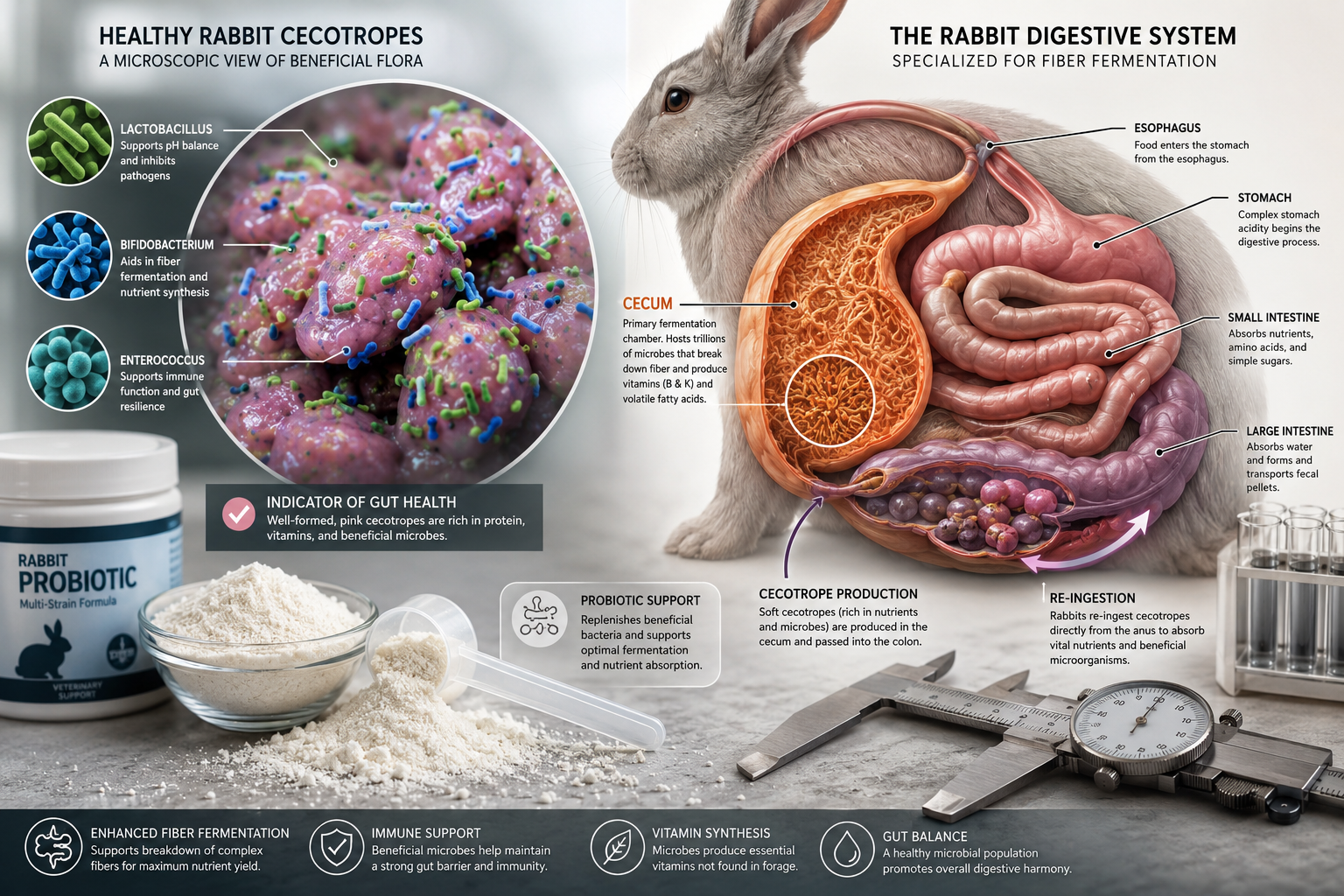
Before evaluating whether rabbit probiotic powder actually works, we need to understand what makes rabbit digestion so unique. Rabbits are hindgut fermenters with a specialized digestive anatomy that sets them apart from dogs, cats, and even humans, the species where most probiotic research has been conducted.
The cecum is the star of the show. This large, comma-shaped organ acts as a fermentation chamber where beneficial bacteria break down fiber into nutrients. Unlike the human colon, a rabbit’s cecum is proportionally massive, accounting for roughly 40% of their gastrointestinal tract volume. The bacterial populations here are incredibly dense and diverse, with concentrations reaching 10¹⁰ to 10¹¹ organisms per gram of content.
Here’s where it gets interesting: rabbits practice cecotrophy, consuming special soft fecal pellets (cecotropes) directly from their anus. This isn’t a behavioral quirk, it’s a nutritional necessity. Cecotropes contain:
- B vitamins synthesized by gut bacteria
- Essential amino acids
- Fatty acids
- Additional bacterial populations
This unique digestive strategy means rabbits essentially “inoculate” themselves with beneficial bacteria every single day through normal behavior. The question becomes: can external probiotic supplementation improve upon this already sophisticated system?
The bacterial ecosystem in a healthy rabbit’s gut includes species like Bacteroides, Ruminococcus, and various Clostridium species, many of which differ significantly from the Lactobacillus and Bifidobacterium strains commonly found in commercial probiotic products. This mismatch raises a critical question about whether probiotics designed for other species can even colonize or benefit rabbit digestive systems.
For context on maintaining overall rabbit health, understanding proper vaccination protocols and recognizing warning signs that require veterinary attention are equally important foundations.
What the Research Actually Says About Rabbit Probiotic Powder
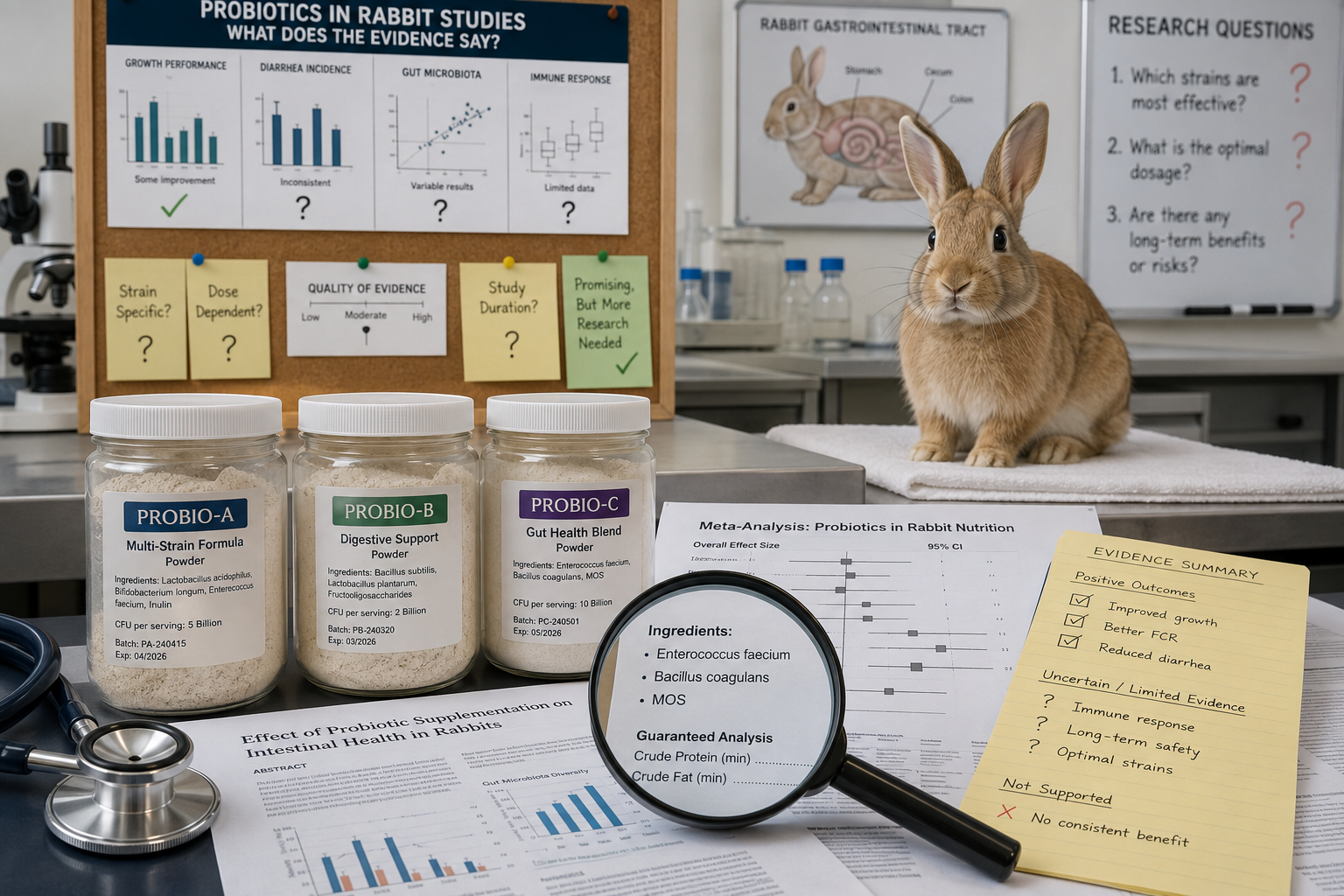
Let’s examine the evidence with the same critical eye we’d apply to any health intervention. The research landscape for rabbit probiotics is sparse, contradictory, and heavily weighted toward production animals rather than companion rabbits.
The Limited Evidence Base
A comprehensive review of veterinary literature reveals:
Production rabbit studies (meat and laboratory animals) show modest benefits in specific contexts:
- Reduced mortality in weaning rabbits during high-stress periods
- Slight improvements in feed conversion ratios
- Decreased incidence of enteritis in crowded commercial settings
However, these studies examine rabbits under conditions dramatically different from pet environments, high population density, early weaning, stress, and exposure to pathogens that healthy house rabbits rarely encounter.
Companion rabbit research is remarkably thin. Most recommendations for rabbit probiotic powder in pet contexts are extrapolated from:
- Studies in other species
- Theoretical mechanisms
- Anecdotal veterinary experience
- Production animal data
When Probiotics Might Actually Help
The most compelling evidence supports probiotic use in specific clinical situations:
During antibiotic therapy: Antibiotics can devastate the delicate bacterial balance in a rabbit’s cecum, potentially leading to fatal dysbiosis. Some veterinarians recommend probiotics during and after antibiotic treatment, though the evidence is more theoretical than proven. The timing matters, probiotics should be given several hours apart from antibiotics to avoid immediate destruction of the beneficial bacteria.
Acute digestive upset: When rabbits experience gas or bloating, some practitioners use probiotics alongside other interventions. However, it’s nearly impossible to isolate whether the probiotic, dietary changes, pain management, or simply time led to improvement.
Post-stasis recovery: After a bout of GI stasis, the theory suggests probiotics might help re-establish normal gut flora. Again, this is largely theoretical, and the primary treatment remains rehydration, pain management, and resuming normal eating.
The Uncomfortable Truth About Product Quality
Here’s where things get genuinely concerning. A 2019 analysis of commercial pet probiotics found:
- 📊 Only 53% of products contained the bacterial species listed on labels
- 📊 Colony-forming unit (CFU) counts often fell short of claimed amounts
- 📊 Many products contained bacterial strains with no published research supporting their use in rabbits
The rabbit probiotic powder market is largely unregulated, meaning manufacturers can make claims without rigorous proof of efficacy or even accurate labeling. When evaluating the best rabbit probiotic powders, product quality and transparency become paramount considerations.
What About Preventive Use in Healthy Rabbits?
This is where the evidence becomes weakest. For healthy rabbits eating a proper diet (unlimited hay, appropriate pellets, fresh vegetables), there’s minimal research supporting routine probiotic supplementation. The existing bacterial ecosystem in a healthy rabbit is already optimized through:
- Natural cecotrophy
- High-fiber hay consumption
- Appropriate pellet nutrition
- Fresh vegetable intake
Adding external bacteria to an already balanced system may provide no additional benefit, or in worst-case scenarios, could potentially disrupt existing balance.
Making an Informed Decision About Rabbit Probiotic Powder
So where does this leave conscientious rabbit owners? The answer requires nuance rather than a simple yes or no.
When Probiotics Make Sense
Consider rabbit probiotic powder in these specific situations:
✅ During prescribed antibiotic treatment (with veterinary guidance on timing and strain selection)
✅ Following a diagnosed digestive disorder as part of a comprehensive recovery plan
✅ During high-stress periods (moving, boarding, travel) where disruption to normal eating patterns occurs
✅ When recommended by a rabbit-savvy veterinarian for a specific medical indication
When to Skip the Probiotics
Probiotics are likely unnecessary for:
❌ Healthy rabbits with normal appetite and fecal output
❌ Rabbits already eating an optimal diet with unlimited hay and appropriate vegetables
❌ “Just in case” supplementation without a specific indication
❌ As a substitute for proper diet and husbandry
Choosing Quality Products If You Decide to Use Them
If you and your veterinarian decide probiotics are appropriate, prioritize:
Species-appropriate strains: Look for products specifically formulated for rabbits or herbivores, not generic pet probiotics. Beneficial strains might include Enterococcus faecium, Bacillus subtilis, or specific Lactobacillus species with research in lagomorphs.
Guaranteed CFU counts: Products should specify colony-forming units and include expiration dates. Probiotics are living organisms that die over time.
Third-party testing: Some manufacturers voluntarily submit products for independent verification of contents and potency.
Proper storage: Many probiotics require refrigeration to maintain viability. Products sitting on warm pet store shelves for months may contain mostly dead bacteria.
Veterinary-grade options: Products sold through veterinary clinics often (though not always) undergo more rigorous quality control than over-the-counter options.
The Foundation That Actually Matters
Here’s the honest assessment: diet and husbandry trump supplementation every time. The most evidence-based approaches to rabbit digestive health include:
🌾 Unlimited high-quality grass hay (timothy, orchard grass, meadow hay) as the foundation of the diet
🥬 Daily fresh vegetables providing natural prebiotics (fiber that feeds beneficial bacteria)
💧 Constant access to fresh water supporting proper digestion and cecotrope formation
🏃 Adequate exercise promoting gut motility and preventing stasis
😌 Stress reduction through appropriate housing, companionship, and routine
🩺 Regular veterinary care catching problems before they become emergencies
These fundamentals have far more research supporting their importance than any supplement. If your rabbit’s diet consists primarily of pellets with minimal hay, no amount of probiotic powder will compensate for that foundational problem.
For rabbits with ongoing digestive sensitivities, exploring digestive support supplements alongside dietary optimization may provide more comprehensive support than probiotics alone.
The Bigger Picture: What Rabbit Owners Really Need to Know
The probiotic question reveals something important about how we approach rabbit care: the desire for simple solutions to complex biological systems. It’s understandable, we want to do everything possible for our rabbits, and supplements promise an easy way to optimize their health.
But rabbit digestive health isn’t primarily about adding things; it’s about creating the right conditions for their natural systems to function optimally. A rabbit eating unlimited hay, producing normal fecal pellets and cecotropes, maintaining steady weight, and showing good appetite doesn’t need intervention, their gut microbiome is already doing exactly what millions of years of evolution designed it to do.
The real value of understanding probiotics isn’t deciding whether to buy them, it’s recognizing what actually supports rabbit digestive health. That knowledge helps you:
- Identify when your rabbit genuinely needs veterinary intervention versus when you’re being sold unnecessary products
- Understand why diet quality matters more than any supplement
- Recognize early signs of digestive problems before they become emergencies
- Make informed decisions when your veterinarian recommends specific interventions
Red Flags That Require Veterinary Care, Not Supplements
No probiotic can substitute for medical care when your rabbit shows:
- 🚨 Decreased or absent fecal production for more than 6-8 hours
- 🚨 Hunched posture, teeth grinding, or signs of pain
- 🚨 Distended, hard, or painful abdomen
- 🚨 Refusal to eat or drink
- 🚨 Lethargy or unusual behavior
These symptoms require immediate veterinary attention, not a trip to the pet store for supplements. Having a well-stocked rabbit first aid kit and knowing emergency first aid procedures matters far more than any preventive supplement.
The Cost-Benefit Analysis
Let’s be practical about the financial aspect. Quality rabbit probiotic powder typically costs $15-40 per container, with recommended daily use adding up to $180-480 annually. For a healthy rabbit, that money might be better invested in:
- Higher-quality hay varieties
- Regular veterinary checkups
- Improved housing or enrichment
- Emergency fund for unexpected veterinary care
For rabbits with specific medical needs, the cost may be justified, but only when there’s a clear indication and veterinary guidance.
FAQ
Do rabbits need probiotics every day?
Healthy rabbits eating a proper diet (unlimited hay, appropriate pellets, fresh vegetables) typically don’t need daily probiotics. Their natural cecotrophy and balanced gut microbiome maintain digestive health without supplementation. Daily probiotics may be recommended during antibiotic treatment or recovery from digestive illness, but routine use in healthy rabbits lacks strong evidence.
Can probiotics harm my rabbit?
While generally considered safe, probiotics can potentially cause problems if they contain inappropriate bacterial strains, are contaminated, or are given in excessive amounts. Introducing foreign bacteria to a balanced gut ecosystem could theoretically cause disruption. Always consult a rabbit-savvy veterinarian before starting any supplement, and discontinue use if you notice changes in appetite, fecal output, or behavior.
What’s the difference between rabbit probiotics and prebiotics?
Probiotics are live beneficial bacteria added to the digestive system, while prebiotics are types of fiber that feed existing beneficial bacteria. For rabbits, prebiotics (found naturally in hay and vegetables) have stronger evidence supporting their benefit than probiotic supplementation. A high-fiber diet essentially provides natural prebiotic support for your rabbit’s existing gut bacteria.
How long does it take for rabbit probiotics to work?
If probiotics are going to provide benefit, you might see changes in fecal consistency or appetite within 3-7 days. However, if your rabbit shows no improvement after a week of use during a digestive issue, the probiotic likely isn’t helping, and veterinary reassessment is needed. For preventive use in healthy rabbits, there’s no clear timeline because measurable benefits are difficult to demonstrate.
Should I give probiotics with antibiotics?
If your veterinarian prescribes antibiotics, ask specifically about probiotic supplementation. Some vets recommend probiotics given several hours apart from antibiotic doses to help protect gut bacteria. However, timing and strain selection matter significantly. Never start probiotics during antibiotic treatment without veterinary guidance, as some combinations may reduce antibiotic effectiveness.
Are human probiotics safe for rabbits?
Human probiotic products are not recommended for rabbits. They typically contain bacterial strains (like specific Lactobacillus and Bifidobacterium species) that may not be appropriate for rabbit digestive systems. Additionally, human products may contain inactive ingredients, flavors, or sweeteners unsuitable for rabbits. If probiotics are needed, use products specifically formulated for rabbits or herbivores under veterinary guidance.
Conclusion
The honest answer to “Do rabbit probiotics actually work?” is frustratingly nuanced: maybe, sometimes, for specific situations, but probably not for routine use in healthy rabbits. The evidence supporting rabbit probiotic powder remains limited, particularly for preventive supplementation in pets eating proper diets and living in appropriate environments.
What actually works with strong evidence:
- Unlimited access to high-quality grass hay
- Appropriate fresh vegetables providing natural prebiotic fiber
- Proper hydration and exercise
- Stress reduction through good husbandry
- Prompt veterinary care when problems arise
When probiotics might be worth considering:
- During antibiotic treatment (with veterinary guidance)
- Recovery from diagnosed digestive disorders
- Specific medical recommendations from rabbit-savvy veterinarians
What doesn’t make sense:
- Routine supplementation in healthy rabbits as “insurance”
- Using probiotics as a substitute for proper diet
- Choosing products without species-appropriate strains or quality verification
The most valuable takeaway isn’t whether to buy probiotics, it’s understanding that rabbit digestive health is built on a foundation of proper nutrition and care, not supplementation. Focus your energy and resources on providing unlimited hay, appropriate vegetables, clean water, adequate space, and regular veterinary care. These evidence-based fundamentals will do far more for your rabbit’s gut health than any powder or pill.
If you’re considering probiotics for your rabbit, have an honest conversation with a rabbit-savvy veterinarian about whether there’s a specific medical indication or if your efforts would be better directed toward optimizing diet and husbandry. Sometimes the most responsible answer is recognizing that your rabbit’s natural systems, supported by proper care, are already doing exactly what they need to do.