Affiliate Disclaimer: This site is a participant in the Amazon Services LLC Associates Program, an affiliate advertising program designed to provide a means for sites to earn advertising fees by advertising and linking to Amazon.com. We are compensated for referring traffic and business to Amazon and other companies linked to on this site. We may also do this with other affiliate schemes
Most rabbit owners discover the truth about house rabbits the hard way: even litter-trained bunnies occasionally miss the mark. A rabbit pee pad isn’t just a convenience product marketed to anxious pet parents, it’s a practical tool that addresses the biological reality of how rabbits eliminate waste and the behavioral patterns that make accidents inevitable, regardless of training success.
Understanding why rabbits need pee pads requires looking beyond the marketing claims and examining rabbit physiology, territorial behavior, and the honest limitations of litter training. While some rabbits achieve near-perfect litter box habits, many will spray, dribble, or simply choose alternative bathroom spots despite their owner’s best efforts. The question isn’t whether your rabbit will ever have an accident, it’s how you’ll manage the inevitable when it happens.
Key Takeaways
- Rabbits have biological and behavioral reasons for missing litter boxes, including territorial marking, age-related incontinence, and medical conditions that make pee pads a practical necessity rather than a training failure
- Pee pads serve multiple functions beyond accident cleanup, including protecting floors during litter training, managing senior rabbit incontinence, and providing sanitary surfaces in recovery areas
- Proper placement and material selection matter significantly,disposable pads work best under and around litter boxes, while reusable options suit long-term use in specific zones
- Evidence for pee pad “training” is limited,they’re better understood as management tools rather than training aids, though they can protect your home during the training process
- Cost-effectiveness varies by rabbit behavior,frequent accidents make reusable pads economical, while occasional mishaps favor disposable options
Why Rabbits Actually Need Pee Pads: The Biology Behind the Behavior
Territorial Marking Is Hardwired
Rabbits are territorial animals with scent glands located under their chins, around their anus, and in their groin area. Urine marking serves as a primary communication method, especially in unneutered or unspayed rabbits. Even after spaying or neutering, some rabbits retain marking behaviors triggered by stress, new environments, or the presence of other animals.
This isn’t a training problem, it’s species-typical behavior. A rabbit who sprays urine on vertical surfaces or leaves small puddles in corners isn’t being defiant; they’re following instincts that helped wild rabbits establish territory and communicate with colony members. Pee pads placed strategically in marking zones acknowledge this reality rather than fighting against rabbit nature.
Age-Related Incontinence Affects Senior Rabbits
Older rabbits frequently develop mobility issues, arthritis, or weakened bladder control. A rabbit who successfully used a litter box for years may suddenly struggle to reach it in time or hold urine as long as they once could. Senior rabbits may also develop conditions like kidney disease or urinary tract infections that increase urination frequency.
For aging rabbits, pee pads become essential care tools rather than optional accessories. Placing absorbent pads in favorite resting spots prevents urine scald, a painful skin condition caused by prolonged contact with wet fur, and maintains dignity for rabbits who can no longer control elimination perfectly.
Medical Conditions Create Genuine Need
Several health conditions make accidents inevitable regardless of training:
- Urinary tract infections cause urgent, frequent urination
- Bladder sludge or stones lead to painful, unpredictable elimination
- Spinal issues (particularly in breeds prone to spondylosis) impair sensation and control
- Obesity makes proper positioning in litter boxes difficult
- E. cuniculi (a parasitic infection) can cause neurological symptoms affecting elimination
When medical issues are present, pee pads protect both rabbit health and home cleanliness while treatment progresses. They’re not masking a training problem, they’re managing a health condition. If your rabbit suddenly develops litter box issues, consult a veterinarian before assuming it’s behavioral; many warning signs require immediate attention.
The Litter Training Limitation Nobody Mentions
Here’s the honest truth: even perfectly litter-trained rabbits have about an 85-95% success rate at best. That remaining 5-15% represents biological reality, rabbits produce cecotropes (soft, nutrient-rich droppings they re-ingest) that sometimes fall outside the litter box, occasional urine dribbles during grooming or stretching, and the simple fact that rabbits don’t have the same sphincter control as cats or dogs.
Expecting 100% litter box accuracy sets unrealistic standards. A rabbit pee pad placed under and around the litter box catches the inevitable misses without requiring constant floor cleaning or accepting permanent stains.
Types of Rabbit Pee Pads and How They Actually Perform

Disposable Pee Pads: The Convenience Trade-Off
Disposable pads feature multiple layers: a quilted top sheet that wicks moisture away from the surface, an absorbent core (usually polymer crystals or fluff pulp), and a waterproof backing. They’re designed for single use and disposal.
Honest advantages:
- Zero laundry burden
- Convenient for travel or temporary setups
- Immediately sanitary (no washing contaminated items)
- Useful during illness when frequent changes are necessary
Real disadvantages:
- Ongoing cost adds up quickly (typically $0.50-$1.50 per pad)
- Environmental impact from landfill waste
- Some rabbits chew or shred them, risking ingestion of polymers
- Quality varies dramatically between brands
For a comprehensive comparison of specific products, see our guide to the best rabbit pee pads currently available.
Reusable Washable Pads: The Long-Term Investment
Reusable pads typically consist of absorbent fabric layers (cotton, bamboo, or microfiber) with a waterproof backing. They’re machine washable and designed for hundreds of uses.
Honest advantages:
- Cost-effective over time (break-even typically at 3-6 months)
- Environmentally friendlier than disposables
- Often more absorbent than disposable options
- Softer surface for rabbits with sensitive feet
Real disadvantages:
- Requires dedicated laundry routine (urine-soaked items need separate washing)
- Initial investment is higher ($15-$40 per pad)
- Absorbency degrades over time with repeated washing
- Must own multiple pads to rotate while washing
The choice between disposable and reusable depends on your rabbit’s accident frequency, your tolerance for laundry, and your budget timeline. Neither option is objectively “better”, they serve different needs.

How to Use Rabbit Pee Pads Effectively: Evidence-Based Placement
Strategic Placement Zone 1: Under and Around the Litter Box
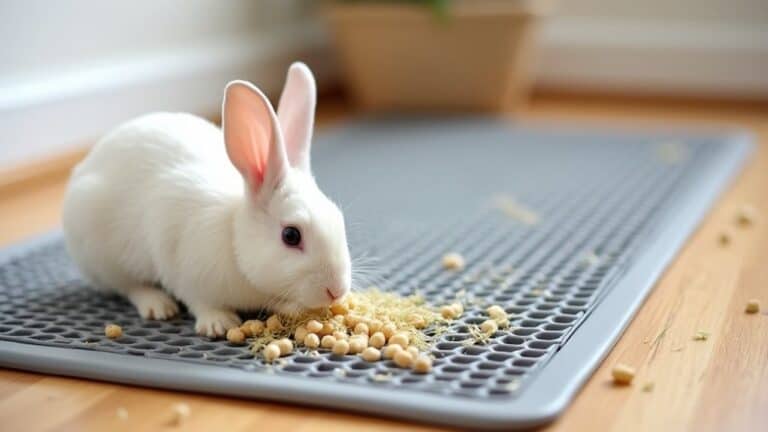
The most effective use of pee pads is creating a “splash zone” around your rabbit’s primary litter box. Even well-trained rabbits occasionally back up too far, spray over the edge, or kick litter (and urine) outside the box.
Placement strategy:
- Place one pad directly under the litter box to catch bottom leaks
- Position additional pads extending 6-12 inches beyond the box entrance
- Consider a litter mat over the pee pad for dual protection
This layered approach catches accidents while maintaining a clean appearance. The litter mat traps scattered litter while the pee pad underneath absorbs any liquid that penetrates through.
Strategic Placement Zone 2: Favorite Lounging Spots
Rabbits often urinate small amounts while relaxing, grooming, or sleeping, particularly senior rabbits or those with medical conditions. Identify where your rabbit spends the most time resting and place pads in those locations.
Observation tips:
- Watch where your rabbit settles for extended periods
- Note any spots with recurring small urine stains
- Consider areas near food and water (rabbits often eliminate shortly after eating)
Some rabbits prefer specific textures or locations for elimination. Rather than fighting this preference, accommodate it with appropriately placed pee pads. This isn’t “giving up” on training, it’s recognizing individual differences in rabbit behavior.
Strategic Placement Zone 3: Territorial Marking Zones
Unneutered males and some spayed females spray urine on vertical surfaces or in corners to mark territory. These spots are predictable once you identify them.
Marking zone management:
- Place pads vertically against walls where spraying occurs
- Use clips or tape to secure pads to vertical surfaces
- Position pads in corners where your rabbit consistently marks
- Consider whether neutering/spaying might reduce (though not eliminate) this behavior
The Training Period: Temporary Full-Floor Coverage
During initial litter training or when introducing a rabbit to a new space, temporary full-floor coverage with pee pads can protect your floors while your rabbit learns the layout and establishes bathroom habits.
Temporary coverage approach:
- Cover the entire exercise pen or room floor with overlapping pads
- Place the litter box in your rabbit’s preferred elimination spot
- Gradually reduce pad coverage as litter box use increases
- Maintain pads only in problem areas once training solidifies
This method acknowledges that training takes time and accidents are part of the learning process. It’s not a permanent solution but a transitional strategy.
What the Research Actually Says About Pee Pads and Training
Here’s where honesty matters: there’s limited peer-reviewed research specifically on rabbit pee pad effectiveness. Most recommendations come from experienced rabbit rescues, veterinarians, and long-term rabbit owners rather than controlled studies.
What We Know From Practical Experience
Rabbit rescue organizations that manage hundreds of rabbits annually report that pee pads:
- Significantly reduce floor damage during foster care
- Make cleanup faster, allowing more time for rabbit socialization
- Reduce stress for rabbits in temporary housing (familiar texture, reduced cleaning disruption)
- Don’t appear to interfere with litter training when used appropriately
What We Don’t Know
The evidence gaps include:
- Whether pads delay litter training compared to bare floors (anecdotal reports conflict)
- Optimal pad placement patterns for different rabbit personalities
- Long-term health effects of various pad materials on rabbit respiratory systems
- Comparative effectiveness of different absorbent materials
The honest verdict: Pee pads are practical management tools with strong anecdotal support but limited rigorous research. They solve real problems (floor protection, senior care, medical management) even if we can’t cite controlled trials proving optimal use patterns.
Common Mistakes That Make Pee Pads Less Effective
Mistake 1: Using Pads as a Substitute for Litter Training
Pee pads should supplement litter training, not replace it. A rabbit who never learns to use a litter box will require permanent floor coverage with pads, an expensive, labor-intensive approach that doesn’t address the underlying behavior.
Better approach: Combine litter training with strategic pad placement in problem areas.
Mistake 2: Choosing Scented or Chemically-Treated Pads
Rabbits have sensitive respiratory systems. Pads with added fragrances, antimicrobial chemicals, or strong dyes can cause respiratory irritation or allergic reactions. Some rabbits also refuse to use scented pads, defeating their purpose entirely.
Better approach: Select unscented, minimally-processed pads. If odor control is necessary, address it through more frequent changes rather than chemical additives.
Mistake 3: Infrequent Pad Changes
Leaving soiled pads in place for extended periods creates several problems:
- Ammonia buildup irritates rabbit respiratory systems
- Wet pads against fur cause urine scald
- Odor becomes embedded in flooring underneath
- Rabbits may avoid the area, creating new problem spots
Better approach: Change disposable pads daily (or immediately when soiled). Wash reusable pads every 1-2 days depending on use.
Mistake 4: Ignoring the Underlying Cause
If your previously litter-trained rabbit suddenly needs pee pads everywhere, investigate the cause rather than simply managing symptoms. Medical conditions, stress, territorial disputes with other pets, or environmental changes often trigger elimination problems.
Better approach: Consult a rabbit-savvy veterinarian to rule out health issues. Address environmental stressors. Consider whether recent changes (new pet, moved furniture, different litter) triggered the behavior change.
Integrating Pee Pads Into a Complete Rabbit Care System
Pee pads work best as one component of a comprehensive rabbit care approach rather than a standalone solution.
The Complete Floor Protection System
Layer 1: Waterproof flooring or floor protector (vinyl, linoleum, or waterproof mat)
Layer 2: Rabbit pee pad in strategic locations
Layer 3: Litter mat around litter box entrance
Layer 4: Appropriate litter box with proper litter material
This layered approach provides redundant protection while maintaining a clean, comfortable environment for your rabbit.
Coordinating With Other Rabbit Supplies
Consider how pee pads interact with other rabbit care products:
- Exercise pens and playpens: Pads protect floors in exercise pen setups and playpen areas
- Bed mats: Comfortable bed mats can be placed over pee pads in lounging areas for dual function
- Cage setups: Pads work well under and around rabbit cages to catch litter and urine kicked out during use
Maintenance Schedule for Optimal Hygiene
Daily tasks:
- Spot-check all pads for wetness
- Replace or remove any soiled disposable pads
- Wipe waterproof backing of reusable pads if surface-soiled
Every 2-3 days:
- Wash reusable pads in hot water with pet-safe detergent
- Rotate pad locations if wear patterns develop
- Check floor underneath pads for any moisture penetration
Weekly tasks:
- Deep clean the floor area where pads are placed
- Inspect pads for damage (tears, worn waterproof backing)
- Evaluate whether pad placement still matches rabbit behavior patterns
When Pee Pads Aren’t the Solution
Honesty requires acknowledging when pee pads won’t solve the problem.
Behavioral Issues Requiring Different Interventions
If your rabbit is:
- Aggressively territorial despite being spayed/neutered (may need behavior modification)
- Stressed by environmental factors (requires addressing the stressor, not managing symptoms)
- Competing with other rabbits for resources (needs separate spaces or resource addition)
…then pee pads will only manage symptoms without addressing the root cause.
Medical Conditions Requiring Veterinary Care
Sudden litter box failure accompanied by:
- Straining to urinate
- Blood in urine
- Excessive water drinking
- Lethargy or appetite loss
- Weight loss
…requires immediate veterinary attention, not pee pad management. These symptoms may indicate serious conditions like bladder stones, kidney disease, or diabetes. Review warning signs that need immediate veterinary attention to recognize emergencies.
When Full Room Rabbit-Proofing Is More Appropriate
For rabbits with severe, persistent elimination issues across large areas, full room waterproofing (vinyl flooring, washable area rugs, waterproof furniture covers) may be more practical and economical than covering everything with pee pads.
Cost Analysis: Are Pee Pads Worth the Investment?
Disposable Pad Cost Projection
Scenario: One pad per day under litter box, one pad every 3 days in lounging area
- Daily pad: 365 pads/year × $0.75 = $273.75
- Lounging pad: 122 pads/year × $0.75 = $91.50
- Annual cost: $365.25
Reusable Pad Cost Projection
Initial investment: 6 pads × $25 = $150
Laundry costs: ~$0.50 per wash × 180 washes/year = $90
Replacement: 2 pads/year × $25 = $50
Annual cost (year 1): $290
Annual cost (subsequent years): $140
The Break-Even Reality
Reusable pads become more economical after approximately 6-8 months if you maintain a consistent washing routine. However, this calculation doesn’t account for:
- Your time value (laundry labor)
- Water and energy costs
- Potential for rabbits to destroy pads (chewing, digging)
- Convenience value of disposables during illness or travel
Honest assessment: Neither option is dramatically cheaper when all factors are considered. Choose based on your priorities (convenience vs. environmental impact vs. upfront cost) rather than assuming one is obviously more economical.
FAQ
Do pee pads confuse rabbits during litter training?
Limited evidence suggests they don’t significantly interfere with training when used strategically. Place pads around the litter box rather than as an alternative to it. The key is ensuring the litter box remains the most attractive elimination option (proper litter material, convenient location, appropriate size) while pads simply catch misses.
Can rabbits safely chew pee pads?
No. Most pads contain polymer crystals or synthetic materials that can cause intestinal blockages if ingested. If your rabbit chews pads, they’re not a safe option for your household. Consider alternatives like washable fleece liners without exposed edges, or address the chewing behavior through increased enrichment and appropriate chew toys.
How often should I change rabbit pee pads?
Change disposable pads immediately when soiled or daily at minimum. Wash reusable pads every 1-2 days depending on use. Leaving wet pads in place creates ammonia buildup that irritates rabbit respiratory systems and can cause urine scald on their skin.
Will using pee pads make my rabbit lazy about using the litter box?
This concern is common but not supported by evidence from rabbit rescues that use pads extensively. Rabbits naturally prefer eliminating in one area (typically a corner or against a wall). If the litter box is more appealing than the pad (better litter, better location), rabbits will choose it. Pads don’t create laziness, they accommodate biological reality.
Are reusable or disposable pee pads better for rabbits?
Neither is objectively superior. Disposables offer convenience and immediate sanitation but create ongoing costs and waste. Reusables are economical long-term and environmentally friendlier but require dedicated laundry routines. Choose based on your rabbit’s accident frequency, your household routine, and your priorities regarding cost, convenience, and environmental impact.
Can I use human incontinence pads for my rabbit?
Yes, with caution. Human incontinence pads use similar materials and construction. Ensure they’re unscented, and monitor for chewing. Some human pads are more cost-effective than pet-specific products with identical functionality. The main difference is often just marketing and packaging rather than actual performance.
Conclusion
The real reason rabbits need pee pads has nothing to do with training failure and everything to do with biological reality. Territorial marking, age-related incontinence, medical conditions, and the simple fact that even well-trained rabbits have occasional accidents make pee pads practical tools rather than admissions of defeat.
Your next steps:
- Assess your rabbit’s specific needs: Is this about litter training support, senior care, medical management, or territorial marking?
- Choose the appropriate pad type: Disposable for convenience and temporary use, reusable for long-term economical management
- Place pads strategically: Under and around the litter box, in favorite lounging spots, and in identified marking zones
- Maintain a consistent routine: Change or wash pads frequently to prevent ammonia buildup and maintain hygiene
- Monitor for underlying issues: If pad needs suddenly increase, consult a veterinarian to rule out medical conditions
Remember that using pee pads doesn’t mean abandoning litter training, it means acknowledging that perfect control isn’t realistic for every rabbit in every situation. The goal is a clean, comfortable home for both you and your rabbit, achieved through practical management rather than unrealistic expectations.
For rabbits with persistent elimination challenges, pee pads are one component of comprehensive care that should also include appropriate nutrition, regular veterinary check-ups, and environmental enrichment. They’re tools that make rabbit ownership more manageable, not solutions that replace proper care and attention to your rabbit’s physical and behavioral needs.