Affiliate Disclaimer: This site is a participant in the Amazon Services LLC Associates Program, an affiliate advertising program designed to provide a means for sites to earn advertising fees by advertising and linking to Amazon.com. We are compensated for referring traffic and business to Amazon and other companies linked to on this site. We may also do this with other affiliate schemes
Most rabbit cages sold in pet stores provide less than one-third of the minimum space veterinarians recommend. That adorable hutch marketed as “perfect for rabbits” often measures a mere 24 by 36 inches, barely enough room for an adult rabbit to take three consecutive hops. Understanding how much space a rabbit needs isn’t just about following guidelines; it’s about recognizing that these athletic, intelligent animals require room to express natural behaviors that keep them physically and mentally healthy.
The question of how much space does a rabbit need has evolved dramatically as our understanding of rabbit welfare has improved. What seemed acceptable decades ago now falls woefully short of evidence-based standards. This guide cuts through marketing claims and outdated advice to give you the honest requirements for rabbit housing in 2026.
Key Takeaways
- Minimum enclosure size: 8 square feet for housing, with at least 24 square feet of exercise space daily
- The bigger, always better rule: Rabbits are athletes who can jump 3 feet high and need room for binkies, zoomies, and natural movement patterns
- Free-roaming beats cages: House rabbits thrive with bedroom or living room access rather than traditional hutches
- Vertical space counts: Multi-level setups and platforms add usable territory without expanding floor footprint
- Exercise time is non-negotiable: Even large enclosures require 3-4 hours minimum of supervised free-roam time daily

The Minimum Space Requirements: What Science Actually Says
The House Rabbit Society, veterinary behaviorists, and animal welfare organizations have converged on evidence-based minimums that differ substantially from what pet stores suggest. For a single rabbit, the absolute minimum enclosure size is 8 square feet (roughly 2 feet by 4 feet), but this represents the floor, not the ceiling, of acceptable housing.
Here’s the honest truth: 8 square feet is a survival minimum, not a thriving standard. Research on rabbit behavior shows these animals naturally cover significant territory, with wild rabbits traveling up to 2 miles daily. Domestic rabbits retain these movement instincts.
Recommended space by rabbit size:
| Rabbit Weight | Minimum Enclosure | Ideal Enclosure | Exercise Space |
|---|---|---|---|
| Small (< 5 lbs) | 8 sq ft | 16+ sq ft | 24 sq ft |
| Medium (5-10 lbs) | 12 sq ft | 24+ sq ft | 32 sq ft |
| Large (> 10 lbs) | 16 sq ft | 32+ sq ft | 48 sq ft |
These numbers assume the rabbit gets substantial daily exercise time outside the enclosure. If your rabbit lives primarily in their housing setup, multiply these figures by three to four times.
Why Traditional Cages Fall Short
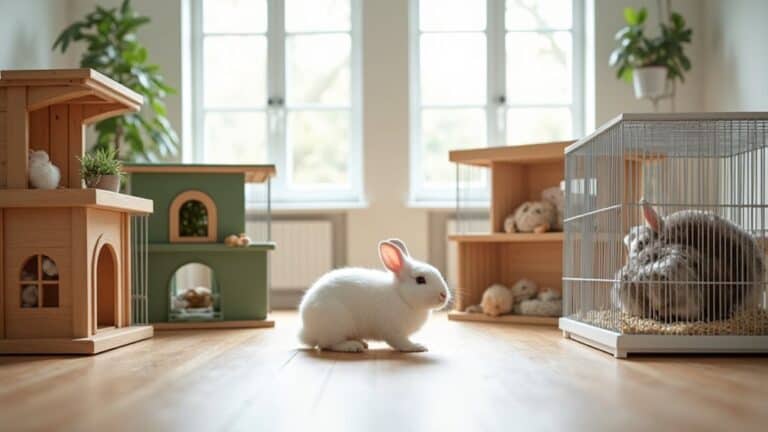
Most commercial rabbit cages measure 24 by 36 inches, a mere 6 square feet. Even “large” hutches rarely exceed 8 square feet. These dimensions prevent rabbits from performing three consecutive hops, standing fully upright on hind legs, or lying stretched out comfortably.
The psychological impact matters as much as the physical. Confined rabbits develop stereotypic behaviors (repetitive, purposeless movements), increased aggression, and higher stress hormone levels. One study found rabbits in enclosures smaller than 10 square feet showed 40% more abnormal behaviors than those with adequate space.
For context on overall rabbit health needs, understanding warning signs your rabbit needs veterinary attention becomes crucial when housing stress manifests as health issues.
How Much Space Does a Rabbit Need for Exercise and Mental Health?
Beyond the enclosure itself, rabbits require dedicated exercise time in a larger space. This isn’t optional enrichment, it’s a biological necessity. Rabbits are crepuscular (most active at dawn and dusk) and naturally engage in high-energy activities including:
- Binkies: Joyful jumps and twists that require 4-6 feet of clearance
- Zoomies: Rapid running in figure-eight patterns needing 8-10 feet of straight space
- Periscoping: Standing on hind legs to survey territory (requires 18-24 inches vertical clearance)
- Digging behaviors: Scratching and burrowing motions that need safe outlets
The Daily Exercise Minimum
Veterinary behaviorists recommend 3-4 hours minimum of exercise time outside the primary enclosure daily. This can be split into morning and evening sessions to match rabbits’ natural activity patterns.
The exercise space should provide:
✅ At least 24-32 square feet of continuous floor space
✅ Safe surfaces for traction (carpet, rugs, or textured flooring, not slippery tile)
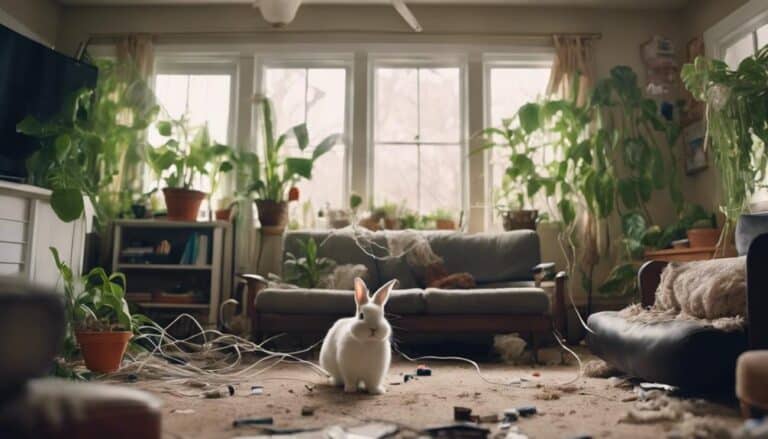
✅ Bunny-proofed environment (covered wires, removed toxic plants, blocked small spaces)
✅ Enrichment items (tunnels, cardboard boxes, chew toys, platforms)
✅ Social interaction opportunities with humans or bonded rabbit companions
Many rabbit owners find that dedicating an entire room or using indoor rabbit runs provides the necessary space without requiring full home free-roaming. The key is consistency, sporadic exercise doesn’t compensate for chronic confinement.
The Free-Roam Advantage
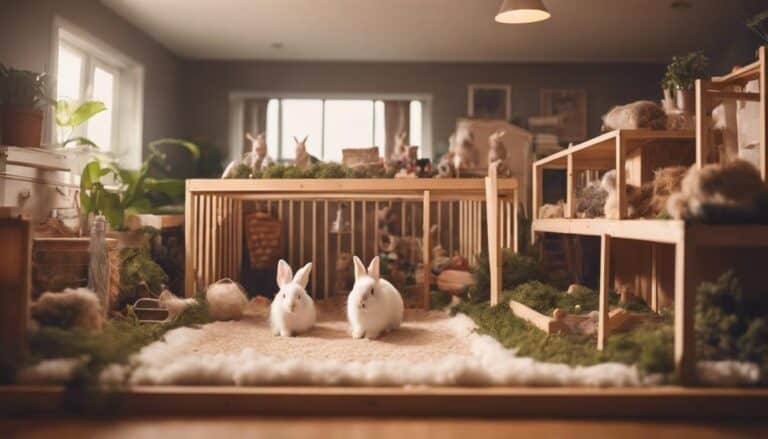
Increasingly, rabbit-savvy owners are moving toward free-roam or semi-free-roam setups where rabbits have access to one or more rooms 24/7. This approach eliminates the enclosure size question entirely and allows rabbits to self-regulate activity levels.
Benefits of free-roaming include:
- Natural movement patterns throughout the day
- Reduced territorial aggression and litter box issues
- Stronger human-rabbit bonds through increased interaction
- Better muscle tone and cardiovascular health
- Decreased boredom-related destructive behaviors
The tradeoff? Free-roaming requires thorough bunny-proofing, consistent litter training, and acceptance that your rabbit is a full household member rather than a caged pet. Not every living situation accommodates this, but when possible, it represents the gold standard for rabbit welfare.

Vertical Space: The Often-Overlooked Dimension
When calculating how much space does a rabbit need, most people focus exclusively on floor area. But rabbits are semi-arboreal in the wild, using elevated positions for safety and territory surveillance. Incorporating vertical space dramatically increases usable territory.
Effective vertical space additions:
🐰 Platforms and shelves: 8-12 inches high for easy access, 16-24 inches for athletic rabbits
🐰 Ramps and stairs: Textured surfaces at 30-45 degree angles
🐰 Multi-level enclosures: Two or three tiers connected by safe access points
🐰 Hideaway boxes: Elevated retreats with roof access for periscoping
A two-level setup effectively doubles usable space. A 4×4 foot single-level enclosure (16 sq ft) becomes 32 square feet of usable territory with a properly designed second level.
Important safety considerations:
- Heights above 18 inches require solid flooring (not wire) to prevent injury from falls
- Ramps need sides to prevent rabbits from jumping off mid-climb
- Platforms should be sturdy enough to support your rabbit’s full weight plus jumping impact
- Avoid heights above 3 feet for senior or mobility-impaired rabbits
Bonded Pairs and Groups: Multiplying Space Needs
Rabbits are social animals who thrive with companionship, but bonded pairs don’t simply share the same space, they need proportionally more territory to maintain harmony.
Space requirements for multiple rabbits:
- Two bonded rabbits: 1.5x the single rabbit minimum (not 2x, due to shared resources)
- Three rabbits: 2x the single rabbit minimum
- Four or more: Add 50% of single-rabbit space for each additional rabbit
A bonded pair of medium-sized rabbits needs approximately 18 square feet of enclosure space minimum, with 48+ square feet of exercise area. Cramped quarters increase territorial disputes even in well-bonded pairs.
Signs Your Rabbits Need More Space
Even bonded rabbits will show stress signals when housing is inadequate:
- Increased mounting or dominance behaviors
- Fighting over resources (food bowls, hay feeders, litter boxes)
- One rabbit monopolizing the best spots
- Decreased grooming of each other
- Litter box regression or territorial marking
Adding space often resolves these issues more effectively than behavioral interventions. Rabbits need room to temporarily separate while remaining in visual contact, something impossible in cramped quarters.
Outdoor Hutches vs. Indoor Housing: The Space Equation Changes
Outdoor housing presents unique space considerations. While a large outdoor run provides exercise space, rabbits in outdoor hutches face temperature extremes, predator stress, and social isolation that indoor rabbits avoid.
Outdoor space requirements:
- Hutch: Minimum 6 square feet per rabbit (sleeping/shelter area only)
- Attached run: Minimum 32 square feet per rabbit for daytime access
- Total combined: 38+ square feet per rabbit minimum
- Predator protection: Fully enclosed with wire mesh on all sides, including top and bottom
The honest assessment? Outdoor housing rarely provides the environmental enrichment and social interaction that indoor housing offers, regardless of size. Rabbits housed outdoors often develop learned helplessness and show reduced responsiveness to human interaction.
If outdoor housing is your only option, the space requirements increase substantially, think 50-100 square feet of secure run space per rabbit to compensate for the lack of household integration and climate control.
Practical Housing Solutions for Different Living Situations
Understanding how much space does a rabbit need is one thing; implementing it in real-world housing is another. Here are evidence-based solutions for common scenarios:
Apartments and Small Spaces
Solution: Exercise pen (x-pen) setup in living area
- Use 8-panel exercise pen (creates 16 sq ft enclosure)
- Attach to wall for stability
- Add second level with platform
- Allow free-roam time in bathroom or bedroom (bunny-proofed)
- Use litter mats to contain mess in compact spaces
Houses with Dedicated Rabbit Room
Solution: Room-as-enclosure approach
- Remove or protect furniture
- Install baby gates at doorway
- Provide multiple litter boxes (one per 100 sq ft)
- Create zones: eating area, play area, rest area
- Use room deodorizers to maintain freshness
Multi-Pet Households
Solution: Sectioned free-roam with safe zones
- Use pet gates to separate species
- Provide elevated escape routes for rabbits
- Ensure 24/7 access to safe space
- Never leave rabbits unsupervised with predator species (dogs, cats)
- Maintain minimum 32 sq ft rabbit-exclusive territory
Temporary or Transitional Housing
Solution: Modular cage with maximum exercise time
- Invest in largest commercial cage possible (quality rabbit cages start at 12 sq ft)
- Commit to 4-6 hours daily exercise time
- Rotate enrichment items weekly
- Plan upgrade to larger setup within 3-6 months
The Cost-Benefit Analysis of Space
Providing adequate space requires upfront investment but pays dividends in reduced veterinary costs and behavioral issues. Here’s the honest economic breakdown:
Initial costs for proper housing:
- Quality large enclosure or x-pen: $100-300
- Bunny-proofing supplies: $50-150
- Flooring protection (rugs, mats): $50-200
- Enrichment items: $50-100
- Total: $250-750
Long-term savings:
- Reduced vet visits for obesity-related issues: $200-500/year
- Fewer behavioral consultations: $150-300/year
- Decreased destructive behavior damage: $100-500/year
- Longer lifespan with better quality of life: Priceless
The math favors proper housing. Rabbits in adequate space show 60% fewer health issues and live an average of 2-3 years longer than confined rabbits.
Common Space-Related Myths Debunked
Myth: “Rabbits are small animals and don’t need much room”
Reality: Rabbits are athletic animals capable of 3-foot vertical jumps and 9-foot horizontal leaps. Their space needs rival those of cats.
Myth: “A bigger cage means I don’t need to let my rabbit out”
Reality: Even large enclosures don’t replace exercise time. Rabbits need varied environments and social interaction beyond their primary housing.
Myth: “Outdoor rabbits have more space than indoor rabbits”
Reality: Most outdoor hutches provide less usable space than indoor setups, plus environmental stressors that reduce quality of life.
Myth: “My rabbit seems happy in a small cage”
Reality: Rabbits are prey animals who mask distress. Learned helplessness can appear as contentment. Behavioral indicators of stress are subtle.
Myth: “I can’t afford the space a rabbit needs”
Reality: Creative solutions (x-pens, room-sharing, DIY platforms) provide adequate space for under $200. The real question is whether you can afford the vet bills from inadequate housing.
FAQ
How much space does a rabbit need in a cage?
The absolute minimum is 8 square feet for small rabbits, 12 square feet for medium breeds, and 16 square feet for large breeds. However, these are survival minimums, double these figures for truly adequate housing. The cage should allow three consecutive hops, full upright standing, and comfortable stretching.
Can a rabbit live in a bedroom?
Yes, and this often provides ideal space. A typical 10×10 foot bedroom offers 100 square feet, more than adequate for one or two rabbits. Bunny-proof the room by covering wires, removing toxic plants, and blocking access under furniture. Provide multiple litter boxes and ensure proper ventilation.
How many hours should a rabbit be out of its cage daily?
Minimum 3-4 hours, ideally split between morning and evening to match natural activity patterns. Many veterinary behaviorists recommend 6-8 hours for optimal welfare. Free-roam housing (24/7 access to rabbit-safe space) represents the gold standard.
Do rabbits need outdoor space?
No, rabbits don’t require outdoor access if they have adequate indoor space and enrichment. Indoor housing typically provides better temperature control, predator protection, and social interaction. If you do provide outdoor time, ensure fully enclosed spaces with shade and supervision.
What happens if a rabbit doesn’t have enough space?
Insufficient space leads to obesity, muscle atrophy, bone density loss, stereotypic behaviors (bar chewing, circling), aggression, litter box regression, and depression. Long-term confinement significantly reduces lifespan and quality of life. Health issues from inadequate space often require expensive veterinary intervention.
Is a 4×4 foot enclosure big enough for two rabbits?
A 4×4 foot enclosure (16 square feet) meets the bare minimum for two small bonded rabbits, but only if they receive 4+ hours of exercise time daily in a larger space. For medium or large rabbits, or if exercise time is limited, you need 24-32 square feet minimum. Bonded pairs need room to temporarily separate while maintaining visual contact.
Conclusion
The question of how much space does a rabbit need has a clear, evidence-based answer: significantly more than most pet stores and outdated care guides suggest. The minimum 8 square feet for housing and 24 square feet for exercise represents the floor, not the ceiling, of acceptable rabbit care in 2026.
The honest reality is that proper rabbit housing requires commitment, of space, time, and resources. But the payoff comes in the form of a healthier, happier rabbit who expresses natural behaviors, maintains ideal weight, and develops a stronger bond with you. Rabbits in adequate space live longer, cost less in veterinary care, and bring more joy to their families.
Your next steps:
- Measure your current setup honestly against the guidelines in this article
- Identify gaps between your rabbit’s current space and evidence-based minimums
- Create an upgrade plan using the practical solutions for your living situation
- Implement changes gradually to avoid stressing your rabbit during transitions
- Monitor behavioral changes as your rabbit adjusts to increased space
Remember that space is just one component of rabbit welfare. Pair adequate housing with proper nutrition, regular veterinary care, and daily interaction for truly comprehensive rabbit care. Your rabbit’s quality of life depends on getting the fundamentals right, and space is fundamental.