Affiliate Disclaimer: This site is a participant in the Amazon Services LLC Associates Program, an affiliate advertising program designed to provide a means for sites to earn advertising fees by advertising and linking to Amazon.com. We are compensated for referring traffic and business to Amazon and other companies linked to on this site. We may also do this with other affiliate schemes
Your rabbit’s teenage phase (3-6 months) brings hormonal challenges that are completely normal. You’ll notice territorial behaviors like spraying, mounting, and possibly aggression as they mature. Litter box habits might regress, and previously bonded rabbits may suddenly squabble. Providing appropriate outlets for digging and marking, along with consistent routines, helps manage this temporary phase. Spaying or neutering resolves about 80% of these behaviors, making everyone’s life easier. The expedition through bunny adolescence becomes more seamless with the right approach.
Recognizing the Signs of Rabbit Puberty
When your adorable baby bunny reaches adolescence, you’ll notice some striking changes in their behavior and appearance. Puberty signs typically emerge between 3-6 months of age, transforming your sweet bunny into a hormone-driven teenager almost overnight!
Male rabbits often become territorial, spraying urine to mark their domain and mounting objects (or your slippers).
Females might dig excessively, become grumpy, or create “phantom nests” from bedding and hay.
Both sexes may exhibit behavioral changes like aggression, restlessness, or defiance of previously established routines.
You’ll also observe physical changes – males develop more prominent testicles, while females may develop a dewlap (that cute chin waddle).
Don’t worry! This challenging phase is temporary, and with patience and proper care, your furry friend will mature into a well-adjusted adult rabbit.
Understanding the Hormonal Timeline: Ages and Stages
Now that you’ve spotted those puberty signs, let’s map out what’s happening inside your rabbit’s body during this rollercoaster phase of development.
Your bunny’s hormonal fluctuations typically begin around 3-4 months of age, though this varies by breed.
Most rabbits experience puberty stages in a predictable pattern: first comes the territorial marking, followed by mounting behaviors, and then the more challenging mood swings.
Small breeds mature faster, often completing the puberty cycle by 6 months, while larger breeds might continue until 9-12 months.
Don’t worry—these changes aren’t permanent! The intensity of hormonal behaviors usually peaks around 5-7 months when your furry teenager is testing boundaries just like human teens.
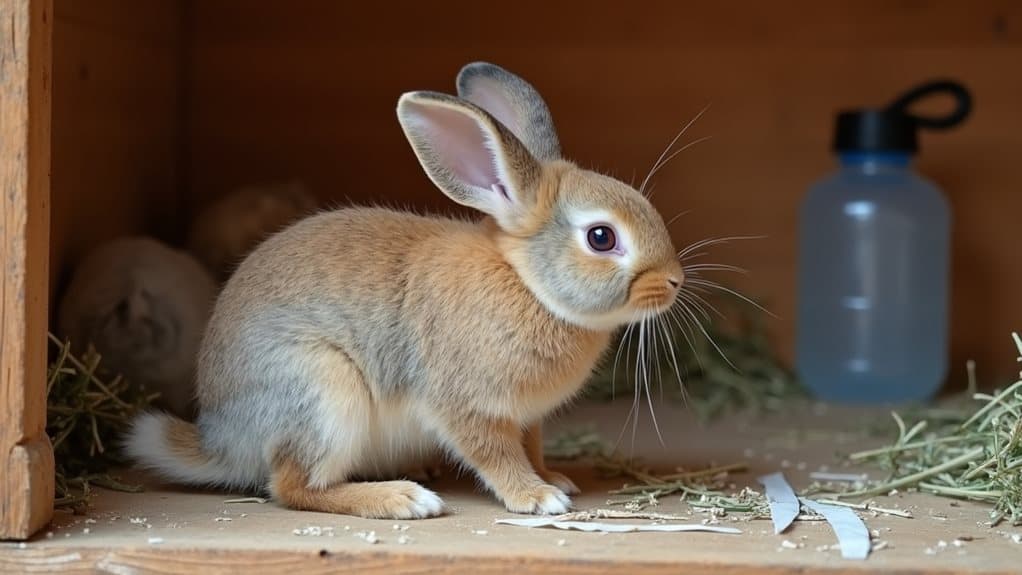
When your rabbit hits adolescence, you’ll notice a surge in territorial behaviors like marking objects with chin secretions versus spraying urine to claim larger areas.
Your once-sweet bunny might suddenly rearrange items, dig at corners, or thump aggressively to establish their space within your home.
If you’ve got multiple rabbits, watch for changing dynamics as your teenage bunnies redefine their social hierarchy, sometimes requiring temporary separation until hormones settle down.
Marking Vs Spraying
Many rabbit owners confuse marking and spraying behaviors, though they’re quite different manifestations of your teenage bunny’s developing territorial instincts.
Marking behaviors typically involve chin rubbing, where your rabbit deposits scent from special glands to claim objects and spaces as their own. You’ll notice them methodically rubbing their chin on cage corners, toys, and even your feet!
Spraying differences are more dramatic and messy. When a rabbit sprays, they’ll arch their back and release a stream of urine, often toward people or other pets. This behavior peaks during adolescence as hormones surge.
While marking is normal and harmless, spraying requires intervention. Don’t punish your bunny—they’re just following natural instincts. Instead, consider neutering or spaying, which typically reduces or eliminates spraying while preserving gentler marking behaviors.
Space Claiming Behaviors
Beyond marking and spraying, teenage rabbits display a fascinating range of space claiming behaviors that’ll both amuse and challenge you as an owner.
You’ll notice your bunny rearranging toys, digging at corners, or nudging furniture as they establish territory boundaries in your home. These aren’t random actions—they’re purposeful ways your rabbit communicates ownership.
When your adolescent rabbit circles your feet or “chinning” objects (rubbing their scent glands on items), they’re saying “this is mine!” Space boundaries matter tremendously to them during this hormonal phase.
Don’t take it personally if they seem possessive of certain areas—it’s just their natural instinct for territory establishment. Instead, provide appropriate outlets like dig boxes and designated “rabbit zones” where they can safely express these behaviors without frustrating you both.
Companion Rabbit Dynamics
Although teenage rabbits can form wonderful bonds with other bunnies, introducing companions during adolescence requires careful management of their heightened territorial instincts.
You’ll notice your teenager may suddenly chase, nip, or mount a previously accepted friend—this is normal hormonal behavior, not aggression.
Effective bonding techniques include neutral territory introductions and supervised “dates” where neither rabbit feels their space is invaded.
Watch their rabbit communication closely—ears back means stress, while side-by-side relaxation shows comfort.
If tensions arise, don’t panic! Separate them briefly, then try again with a smaller space.
Remember, teenage bunnies are like furry teenagers—they’re figuring out social boundaries.
With patience and consistent supervision, most rabbits maneuver through this phase successfully and develop lifelong friendships that benefit their emotional health.
Litter Box Regression: Causes and Solutions
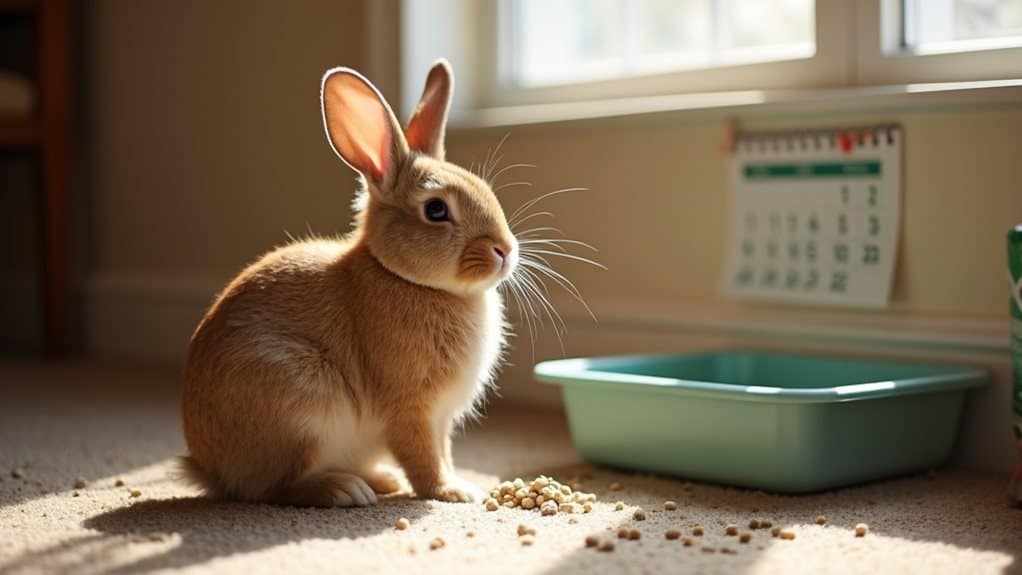
When your well-trained teenage rabbit suddenly starts ignoring their litter box, it’s more than frustrating—it’s a signal that something needs your attention. Hormonal changes during adolescence often trigger these litter box habits to deteriorate as your bunny establishes territory.
First, rule out medical issues with a vet visit. Then, consider these behavioral modifications: thoroughly clean soiled areas with enzymatic cleaners to remove scent markers, and temporarily place additional litter boxes in problem spots.
Neutering or spaying your rabbit typically resolves 80% of marking behaviors within weeks of surgery.
Don’t punish your bunny—they’re not being stubborn on purpose! Instead, patiently reinforce proper habits with positive rewards when they use the litter box correctly.
With consistency and understanding, you’ll help your teenage rabbit return to their tidy ways.
The Pros and Cons of Spaying and Neutering
Spaying or neutering your teenage rabbit offers notable health benefits, including reduced cancer risks and fewer hormone-driven behaviors like spraying or aggression.
You’ll likely notice positive changes in your bunny’s demeanor after the procedure, with many becoming calmer and more affectionate companions.
When considering the surgery, timing is essential—most veterinarians recommend the procedure between 4-6 months of age, but your specific rabbit’s development and health status should guide this important decision.
Health Benefits Explored
Because your teenage rabbit’s health directly impacts their quality of life, considering spaying or neutering is an important decision you’ll need to make as a responsible pet owner.
While the procedure involves surgery, it offers notable hormonal health benefits that shouldn’t be overlooked.
Your rabbit’s growth nutrition needs stabilize after these procedures, often resulting in more consistent eating patterns. Unaltered rabbits may experience hormonal fluctuations that lead to selective eating or weight fluctuations.
Additionally, spayed females have zero risk of uterine cancer, which affects up to 80% of unspayed females by age five. Males benefit too, with reduced aggression and territorial marking behaviors that make them more pleasant companions.
Behavior Changes Observed
After your rabbit undergoes spaying or neutering, you’ll likely notice considerable behavioral transformations that improve your relationship with your pet. The procedure often reduces aggression, eliminating common behavioral triggers like lunging, growling, or territorial spraying.
You’ll find your bunny becoming more relaxed and affectionate.
Social interactions may dramatically improve as well. Your rabbit might show increased interest in bonding with you and other household pets. The constant urge to mate disappears, replacing restlessness with a calmer demeanor.
Male rabbits typically stop mounting objects and other pets, while females won’t experience hormone-driven nesting behaviors.
Timing Considerations Important
When considering the timing of your rabbit’s spay or neuter procedure, you’ll need to weigh several important factors that impact both your pet’s health and development.
Most veterinarians recommend scheduling these procedures between 4-6 months of age, when your bunny has reached sexual maturity but before problematic behaviors become established habits.
Making appropriate timing adjustments based on your rabbit’s specific development can lead to better outcomes. You might notice dramatic behavioral expectations fulfilled within weeks after surgery – less spraying, reduced aggression, and decreased territorial marking.
However, don’t expect immediate changes! Your furry friend will need recovery time, typically 7-14 days, during which you should monitor them closely.
Post-Surgery Care for Teen Rabbits
Should your teenage rabbit undergo surgery, proper post-operative care becomes vital for their recovery.
Keep your bunny in a quiet, comfortable space away from other pets and loud noises. Post-operative monitoring is important during the first 48 hours—watch for signs of pain, infection, or unusual behavior that might indicate complications.
For pain management, never give over-the-counter medications without veterinary approval, as many human painkillers are toxic to rabbits. Your vet will prescribe appropriate pain relief, which you’ll need to administer exactly as directed.
Make sure your bunny’s eating and drinking normally—if they’re not interested in food within 12 hours post-surgery, call your vet immediately.
Keeping their environment clean will also prevent infection and help your furry friend bounce back to their playful self sooner!
Growth Spurts: Adjusting Diet for Developing Bodies
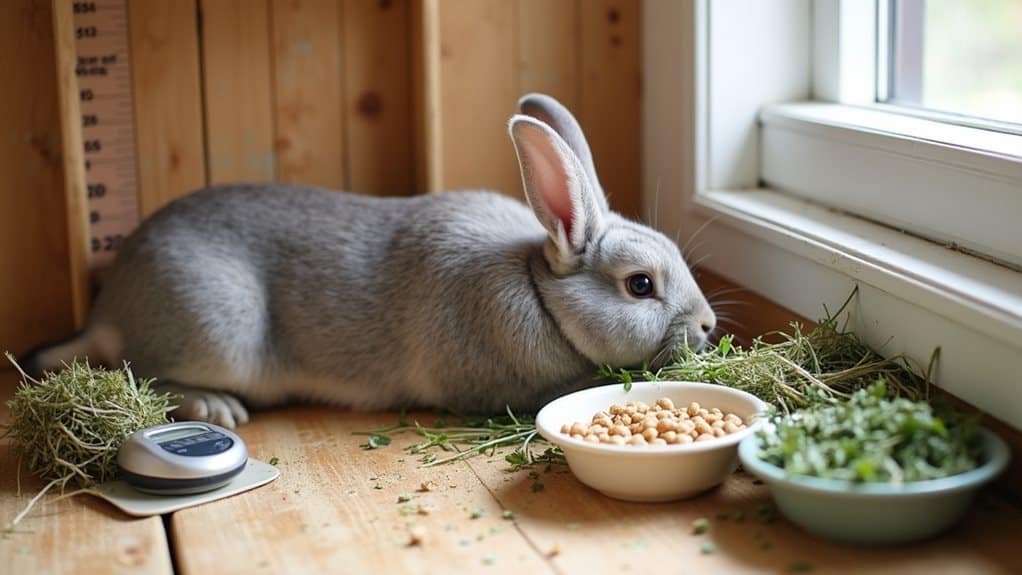
During adolescence, teenage rabbits experience considerable growth spurts that require careful dietary adjustments to support their developing bodies.
You’ll notice your bunny eating more as they rapidly develop muscle and bone mass between 3-6 months of age. This isn’t the time to restrict food!
Increase their daily timothy hay and offer unlimited pellets to fuel growth. Some nutritional supplements containing calcium can support bone development, but don’t overdo it—excess minerals can cause health problems.
Fresh leafy greens should make up about 10% of their diet during this critical period.
Watch your rabbit’s weight closely; they should feel firm but not bony. If your teen bunny seems constantly hungry yet losing weight, consult your vet immediately—this could indicate a health issue requiring attention.
Managing Aggression in Hormonal Rabbits
When your teenage rabbit starts lunging, boxing, or grunting, you’re witnessing hormonal aggression that’s completely normal but needs addressing.
You’ll find remarkable benefits from spaying or neutering, including reduced aggression, elimination of territorial spraying, and prevention of certain cancers.
While waiting for surgery (or if you’ve chosen not to alter your pet), you can use positive reinforcement training to redirect aggressive behaviors, rewarding calm interactions with treats and gentle praise.
Recognizing Hormonal Triggers
Hormonal changes in teenage rabbits can trigger sudden aggression that leaves many first-time owners feeling bewildered and unprepared. Your once-cuddly bunny might suddenly nip, lunge, or growl without apparent reason.
These behavioral cues aren’t personal attacks—they’re simply your rabbit’s natural response to hormonal fluctuations.
Watch for telltale signs: circling your feet, mounting objects (or even your arm!), territorial spraying, or excessive chin rubbing.
Female rabbits might become especially defensive of their space, while males often develop a more musky scent.
You’ll also notice increased digging and rearranging of bedding as they attempt to create territories.
Spaying/Neutering Benefits
Although many owners hesitate at the thought of surgery, spaying or neutering your teenage rabbit offers the most effective solution to hormone-driven aggression.
Despite common spaying myths, the procedure is routine and safe when performed by an experienced exotic vet. Neutering misconceptions often lead people to delay this important step, but the benefits far outweigh the risks.
Your rabbit will experience notable improvements after recovery:
- Reduced territorial marking – no more unwanted spraying around your home
- Decreased destructive behaviors – less chewing on furniture and carpets
- Gentler temperament – your formerly nippy bunny will likely become more affectionate
You’ll notice these positive changes within weeks after surgery, though some rabbits may take up to two months to fully settle into their new, calmer personality.
Positive Behavior Conditioning
Until your teenage rabbit can be safely spayed or neutered, positive behavior conditioning offers effective strategies to manage their hormone-driven aggression.
When your bunny lunges or nips, redirect this energy by immediately offering appropriate toys. Consistency is key in behavior modification—reward calm interactions with treats and gentle praise.
Create a predictable routine that helps your rabbit feel secure. You’ll notice that positive reinforcement works better than punishment, which only increases fear and aggression.
If your rabbit allows handling without showing aggression, reward this behavior immediately.
Don’t take hormonal outbursts personally! Your once-sweet bunny isn’t plotting against you—they’re just struggling with rabbit puberty.
With patience and consistent positive conditioning techniques, you’ll help guide your fuzzy teenager through this challenging phase while maintaining your bond.
Creating a Safe Environment During Tumultuous Times
When your teenage rabbit enters a stressful period, their environment becomes even more critical to their wellbeing.
Creating safe spaces throughout your home gives your bunny options to retreat when feeling overwhelmed. Remember, environmental enrichment isn’t just about toys—it’s about providing security during hormonal fluctuations.
Your rabbit needs a consistent sanctuary during these tumultuous teenage months.
Here’s how to help:
- Designate quiet zones where your rabbit can escape household noise and activity
- Maintain a consistent daily schedule to reduce anxiety triggers
- Provide multiple hiding spots with both open and enclosed options
Don’t be surprised if your formerly outgoing bunny suddenly seeks solitude. This behavior is normal!
Building Trust and Maintaining Bonds Through Adolescence
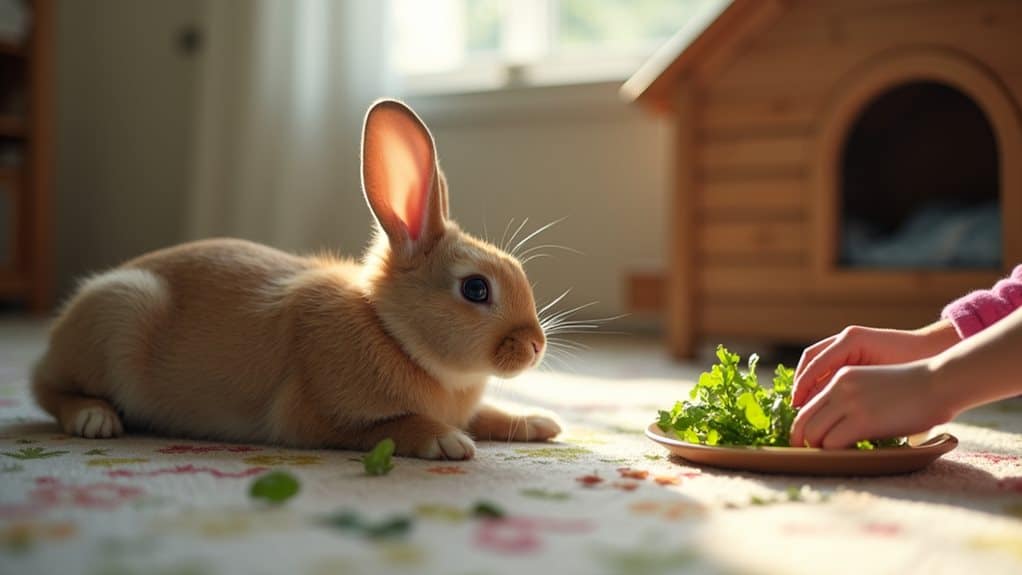
As your rabbit moves through adolescence, you’ll notice shifts in behavior that might seem like a rejection of the bond you’ve built.
Don’t take it personally! This is a natural phase where your furry friend is establishing independence.
Consistency is key for maintaining trust during this time.
Try simple trust building activities like sitting quietly near their space without demanding interaction. When they approach, offer gentle pets and treats as positive reinforcement.
Bonding exercises should happen on their terms—let them hop onto your lap rather than picking them up.
Create daily rituals they can count on, such as feeding at the same times or quiet reading sessions nearby.
Final Thoughts
You’ll survive this rollercoaster of bunny adolescence—even when your once-sweet pet seems possessed by hormonal demons! Remember, your rabbit isn’t plotting world domination; they’re just growing up. With patience thicker than a carrot patch and consistent boundaries, you’ll guide them through this challenging phase. Before you know it, your rebellious teenage rabbit will transform back into the loving companion you adore, with perhaps just a touch more personality.