Affiliate Disclaimer: This site is a participant in the Amazon Services LLC Associates Program, an affiliate advertising program designed to provide a means for sites to earn advertising fees by advertising and linking to Amazon.com. We are compensated for referring traffic and business to Amazon and other companies linked to on this site. We may also do this with other affiliate schemes
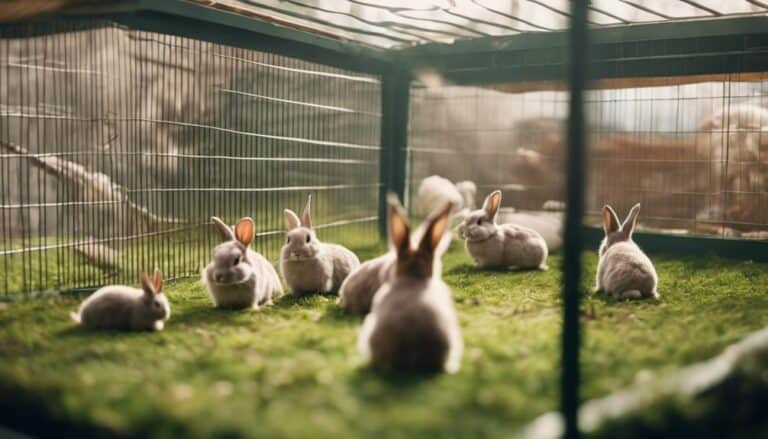
Responsible rabbit breeding requires you to prioritize genetic diversity, proper housing, and animal welfare. You’ll need to maintain detailed health records, provide spacious enclosures with enrichment, and keep temperatures between 60-70°F. Ethical breeders educate potential buyers about proper care, assess their readiness, and quarantine new arrivals for disease prevention. By partnering with other ethical breeders and focusing on sustainable practices, you’ll help preserve healthy bloodlines for generations to come.
The Current State of Rabbit Breeding Industry
While you might think rabbit breeding is a simple matter of nature taking its course, the industry today faces complex challenges that require our attention.
You’ll find that breeding regulations vary widely across regions, creating inconsistency in how breeders operate. Some areas have strict oversight, while others have minimal requirements.
Industry standards have evolved in recent years, with more focus on rabbit welfare and genetic diversity.
You’re likely to see more breeders adopting ethical practices like proper housing, nutritional guidelines, and responsible pairing to prevent hereditary issues.
Despite these improvements, you’ll still encounter operations that prioritize quantity over quality. The gap between responsible breeders and mass-production facilities continues to widen, highlighting the need for universal standards that everyone can follow.
Genetic Health Considerations and Disease Prevention
Speaking of better practices, genetic health represents a cornerstone of responsible rabbit breeding.
You’ll want to maintain genetic diversity in your breeding program, which means avoiding repetitive breeding of closely related rabbits. When you pair unrelated animals, you’re reducing the risk of inherited conditions that can cause suffering down the line.
Disease management isn’t just about treating sick rabbits—it’s about prevention first!
You should quarantine new arrivals for at least two weeks, keeping a watchful eye for snuffles, ear mites, or digestive issues. Regular health checks become your best friend in catching problems early.
Ethical Housing and Care Standards for Breeding Rabbits
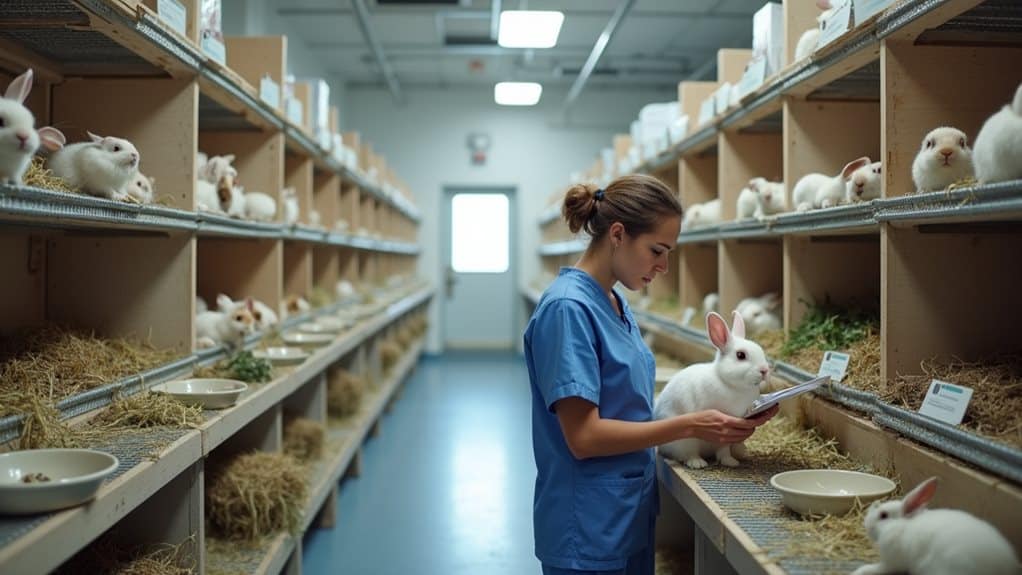
Three vital elements define ethical housing for breeding rabbits: space, comfort, and environmental enrichment.
When you’re raising rabbits, you’re responsible for their humane treatment at every stage of life. Your breeding does need cages large enough to accommodate nesting boxes and their growing litters, while bucks require sufficient room to move freely and express natural behaviors.
Temperature control is fundamental—rabbits thrive between 60-70°F and struggle in extreme heat.
You’ll want to provide proper ventilation without drafts, which can quickly lead to respiratory issues. Welfare standards also call for enrichment items like chew toys, tunnels, and platforms that satisfy their natural instincts.
Responsible Buyer Education and Adoption Practices
Because potential rabbit owners often underestimate the commitment involved, responsible breeders must prioritize education before finalizing any adoption.
You’ll find that ethical breeders provide extensive adoption resources covering housing, diet, and healthcare needs that extend beyond the cute bunny phase.
When you’re considering a rabbit, good breeders will assess your readiness rather than rushing a sale.
They’ll ask about your living situation, time availability, and knowledge of rabbit care.
This buyer awareness process isn’t meant to discourage you—it’s designed to create successful, lasting homes for their rabbits.
Building Sustainable Breeding Programs for Future Generations

When planning for the future of rabbit breeding, ethical breeders must establish sustainable programs that prioritize genetic diversity and rabbit health over simply producing more animals.
You’ll find that maintaining sustainable genetics isn’t merely good practice—it’s crucial for preventing hereditary diseases that can devastate future generations.
Consider creating partnerships with other ethical breeders to expand your breeding diversity.
You’re not only raising rabbits; you’re preserving bloodlines and guaranteeing these wonderful animals thrive for years to come.
Keep detailed records of lineage, health issues, and temperament traits to make informed breeding decisions.
Final Thoughts
You’re now at the crossroads of responsibility and compassion in rabbit breeding. Like tending a garden that will bloom for generations, your breeding practices shape the future of these animals. When you prioritize genetic health, ethical housing, and buyer education, you’re not only raising rabbits—you’re cultivating respect for life itself. Remember, responsible breeding isn’t merely good practice; it’s your legacy in the rabbit community.