Affiliate Disclaimer: This site is a participant in the Amazon Services LLC Associates Program, an affiliate advertising program designed to provide a means for sites to earn advertising fees by advertising and linking to Amazon.com. We are compensated for referring traffic and business to Amazon and other companies linked to on this site. We may also do this with other affiliate schemes
Rabbit pregnancy lasts 28-32 days, with subtle signs appearing around day 10-14. You’ll notice weight gain, increased water consumption, and nest-building behaviors. Provide extra nutrition (25-50% more feed) and introduce a nest box 3-5 days before kindling. Watch for fur-pulling, which signals imminent birth. After kindling, guarantee the doe has fresh water and extra food, and monitor kits for round bellies indicating successful nursing. The next sections will guide you through potential complications and emergency care protocols.
Recognizing the Signs of Pregnancy in Rabbits
Determining whether your rabbit is pregnant can be tricky, even for experienced breeders, since the early signs aren’t always obvious.
Your doe won’t immediately show pregnancy symptoms, but you’ll notice subtle changes in her behavior about a week after mating.
Watch for mood shifts—she might become territorial or unusually calm. Hormonal changes often cause does to dig frantically or create nests with hay and fur they’ve pulled from their dewlap.
You’ll also notice weight gain, especially around her abdomen which will feel firm when gently palpated.
The Rabbit Gestation Timeline: What to Expect
You’ll notice subtle changes in your rabbit’s behavior when she’s pregnant, from decreased activity to a rounder belly around day 10-14.
As your doe reaches the final week of her 28-32 day gestation, she’ll begin gathering hay in her mouth and searching for private spaces to build her nest.
Watch for fur-pulling behaviors about 3-5 days before kindling, when she’ll pluck soft fur from her dewlap and sides to line the warm, cozy nest for her soon-to-arrive kits.
Pregnancy Detection Signs
The rabbit’s body offers several reliable clues that can help confirm pregnancy, though these signs mightn’t appear immediately. Between days 10-14 after breeding, you’ll notice your doe’s belly becoming rounder and firmer to the touch.
Don’t fall for common pregnancy myths—rabbits don’t experience morning sickness like humans do!
By day 12, hormonal changes will cause your doe to become more territorial and possibly aggressive. She may start nesting behaviors around day 25, pulling fur from her dewlap to line her nest.
You might also observe her drinking more water and eating less hay.
For a definitive answer, your veterinarian can perform gentle palpation between days 10-14, feeling for marble-sized embryos in the uterus—a more reliable method than guessing.
Nesting Behavior Stages
While every pregnant doe follows her own unique timeline, most rabbits progress through similar nesting stages during their 28-32 day gestation period.
You’ll notice your doe’s nesting behavior intensify as her due date approaches. Understanding these stages helps you provide appropriate nesting materials based on her changing nesting preferences.
- Early Interest (Days 1-20): Your doe may show minimal nesting behavior but might rearrange her bedding occasionally.
- Material Gathering (Days 21-25): She’ll become more active, collecting hay, straw, or whatever nesting materials you provide.
- Nest Construction (Days 26-28): Watch as she builds a defined nest area, often in a corner of her enclosure.
- Hair Pulling (Days 28-32): In the final days, she’ll pull fur from her dewlap and sides to line the nest for warmth.
Nutritional Requirements for Pregnant Does
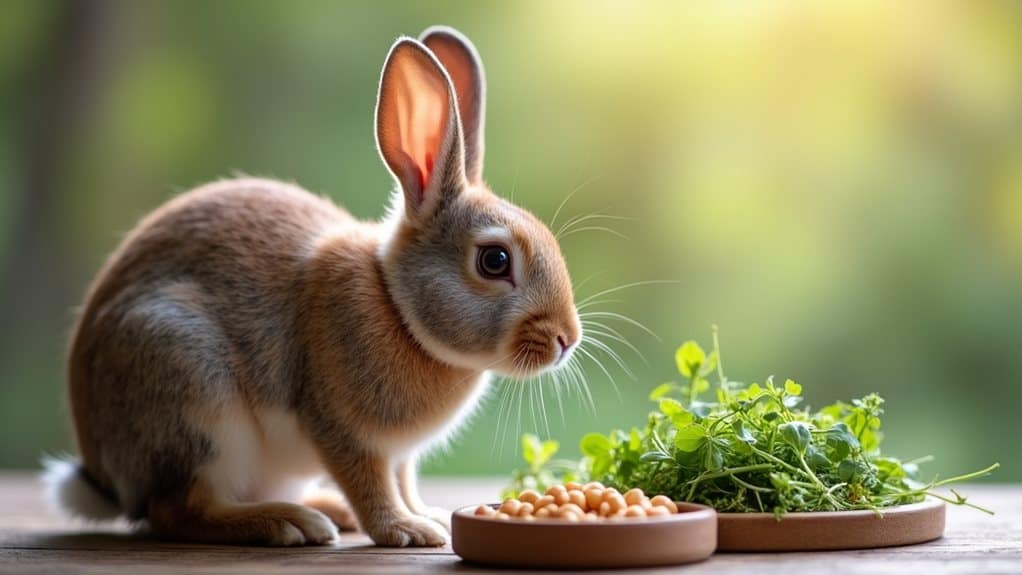
Your pregnant doe’s nutritional needs will shift dramatically, with calcium and protein requirements increasing to support both her health and her developing kits.
You’ll need to adjust her feed amounts gradually throughout pregnancy, typically increasing by 25-50% by the final week.
Proper nutrition during this critical time prevents complications like pregnancy toxemia and guarantees your doe has enough reserves for successful kindling and nursing.
Calcium and Protein Needs
Proper calcium and protein intake becomes crucial during a doe’s pregnancy, as these nutrients directly impact both maternal health and kit development.
You’ll need to monitor and adjust your pregnant rabbit’s diet to guarantee she receives adequate nutrition for herself and her growing kits.
- Offer calcium sources like dark leafy greens (kale, dandelion greens) and small amounts of alfalfa hay during late pregnancy
- Increase protein supplements gradually, aiming for 16-18% protein content in her overall diet
- Provide fresh, clean water at all times, as hydration helps with nutrient absorption
- Monitor weight and adjust portions accordingly—too much can be as harmful as too little
Feed Amount Adjustments
Beyond calcium and protein considerations, managing the overall feed amount becomes a key focus throughout your doe’s pregnancy process.
You’ll need to gradually increase feed quantity as her pregnancy progresses, but don’t rush this adjustment! Start with small increments to avoid digestive upset.
During the first three weeks, maintain her regular diet.
From week four onward, you’ll want to increase portions by about 10% every few days. By the final week, she should receive approximately 30-50% more feed than her pre-pregnancy amount.
Feeding frequency matters too!
While once-daily feeding works for non-pregnant rabbits, consider splitting your pregnant doe’s meals into 2-3 smaller portions throughout the day. This approach helps prevent overeating while guaranteeing she gets the sustained nutrition her developing kits need.
Preparing the Nest Box for Kindling
Three to five days before your doe’s expected kindling date, it’s time to introduce a properly prepared nest box. This vital step gives your rabbit time to arrange her nesting materials and feel comfortable in her birthing space. The nest box should be spacious enough for mom and her kits but cozy enough to retain warmth.
- Choose soft nest box materials like timothy hay, straw, or shredded paper—avoid cedar shavings which can cause respiratory issues.
- Place the box in the quietest corner of the hutch for an ideal nesting location.
- Make sure the box has low sides (3-4 inches) so mama can hop in and out easily.
- Add extra bedding material nearby—your doe will likely rearrange everything anyway!
Behavioral Changes During Pregnancy and Pre-Birth
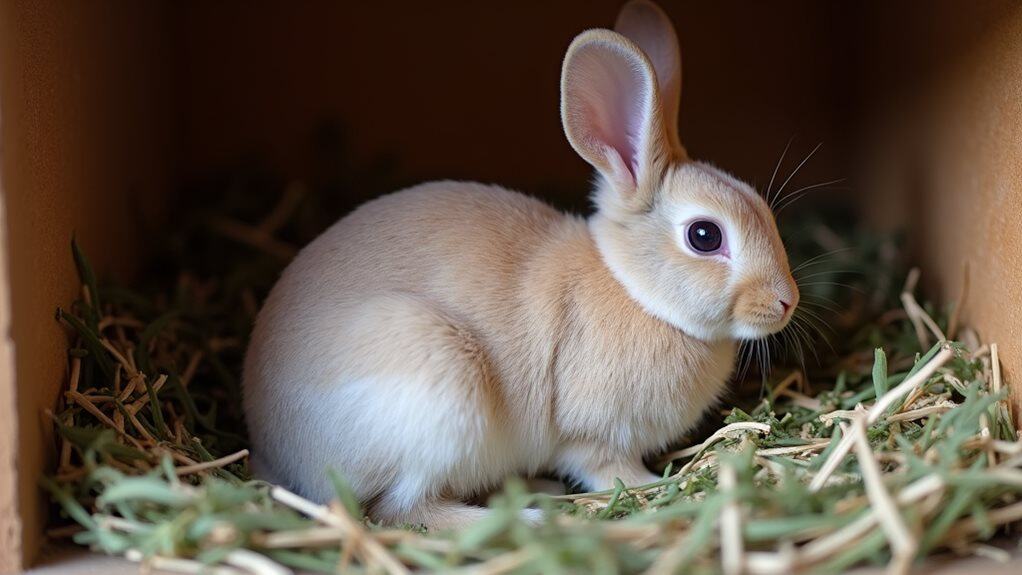
As your doe progresses through her pregnancy, you’ll notice several telltale behavioral changes that signal her approaching delivery date. Hormonal fluctuations often make her more territorial, and she might grunt or thump when you approach her cage.
Don’t take it personally—she’s just being protective!
Around day 28-30, watch for strong nesting instincts to emerge. Your normally neat doe may start pulling fur from her dewlap and sides, creating soft lining material.
She’ll become increasingly restless, rearranging bedding and hay in her nest box. Some does become surprisingly aggressive, while others seek more attention.
You’ll also notice decreased appetite about 24 hours before birth—a sure sign that kindling is imminent.
Keep disturbances to a minimum during this critical time.
The Kindling Process: What’s Normal vs. Concerning
When your doe begins the kindling process, you’ll want to recognize the difference between normal birth behaviors and concerning signs that require intervention. Most rabbits display strong maternal instincts and will complete the kindling process without any help from you. The typical kindling frequency lasts about 15-30 minutes, with kits arriving every few minutes.
- Normal behavior: Pulling fur, building a nest, and seeming restless 24-48 hours before delivery
- Concerning: Straining for more than 30 minutes without producing a kit
- Normal: Eating the afterbirth and cleaning kits immediately after birth
- Concerning: Ignoring kits or showing signs of distress like heavy breathing or lethargy
Trust your rabbit’s natural abilities, but don’t hesitate to call your vet if something seems off during the kindling process.
Immediate Post-Birth Care for Mother and Kits
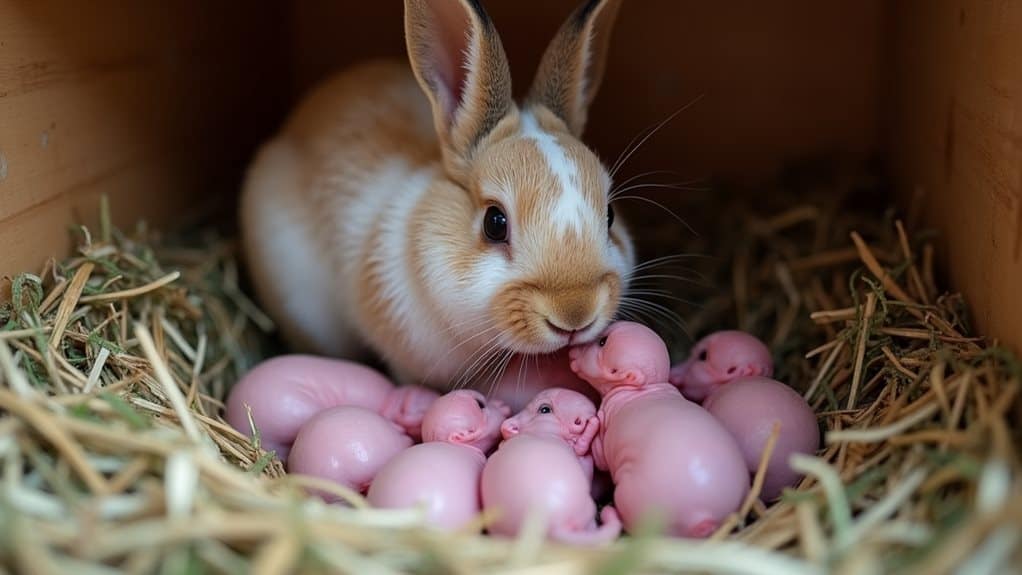
Once the kindling process is complete, your focus shifts to keeping both the mother and her newborn kits healthy and thriving.
The first 48 hours are critical for kit care, so check the nest box without disturbing it too much. Count the kits and remove any stillborn babies, which helps prevent infection and protects the living ones.
For maternal health, provide your doe with fresh water, high-quality hay, and extra pellets. She’s burning lots of calories producing milk!
Don’t be alarmed if she seems to ignore her babies—rabbits typically nurse just once or twice daily for only a few minutes. As long as the kits have round bellies and are warm in their nest, she’s doing her job perfectly.
Trust her natural instincts!
Common Complications and When to Seek Veterinary Help
Despite the natural process of rabbit kindling, complications can arise that require prompt attention or veterinary care.
You’ll need to monitor your doe closely during and after birth to catch any issues early.
- Dystocia (difficult birth) – If your doe strains for over 30 minutes without producing kits, or appears in distress, call your vet immediately.
- Retained kits or placentas – Watch for continued straining, lethargy, or bloody discharge after kindling seems complete.
- Mastitis – Red, hot, or painful mammary glands require veterinary help, as this infection can become serious quickly.
- Neglected kits – If the mother isn’t feeding or is harming her babies, you may need to intervene with hand-feeding or fostering.
Caring for Orphaned or Rejected Kits
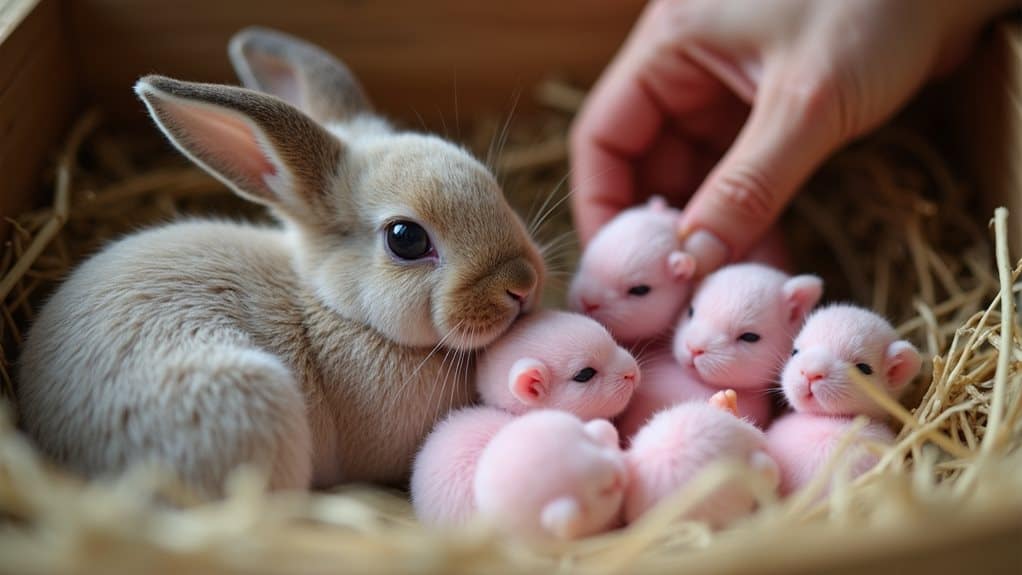
When you notice baby rabbits that aren’t being fed or cared for by their mother, you’ll need to act quickly to save their lives.
You’ll want to start with an emergency feeding plan using kitten formula or a specialized rabbit milk replacer, which must be given every few hours around the clock.
It’s also essential to keep orphaned kits warm (about 85-90°F for newborns) in a draft-free container with soft bedding like flannel or fleece, as they can’t regulate their own body temperature until they’re about two weeks old.
Identify Abandoned Kits
How can you tell if a mother rabbit has abandoned her babies? Mother rabbits typically feed their young only once or twice a day, usually at dawn or dusk, which can make kit identification techniques challenging. You’ll need to observe carefully to determine if intervention is necessary.
Look for these abandoned kit signs:
- Kits appear thin, wrinkled, or have sunken bellies (healthy kits should look plump)
- The nest remains undisturbed for more than 24 hours
- Kits are scattered outside the nest rather than huddled together
- They’re unusually vocal, making distress sounds consistently
If you suspect abandonment, try placing string across the nest entrance and check if it’s disturbed after several hours.
Don’t rush to judgment—mama rabbits are often more attentive than they appear!
Emergency Feeding Protocol
Once you’ve confirmed the mother rabbit has truly abandoned her kits, implementing an emergency feeding protocol becomes your top priority.
These tiny lives depend entirely on your quick action and proper crisis management skills.
Purchase kitten milk replacer (never cow’s milk) from your local pet store, and feed using a small syringe or eyedropper.
Warm the formula to body temperature and feed each kit twice daily, about 2-3cc per feeding during their first week.
You’ll need to stimulate elimination after feeding by gently wiping their genital area with a warm, damp cloth—mimicking their mother’s natural behavior.
Keep the kits warm at all times in a quiet, draft-free space.
While emergency feeding is challenging, don’t get discouraged!
With patience and consistent care, you can successfully raise these delicate babies until they’re ready for solid food.
Temperature and Housing
Maintaining proper temperature is absolutely critical for orphaned rabbit kits, as these tiny creatures can’t regulate their body heat during their first weeks of life.
Creating a proper housing environment will dramatically increase their chances of survival when they don’t have their mother’s warmth.
- Keep the nesting box temperature between 85-90°F for the first week, gradually reducing to 75°F by week three
- Use a heating pad set on low under half of the container to allow kits to move away if too warm
- Line the housing with soft materials like flannel or cotton, avoiding towels with loops that can trap tiny paws
- Check temperature regulation frequently, as overheating can be just as dangerous as chilling
Supporting the Nursing Mother During Early Kit Development
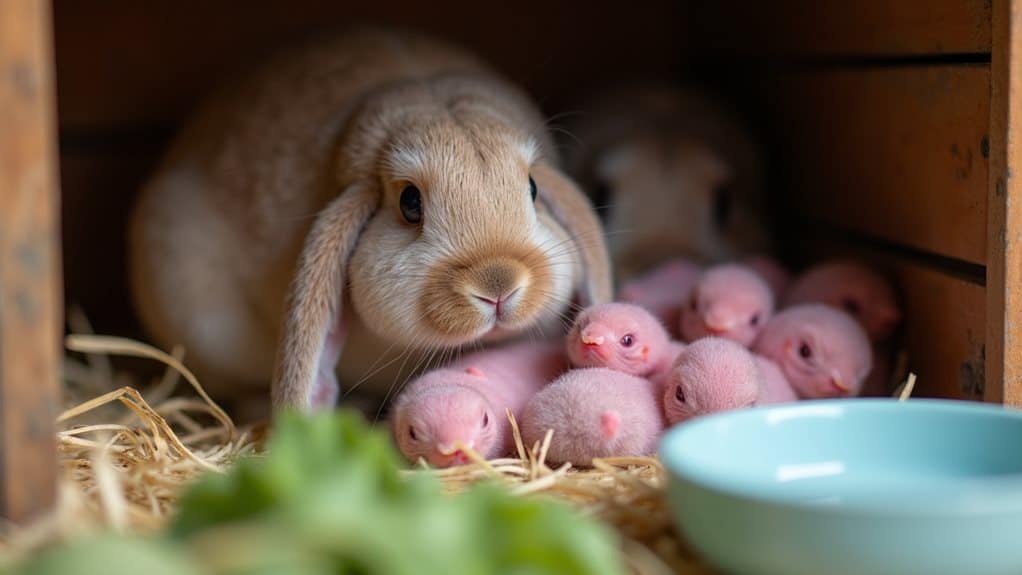
After successfully kindling her litter, a nursing mother rabbit requires special attention and care during the critical early weeks of kit development.
You’ll want to provide fresh nesting materials daily, which helps maintain cleanliness and supports bonding activities between mother and babies. The doe will spend considerable time with her kits, though she’ll only nurse them briefly once or twice daily—this is completely normal!
Ensure your nursing mother has constant access to fresh water and high-quality feed, as her nutritional needs increase dramatically while producing milk.
Offer alfalfa hay along with her regular timothy hay for added calcium and protein.
Keep the nestbox in a quiet area where she feels secure, and resist the urge to handle the kits too frequently during the first week.
Your patience now helps establish a strong foundation for healthy kit development.
Final Thoughts
You’re now equipped to steer through the maze of rabbit pregnancy with confidence. Like a seasoned gardener tending to new seedlings, you’ll nurture your doe and her kits through this remarkable expedition. Remember, your attentiveness during pregnancy, kindling, and early development creates the foundation for healthy bunnies. With proper preparation and care, you’ll transform this potentially challenging time into a rewarding experience for both you and your furry family.