Affiliate Disclaimer: This site is a participant in the Amazon Services LLC Associates Program, an affiliate advertising program designed to provide a means for sites to earn advertising fees by advertising and linking to Amazon.com. We are compensated for referring traffic and business to Amazon and other companies linked to on this site. We may also do this with other affiliate schemes
While traditional vet care is vital for your rabbit’s health, some complementary therapies can offer additional support. Massage therapy can help aging bunnies with mobility issues, and certain nutritional supplements may support digestive health. However, approach alternatives like vital oils, homeopathy, and herbal remedies with caution—many lack scientific evidence and could harm your rabbit’s sensitive system. Always consult with an exotic pet veterinarian before trying any new therapy for your furry friend. Discover which safe options might benefit your bunny’s unique needs.
Herbal Remedies for Common Rabbit Ailments
While many online sources suggest herbal remedies for rabbit ailments, it’s important to understand that most aren’t scientifically proven and could actually harm your furry friend.
Before trying any herbal applications on your rabbit, always consult with an exotic pet veterinarian first.
You might see claims about chamomile for digestive issues or echinacea for immune support, but these natural remedies haven’t been tested rigorously in rabbits.
What works for humans or even dogs can be toxic to your bunny’s sensitive system. Their unique metabolism processes compounds differently than other animals.
If your rabbit is showing any signs of illness—decreased appetite, lethargy, or unusual droppings—skip the home remedies and head straight to the vet.
Your bunny’s health is too precious to experiment with unproven treatments!
Acupuncture and Acupressure Techniques
Despite what some alternative medicine websites claim, acupuncture and acupressure for rabbits aren’t supported by substantial scientific evidence.
While some rabbit owners report positive experiences, you should approach these treatments with caution and realistic expectations.
Practitioners who offer these services often suggest that stimulating specific acupuncture points can relieve pain or improve circulation in your furry friend. They’ll tell you about acupressure benefits like reduced stress or improved digestion.
The truth is, we just don’t have enough research to back these claims up.
If you’re curious about trying these methods, always consult with your regular veterinarian first. Your bunny’s health is too important to risk on unproven therapies!
Traditional veterinary care should remain your primary approach, with any complementary treatments serving as potential additions, not replacements.
Massage Therapy and Physical Rehabilitation
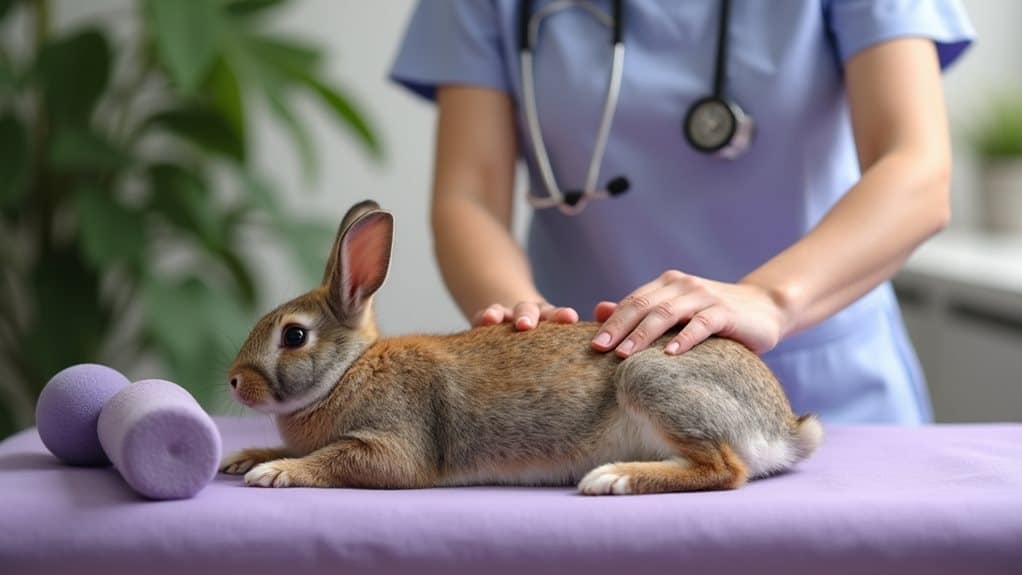
Massage therapy can bring remarkable relief to your aging rabbit, easing arthritis pain and improving mobility in their golden years.
You’ll find that gentle, proper handling is essential when performing these techniques, as rabbits have delicate spines and can be injured if restrained incorrectly.
Learning safe massage methods from a qualified exotic pet therapist will help you connect with your furry friend while providing therapeutic benefits that improve their quality of life.
Benefits for Aging Rabbits
As your rabbit enters their golden years, gentle therapeutic approaches can greatly improve their quality of life and mobility.
Regular massage sessions can reduce joint stiffness and ease the discomfort that often accompanies aging. You’ll notice your furry friend becoming more active and responsive after consistent geriatric care routines.
When providing mobility support, focus on gentle stretches that target their hindquarters, where rabbits typically experience age-related weakness first.
Even five minutes of daily therapy can make a remarkable difference! Create a calm environment for these sessions—perhaps with soft music and dim lighting—to help your bunny relax completely.
Safe Handling Techniques
When approaching your rabbit for therapeutic handling, proper technique becomes the foundation for successful treatment and trust-building.
Always move slowly and speak softly before touching your furry friend. This reduces handling stress and prevents triggering their natural flight response.
To create safe interactions, place one hand under your rabbit’s chest and the other supporting their hindquarters.
Never grab them by the ears or scruff—this causes pain and destroys trust. Instead, gently stroke along their back to establish comfort before attempting any massage techniques.
Nutritional Supplements and Dietary Approaches
You’ll find that natural digestive support supplements can greatly improve your rabbit’s gut health, preventing common problems like GI stasis.
Herbal immune boosters, including echinacea and astragalus, offer a gentle way to strengthen your bunny’s resistance to seasonal illnesses.
Crucial fatty supplements, particularly those rich in omega-3s, contribute to healthier skin, shinier fur, and reduced inflammation in your rabbit’s body.
Natural Digestive Support
Why do rabbits need special attention when it comes to their digestive health? Their unique digestive systems are incredibly sensitive and can quickly spiral into dangerous conditions when imbalanced.
Your bunny’s gut health directly impacts their overall wellness and happiness.
Proper fiber sources are absolutely crucial for keeping your rabbit’s digestive system moving. Timothy hay should make up about 80% of your bunny’s diet, supplemented with leafy greens and limited pellets.
When your rabbit experiences mild digestive upset, probiotic use can help restore balance to their gut flora. You’ll find specialized rabbit probiotics at pet stores, but plain unsweetened yogurt (in tiny amounts) can work in a pinch.
Herbal Immune Boosters
Although rabbits naturally have robust immune systems, they can benefit tremendously from herbal supplements that improve their body’s natural defenses.
When considering herbal support for your furry friend, always prioritize herbal safety by researching thoroughly or consulting with an exotic pet veterinarian.
Echinacea, astragalus, and elderberry extracts can give your bunny’s immune health a gentle boost during seasonal changes or stressful periods.
You’ll want to introduce these herbs gradually—just a tiny amount mixed with their favorite greens!
Many rabbit owners swear by calendula for its immune-supporting properties, and it’s something bunnies actually enjoy eating.
Essential Fatty Supplements
Beyond herbal remedies, proper nutrition plays a fundamental role in rabbit health maintenance. Your furry friend’s diet can benefit from crucial fatty supplements that support their immune system and coat health.
Unlike what some believe, you shouldn’t use crucial oil blends directly on rabbits, as they can be toxic when ingested during grooming. Instead, focus on natural fatty acid sources that are safe for bunnies.
Flaxseeds offer omega-3 fatty acids that promote healthy skin and reduce inflammation. A tiny sprinkle of chia seeds (no more than 1/4 teaspoon daily) can also boost their nutrition.
Remember, your rabbit’s digestive system is delicate—you’ll want to introduce any supplement gradually. Watch for changes in their droppings, which will tell you how they’re adjusting.
Always consult your exotic vet before adding anything new to their diet.
Aromatherapy and Essential Oil Safety for Rabbits
Despite their popularity in human wellness routines, vital oils and aromatherapy can pose serious risks to your rabbit’s health.
Rabbits have incredibly sensitive respiratory systems that can be overwhelmed by even diluted aromatherapy blends. Their small bodies process these concentrated plant compounds differently than humans do, often with harmful results.
Never use key oil diffusers in rooms where your rabbit spends time, even with proper key oil dilution. What smells pleasant to you could be causing your furry friend respiratory distress without obvious symptoms until it’s too late.
Many common oils like tea tree, eucalyptus, and citrus are particularly toxic to rabbits.
If you’re looking for natural ways to improve your rabbit’s environment, opt instead for rabbit-safe fresh herbs like basil or mint in their play area.
Homeopathic Treatments and Their Applications
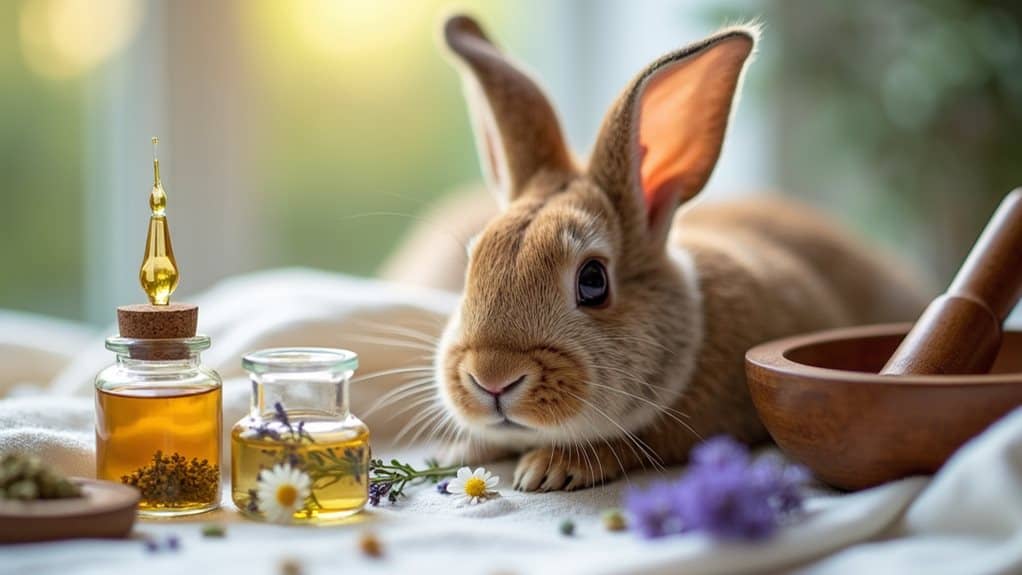
Unlike the aromatic oils that rabbits should avoid, homeopathic treatments offer a different approach to rabbit wellness—though they warrant careful consideration. The core homeopathy principles suggest that “like cures like” using highly diluted substances, but there’s no scientific evidence supporting these methods for rabbits.
If you’re curious about remedy selection for your furry friend, it’s vital to remember that what works for humans doesn’t necessarily translate to bunny health. Your little hopper deserves treatments backed by veterinary science!
While some rabbit owners swear by homeopathic solutions for minor issues like stress or digestive troubles, always consult your exotic vet before trying anything new. Your bunny’s twitching nose and perky ears deserve the best care possible—one that combines your loving attention with proven medical approaches.
Creating an Integrated Wellness Plan With Your Veterinarian
When developing a health strategy for your rabbit, partnering with a qualified veterinarian creates the foundation for thorough care.
While you’ve explored complementary approaches, integrated care means combining conventional medicine with alternative therapies for peak rabbit wellness. Your vet’s expertise is invaluable, even when incorporating natural remedies into your bunny’s routine.
For successful veterinary collaboration, consider these key steps:
- Bring detailed records of any alternative treatments you’re using.
- Ask your vet about potential interactions between conventional and complementary therapies.
- Develop a written wellness plan that includes both approaches.
Don’t hesitate to discuss your interest in holistic options—many modern vets are open to integrated approaches.
Final Thoughts
You’ll find that complementary therapies, when used responsibly, can improve your rabbit’s quality of life. Trust your instincts, consult your vet, and observe your bunny’s responses. Whether you’re trying herbal remedies, acupressure, or massage techniques, remember that your rabbit’s well-being comes first. Integrate traditional care with alternative approaches, monitor progress carefully, and adjust as needed. Your furry friend deserves both conventional wisdom and thoughtful exploration of gentle alternatives.