
Affiliate Disclaimer: This site is a participant in the Amazon Services LLC Associates Program, an affiliate advertising program designed to provide a means for sites to earn advertising fees by advertising and linking to Amazon.com. We are compensated for referring traffic and business to Amazon and other companies linked to on this site. We may also do this with other affiliate schemes
Caring for baby rabbits requires careful assessment before intervention. If you find orphaned bunnies, create a nest using a shallow box with soft towels and maintain temperatures of 85-90°F. Feed them specialized rabbit milk replacer every 3-4 hours, and introduce solid foods by three weeks. Handle them gently for short periods to build trust, and watch for health issues like lethargy or diarrhea. The key to successful bunny care lies in understanding their developmental stages and needs.
When to Intervene: Assessing if Baby Rabbits Need Human Care
How do you know when baby rabbits truly need your help?
It’s essential to observe from a distance first, as mother rabbits naturally visit their nests only once or twice daily, usually at dawn and dusk. This limited contact is normal parental instinct, not abandonment.
Look for these behavioral indicators that suggest intervention is necessary:
- if the babies are scattered outside the nest,
- feel cold to the touch,
- or are crying loudly.
A sunken, wrinkled appearance indicates dehydration requiring immediate attention.
Creating the Optimal Nesting Environment for Baby Rabbits
When you’ve determined that baby rabbits need your help, the next step is preparing the right home for them. Create a cozy nest using a small, shallow box lined with soft nesting materials like clean cotton towels or fleece.
Avoid using materials with loose fibers, as these can entangle tiny paws or be accidentally ingested.
Temperature control is absolutely critical for these vulnerable little ones. Maintain a consistent warmth of 85-90°F for the first week, gradually decreasing to about 75°F by week three.
You can use a heating pad set on low beneath half of the container, allowing babies to move away if they get too warm. Always monitor the temperature with a thermometer—baby rabbits can’t regulate their body heat effectively and depend on you for their survival!
Proper Feeding Techniques and Nutrition for Orphaned Bunnies
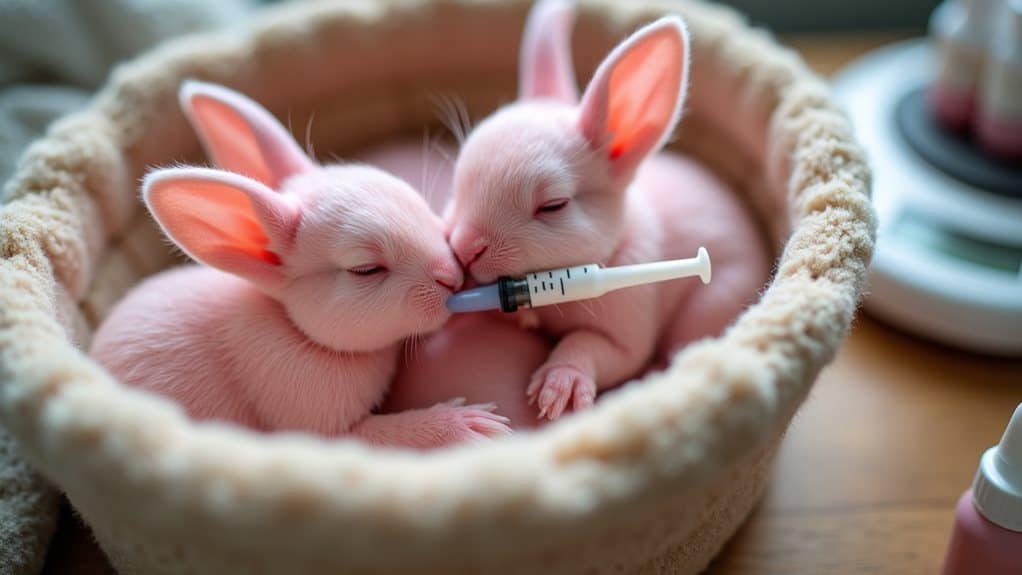
Because orphaned baby rabbits require specialized care, feeding them correctly becomes your most critical responsibility.
You’ll need to use special rabbit milk replacer (never cow’s milk) administered through a small syringe or eyedropper. Establish consistent feeding schedules, offering formula every 3-4 hours during the day and at least once overnight for bunnies under two weeks old.
As they grow, you’ll gradually decrease feeding frequency while introducing nutritional supplements. Around three weeks, begin offering alfalfa hay and pellets soaked in warm water.
Don’t rush weaning—it’s a delicate process! Monitor their weight daily; healthy kits gain steadily. Watch for rounded tummies after feeding, but not bloating, which signals trouble.
Handling, Socialization, and Developmental Milestones
Proper handling of baby rabbits demands gentle care, as these delicate creatures need special attention during their critical developmental stages.
You’ll notice your baby bunnies opening their eyes around 10 days old and becoming more curious about their surroundings. Bonding techniques should begin early, with short, gentle handling sessions that gradually increase as they grow.
- Hold them close to your body to make them feel secure and build trust
- Introduce playtime activities on the floor once they’re hopping confidently
- Speak softly when near them to create positive associations with your voice
- Observe their unique personalities emerge—some will be bold, others shy
Recognizing Health Problems and Emergency Care
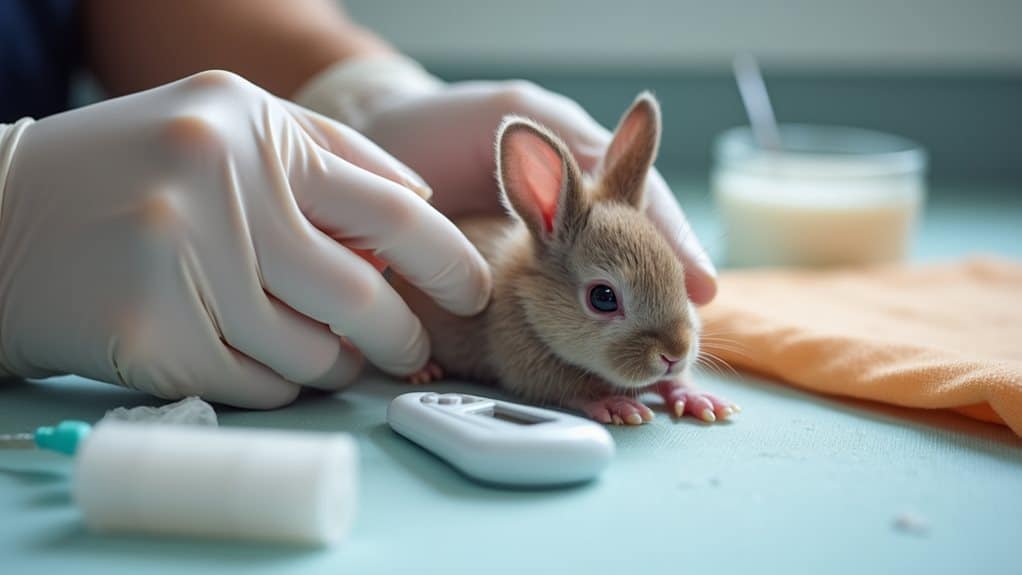
Spotting health issues in baby rabbits requires vigilant attention since these tiny creatures can decline rapidly if problems go unnoticed.
Watch for concerning health signs like lethargy, refusal to eat, unusual posture, or labored breathing. If you notice crusty eyes, diarrhea, or a bloated tummy, it’s time to act quickly.
Always keep emergency procedures ready: have your vet’s number handy and a small carrier available for transport.
You’ll need to maintain your little one’s body temperature during emergencies, so keep a warm water bottle wrapped in a soft towel nearby.
Don’t try to force-feed a severely ill kit—this can make things worse! Instead, gently wrap them in a soft towel and contact your exotic pet veterinarian immediately.
Quick action often makes all the difference.
Final Thoughts
As you begin your bunny-raising adventure, remember that these tiny cotton-tailed creatures are as delicate as they are resilient. With proper nutrition, gentle handling, and a watchful eye, you’ll guide them from vulnerable kits to vibrant rabbits. Trust your instincts, but don’t hesitate to call a vet when you’re unsure. You’re more than caring for rabbits—you’re nurturing little heartbeats that will hop into your heart forever.