Affiliate Disclaimer: This site is a participant in the Amazon Services LLC Associates Program, an affiliate advertising program designed to provide a means for sites to earn advertising fees by advertising and linking to Amazon.com. We are compensated for referring traffic and business to Amazon and other companies linked to on this site. We may also do this with other affiliate schemes
Flemish Giants need spacious housing (minimum 4’x2’x2′) with solid flooring and deep bedding to protect their joints. You’ll want to provide unlimited timothy hay, limited pellets (¼-½ cup daily), and fresh vegetables (1-2 cups daily). Their large size demands daily exercise to maintain muscle tone and prevent obesity—try agility training with tunnels and platforms. Don’t forget mental stimulation through puzzle toys and at least 30 minutes of social interaction daily. These gentle giants thrive with proper care customized to their magnificent proportions.
The Magnificent Scale of Flemish Giants
Giants in the rabbit world, Flemish Giants certainly live up to their name with their impressive stature. You’ll be amazed when you first meet one of these magnificent creatures, often weighing between 15-22 pounds and stretching over 2.5 feet long when fully grown!
Despite their intimidating size, these gentle giants are known for their docile Flemish temperament, making them wonderful companions for families.
The giant breed characteristics include not only their size, but also their distinctive arched back and broad, muscular bodies. You’ll notice their ears stand upright and can reach nearly 8 inches in length.
Don’t let their size fool you—they’re basically the teddy bears of the rabbit world, preferring cuddles to confrontation. Their calm nature belies their impressive dimensions.
Creating an Appropriately Sized Living Environment
When considering the impressive dimensions of Flemish Giants, you’ll quickly realize standard rabbit hutches simply won’t cut it.
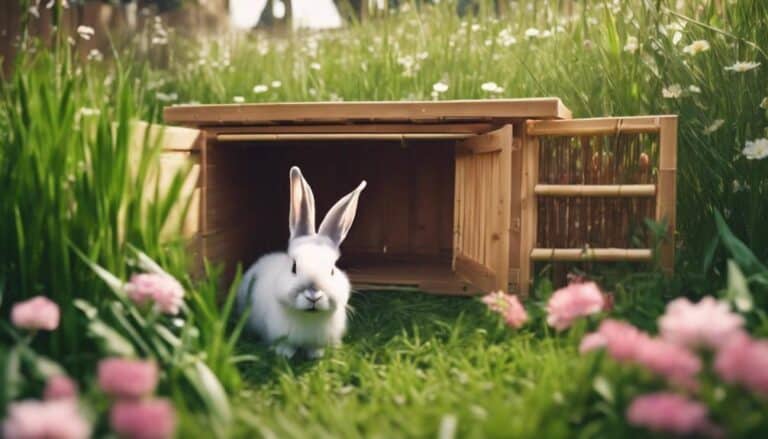
These gentle giants need considerably more room to stretch, hop, and live comfortably. At minimum, your Flemish friend requires a living area of 4′ x 2′ x 2′, though bigger is always better!
The space requirements for these rabbits shouldn’t be underestimated—they need room to stand fully upright on their hind legs without hitting their heads.
Habitat enrichment is equally important; include multiple levels, hiding spots, and sturdy toys that won’t be easily destroyed by these powerful bunnies.
Bedding and Flooring Considerations for Giant Breeds

You’ll need to provide your Flemish Giant with proper flooring that won’t harm their sensitive paws, as wire bottoms can cause painful foot injuries in these heavy rabbits.
For ideal comfort, choose solid flooring options like untreated wood, ceramic tiles, or thick plastic mats that distribute their substantial weight evenly.
Your giant bunny will also appreciate deep bedding—at least 3-4 inches of paper-based or straw bedding—which helps cushion their joints and prevents pressure sores that these large breeds are particularly prone to developing.
Wire-Free Flooring Options
Flemish Giants require special flooring considerations because their large size makes them particularly susceptible to painful foot conditions like sore hocks.
When selecting wireless flooring options for these gentle giants, you’ll want to prioritize comfort and support above all else.
Solid flooring materials like vinyl, cork, or rubber mats provide excellent cushioning while being easy to clean. Many owners find success with layering approaches – placing fleece blankets over foam mats creates a comfortable surface that’s gentle on sensitive paws.
Wood platforms covered with washable rugs also work wonderfully.
Whatever option you choose, make sure it’s thick enough to support your rabbit’s substantial weight. Your Flemish Giant will thank you with happy hops and fewer health issues!
Remember to change or clean these surfaces regularly, as proper hygiene prevents additional foot problems.
Bedding Depth Requirements
The right bedding depth makes all the difference for your Flemish Giant’s comfort and health. Your rabbit needs at least 3-4 inches of proper bedding to protect their large bodies from pressure sores and joint pain.
Different bedding types offer varying levels of cushioning and absorption.
When selecting bedding materials for your gentle giant, consider these key factors:
- Soft paper-based bedding absorbs moisture while keeping paws dry
- Kiln-dried pine shavings provide excellent odor control (avoid cedar!)
- Straw offers thermal insulation for cooler environments
- Hemp bedding combines superior absorption with minimal dust
- Fleece liners work well with a moisture-wicking layer underneath
You’ll need to change bedding more frequently for Flemish Giants than smaller breeds due to their larger waste production.
Your bunny will thank you!
Nutritional Requirements for Healthy Growth
Providing proper nutrition for your Flemish Giant rabbit is essential for supporting their extraordinary growth and maintaining ideal health throughout their life.
These gentle giants need a balanced diet that emphasizes nutritional diversity, with high-quality timothy hay forming the foundation (about 70% of their diet).
You’ll want to establish consistent feeding schedules, typically offering unlimited hay, limited pellets (1/4 to 1/2 cup per day), and fresh vegetables (1-2 cups daily).
Unlike smaller breeds, Flemish Giants require more calories but in proper proportion to avoid obesity.
Don’t forget to include dark leafy greens like kale and romaine, and occasional treats like berries or carrots.
Fresh water is non-negotiable—these big bunnies drink more than you might expect!
With their size comes specific needs, but you’ll soon master their nutritional requirements.
Balanced Diet Planning to Prevent Health Issues

To keep your Flemish Giant thriving, you’ll need to balance their diet with essential nutrients like fiber, protein, and vitamins while monitoring their weight carefully.
You can prevent common health issues by adjusting hay-to-pellet ratios as they age, guaranteeing they maintain their ideal body condition.
Regular weigh-ins and body checks will help you catch potential problems early, allowing you to modify their diet before obesity or malnutrition affects their mobility and overall health.
Crucial Nutrients Guide
Because Flemish Giants have specific nutritional requirements due to their massive size, understanding these essential nutrients becomes fundamental for preventing common health problems.
You’ll need to provide a mix of fiber, protein, vitamins, and minerals to keep your gentle giant thriving. The best nutrient sources include fresh hay, leafy greens, and specialized rabbit pellets.
Don’t worry—you won’t need many dietary supplements if you’re offering a well-rounded diet!
Here’s what your Flemish Giant absolutely needs:
- Fresh timothy hay (available 24/7) for digestive health
- Dark leafy greens like romaine and kale (about 1 cup per 5 pounds daily)
- High-quality rabbit pellets (limited to 1/4 cup per 6 pounds)
- Fresh, clean water (changed twice daily)
- Occasional treats like berries or carrots (thumbnail-sized portions)
Weight Management Tips
Weight management stands as one of the most critical aspects of Flemish Giant care, since these massive rabbits can quickly develop obesity when their diet isn’t properly monitored. Your gentle giant needs careful dietary restrictions to maintain a healthy weight.
Weigh your rabbit monthly to track changes, and adjust portions accordingly. Remember, a healthy Flemish Giant should feel firm, not squishy, when you gently run your hands along their sides. You shouldn’t feel sharp bones, nor should you struggle to feel the ribcage at all.
Limit treats to just 5% of their daily diet, and never feed sugary foods like cookies or cereal.
When your rabbit maintains proper weight, you’ll avoid costly health problems like arthritis, heart disease, and mobility issues. Exercise combined with smart feeding creates the perfect weight management strategy!
Exercise Routines for Optimal Muscle Development
Flemish Giant rabbits benefit from daily exercise that supports their natural behaviors and physical health. Your gentle giant needs dedicated activity time to maintain proper muscle tone and prevent obesity.
Incorporating stretching exercises and agility training will keep your bunny’s massive frame limber and strong.
Create a stimulating exercise routine with these activities:
- Set up a mini obstacle course with tunnels and low hurdles for agility training
- Provide boxes and platforms of varying heights for jumping practice
- Scatter treats around a safe play area to encourage natural foraging movements
- Offer toys that require pushing or tugging to build shoulder muscles
- Schedule supervised outdoor time in a secure pen for running and hopping
You’ll notice improved mood and health when your Flemish Giant enjoys regular exercise!
Enrichment Activities for Mental Stimulation

Physical exercise is just one part of keeping your Flemish Giant happy and healthy—their impressive brains need regular workouts too!
These intelligent rabbits thrive when given puzzles and challenges that stimulate their natural problem-solving abilities. Try hiding treats in cardboard tubes or specialized puzzle toys to encourage foraging behaviors.
Social interaction is essential for your giant bunny’s mental wellbeing. Spend at least 30 minutes daily engaging with your rabbit through gentle petting and talking.
When you’re busy, provide sensory stimulation through different textures—try placing various safe fabrics, untreated woods, and cardboard in their play area.
Rotate toys weekly to maintain curiosity and prevent boredom. Remember, a mentally stimulated Flemish Giant is less likely to develop destructive behaviors like excessive chewing or digging.
Your efforts will reward you with a content, well-adjusted companion!
Monitoring Physical Health in Large Rabbit Breeds
Because of their impressive size and unique physiology, giant rabbit breeds require special attention to their health needs.
You’ll need to establish a regular health monitoring routine for your Flemish Giant to catch potential issues early. Weight assessment is particularly vital, as these rabbits can rapidly gain unhealthy pounds that strain their joints and organs.
- Check their ears weekly for signs of mites or infection – clean, pink inner ears mean a happy bunny.
- Run your hands along their body to feel for lumps or sore spots that might be hidden under their thick coat.
- Watch their droppings daily – changes can signal digestive problems.
- Monitor their teeth monthly for proper alignment and growth.
- Observe their mobility – any limping or reluctance to move needs immediate attention.
Final Thoughts
Your gentle giant isn’t just a pet—they’re a symbol of boundless joy waiting to hop into your heart. By meeting their housing, dietary, and exercise needs, you’re nurturing more than a rabbit; you’re building a relationship that will flourish for years. Remember, the spacious home you create for them mirrors the room they’ll make in your life—vast, comfortable, and filled with shared adventures.