Affiliate Disclaimer: This site is a participant in the Amazon Services LLC Associates Program, an affiliate advertising program designed to provide a means for sites to earn advertising fees by advertising and linking to Amazon.com. We are compensated for referring traffic and business to Amazon and other companies linked to on this site. We may also do this with other affiliate schemes
As your rabbit ages, you’ll need to adapt their environment for comfort and mobility. Create non-slip surfaces with ramps for easier navigation, adjust their diet with softer hay varieties, and maintain ideal temperatures between 65-75°F. Don’t forget weekly grooming sessions with soft brushes and enrichment activities that require minimal movement. Establish consistent routines while remaining flexible to accommodate changing energy levels. These simple adjustments will transform your senior bunny’s golden years into a time of continued joy and comfort.
Recognizing the Signs of an Aging Rabbit
As your bunny hops into its golden years, you’ll notice subtle changes that signal the aging process. Your once-energetic companion might move more slowly, sleep longer, or show less interest in playtime. These behavioral changes aren’t necessarily concerning—they’re natural parts of aging.
You might observe your senior rabbit grooming less thoroughly, resulting in a slightly unkempt appearance. Their food preferences may shift, and they might drink more water than before. Weight changes, either loss or gain, are common aging indicators too.
Regular veterinary checkups become even more essential during this life stage. Your vet can spot early signs of age-related conditions before they become serious problems.
Don’t dismiss new behaviors as “just getting old”—many changes can be managed with proper care, keeping your elderly bunny comfortable and happy.
Creating a Mobility-Friendly Living Space
When your rabbit enters its senior years, mobility challenges often become a primary concern.
You’ll need to adapt their living space to accommodate stiff joints and reduced agility. Start by replacing wire-bottom cages with solid, non-slip surfaces that provide stable footing and prevent painful pressure on aging paws.
Consider adding mobility aids like ramps with gentle inclines to help your bunny access favorite spots without jumping.
Make certain all safe surfaces have good traction—fleece blankets or rubber mats work wonderfully. Keep food, water, and litter boxes easily accessible on the ground level, and create cozy resting areas throughout their space.
Dietary Adjustments for Senior Bunnies

As your bunny enters their golden years, you’ll need to adjust their diet to match their changing nutritional needs.
You can start by reducing their overall calorie intake, since senior rabbits tend to be less active but still require vital nutrients for health.
Consider introducing softer hay varieties that are easier to chew and digest, while adding joint-supporting supplements like glucosamine to help maintain mobility and comfort in your aging companion.
Reduced Calorie Requirements
Unlike younger rabbits who burn through calories at lightning speed, senior bunnies typically need fewer calories as their metabolism naturally slows down.
You’ll need to adjust your feeding approach to prevent weight gain, which can be particularly problematic for older rabbits with already decreased mobility. Implementing calorie tracking can help you monitor your bunny’s intake and make necessary adjustments.
Here are three key strategies for managing your senior rabbit’s calories:
- Reduce pellet portions by 25-30%, replacing with additional hay
- Create consistent feeding schedules with smaller, more frequent meals
- Weigh your rabbit weekly to track changes and adjust accordingly
Softer Hay Options
Senior rabbits often struggle with dental issues that make chewing tough hay varieties painful and difficult.
You’ll want to contemplate softer hay benefits for your aging bunny companion. Orchard grass and meadow hay offer excellent hay texture alternatives that are easier on your senior’s teeth and jaws while still providing necessary fiber.
You might notice your older rabbit leaving behind the coarser timothy hay they once enjoyed.
Don’t worry! Switching to second-cut timothy, which is naturally softer, can make mealtime comfortable again.
Many rabbit parents find that mixing different soft varieties creates an appealing buffet that encourages their senior bunnies to maintain proper eating habits.
Joint-Supporting Supplements
Beyond softer hay options, your senior rabbit’s diet may need additional support for aging joints. As your fluffy friend hops into their golden years, you’ll notice they might move a bit slower or struggle with mobility.
That’s when joint-supporting supplements can make a world of difference!
Here are three excellent supplement types to evaluate for your aging bunny’s joint health:
- Glucosamine supplements – These help rebuild cartilage and improve mobility
- Omega-3 fatty acids – Reduce inflammation and support overall joint function
- MSM (Methylsulfonylmethane) – Decreases pain and swelling in arthritic joints
Always consult your exotic vet before adding any supplements to your rabbit’s diet.
The right support can keep your senior hopping comfortably for years to come, even if they’re not quite as sprightly as they once were!
Temperature and Comfort Considerations

As your rabbit ages, maintaining appropriate temperature conditions becomes increasingly critical for their health and comfort. Senior bunnies often struggle to regulate body temperature efficiently, making them vulnerable to heat stress and cold-induced stiffness. You’ll want to keep their living area between 65-75°F year-round.
Consider using heating pads designed specifically for pets during colder months, but always wrap them in towels to prevent burns and guarantee your rabbit can move away if too warm.
Proper humidity control is equally important—aim for 40-50% humidity to prevent respiratory issues common in elderly rabbits. Too dry, and their skin becomes flaky; too humid, and you’ll risk mold growth that can trigger breathing problems.
Don’t forget to check your senior’s environment daily—what was comfortable yesterday mightn’t work today as their needs change.
Special Grooming Needs of Elderly Rabbits
While keeping your rabbit’s environment comfortable protects their well-being, proper grooming becomes increasingly important as they enter their golden years.
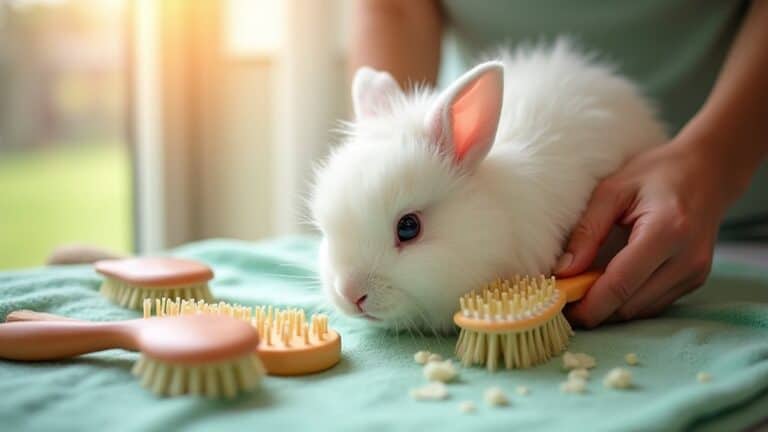
Senior bunnies often struggle with self-grooming due to arthritis or reduced flexibility, making your help vital. Their coat and skin need extra attention to prevent painful mats and health issues.
Your senior rabbit’s grooming routine should include:
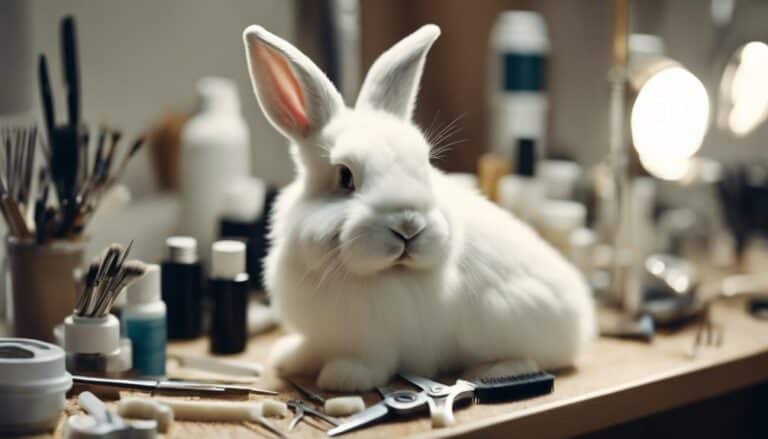
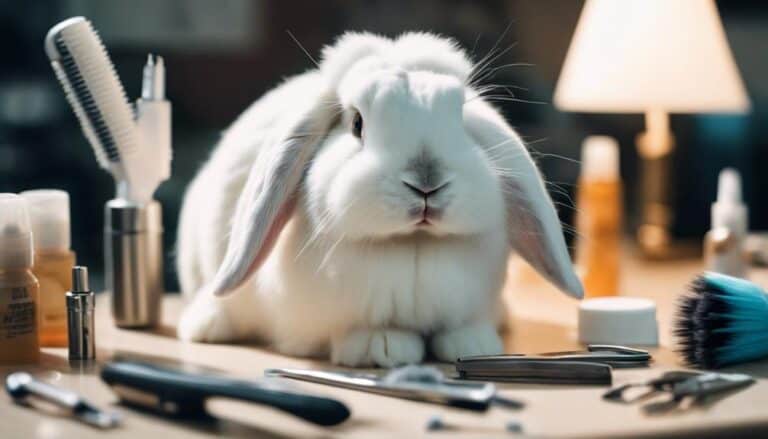
- Weekly brushing sessions using gentle grooming tools like soft-bristled brushes to remove loose fur without causing discomfort.
- Regular nail trims every 4-6 weeks, as elderly rabbits’ nails tend to grow irregularly and can catch on bedding.
- Careful fur maintenance around the hindquarters, checking daily for signs of urine scalding or fecal buildup that seniors commonly experience.
Don’t forget to make grooming a positive bonding time with treats and gentle praise!
Managing Health Conditions Common in Older Rabbits

Senior rabbits often develop specific health conditions that require vigilant monitoring and proactive care from their owners. Watch for subtle signs of discomfort, as bunnies naturally hide their pain. If your furry friend seems less active or reluctant to move, consult your vet about appropriate pain management options customized for aging rabbits.
Dental care becomes even more essential as your rabbit ages. Their teeth continuously grow throughout their lives, and seniors are particularly prone to developing painful spurs or misalignments.
You’ll need to schedule more frequent dental checks and provide plenty of hay to help wear down their teeth naturally. A rabbit who stops eating might be experiencing dental pain, which requires immediate attention.
Enrichment and Mental Stimulation for Aging Pets
Mental stimulation remains just as important as physical health when caring for your elderly rabbit.
Even as your furry friend slows down physically, their curious minds still crave engagement. Interactive toys designed for senior rabbits can prevent cognitive decline and keep their spirits high.
Try these brain-boosting activities for your aging companion:
- Rotate a collection of simple mental games like treat puzzles and snuffle mats that don’t require excessive movement.
- Create cardboard structures with hidden treats that encourage natural foraging behaviors.
- Spend quality time with gentle grooming sessions that stimulate bonding while checking for health issues.
You’ll notice your senior rabbit perks up with these enrichment activities, often showing renewed energy and contentment despite their advancing years.
Final Thoughts
You might worry that caring for a senior rabbit is too challenging, but the joy they bring in their golden years is worth every effort. By making these simple adjustments to their environment, diet, and routine, you’re giving your faithful companion the dignity and comfort they deserve. Your aging bunny has given you years of happiness—now it’s your turn to make their senior days just as special.