Affiliate Disclaimer: This site is a participant in the Amazon Services LLC Associates Program, an affiliate advertising program designed to provide a means for sites to earn advertising fees by advertising and linking to Amazon.com. We are compensated for referring traffic and business to Amazon and other companies linked to on this site. We may also do this with other affiliate schemes
End-of-life care for rabbits focuses on comfort and dignity. Watch for declining appetite, behavioral changes, and mobility issues as warning signs. Create a peaceful environment with soft bedding, easy access to necessities, and consistent routines. Provide pain management through vet-prescribed medications and gentle therapies like massage. Adapt feeding approaches with syringe feeding or smaller meals of soft foods. Your presence offers vital emotional support during final moments, speaking softly and maintaining gentle contact. The path ahead requires compassion and understanding.
Recognizing Signs of a Rabbit’s Declining Health
While rabbits may conceal their discomfort due to their prey animal instincts, recognizing the subtle signs of declining health is crucial for their well-being.
Your bunny’s declining appetite is often the first warning sign something’s wrong. If your normally enthusiastic eater suddenly shows disinterest in favorite treats or hay, it’s time to pay attention.
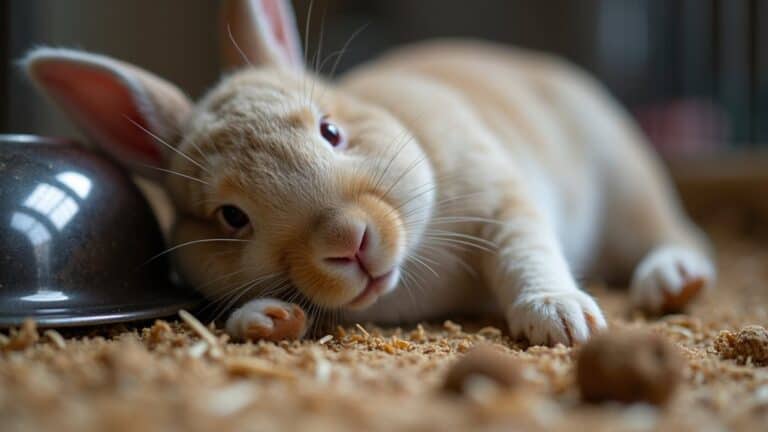
Watch for behavioral changes too. Has your social rabbit become withdrawn? Is your normally active bunny spending more time hunched in a corner?
These shifts aren’t just personality quirks—they’re your pet’s way of communicating distress. Other signs include unusual posture, labored breathing, mobility issues, or changes in bathroom habits.
Trust your instincts—you know your rabbit best. When something seems off, don’t wait to consult your exotic veterinarian.
Creating a Comfortable Environment for an Aging Rabbit
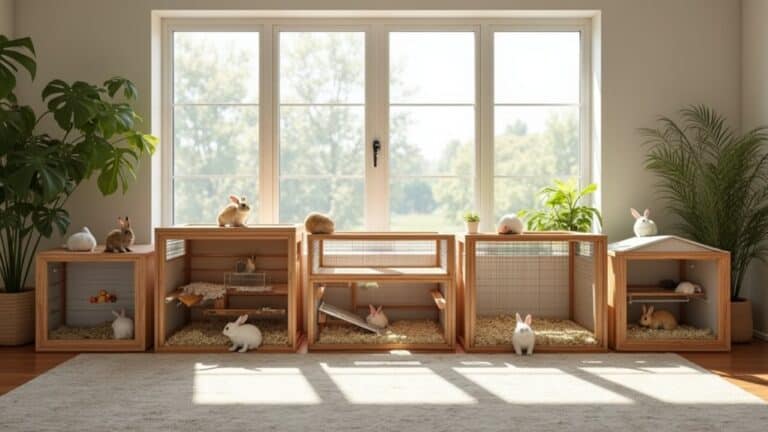
As your rabbit enters their golden years, creating a comfortable environment becomes essential for maintaining their quality of life. Start by guaranteeing their living space has soft bedding and easy access to food, water, and litter areas.
Consider installing ramps instead of steps, as aging bunnies often develop arthritis and mobility issues.
Environmental enrichment remains significant—provide a variety of textures, tunnels, and hiding spots, but keep them easily accessible. Gentle sensory stimulation helps keep their mind active; try rotating toys with different scents or textures weekly.
Remember, older rabbits are more sensitive to temperature changes, so maintain a consistent, moderate climate in their living area.
You’ll find your senior bunny appreciates routine more than ever, so try to keep feeding times and social interactions predictable and stress-free.
Pain Management Options for Elderly Rabbits
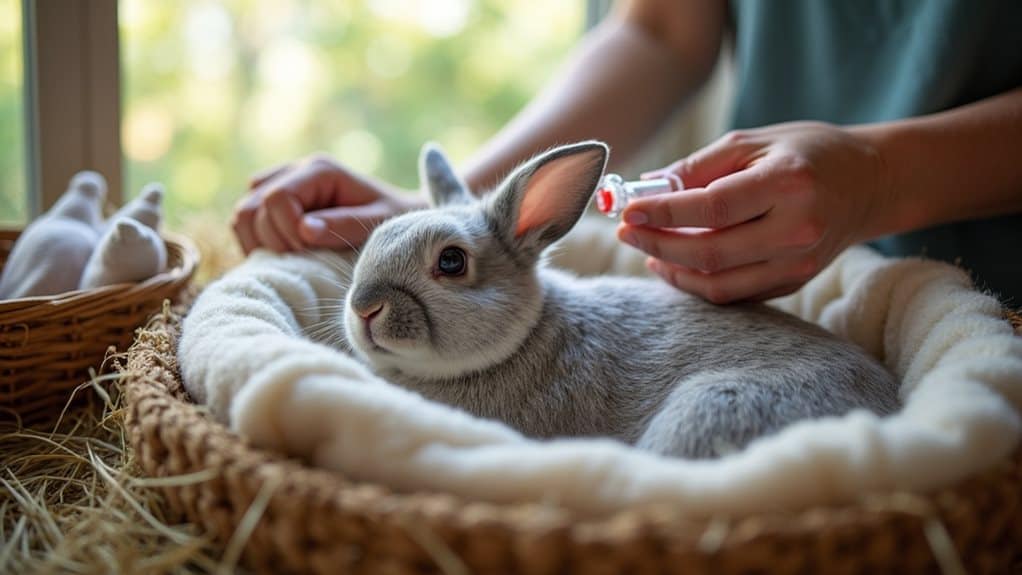
Because rabbits naturally hide their pain, recognizing and managing discomfort in your elderly bunny requires special attention.
Watch for subtle signs like decreased appetite, hunched posture, or reluctance to move—these could indicate your furry friend is hurting.
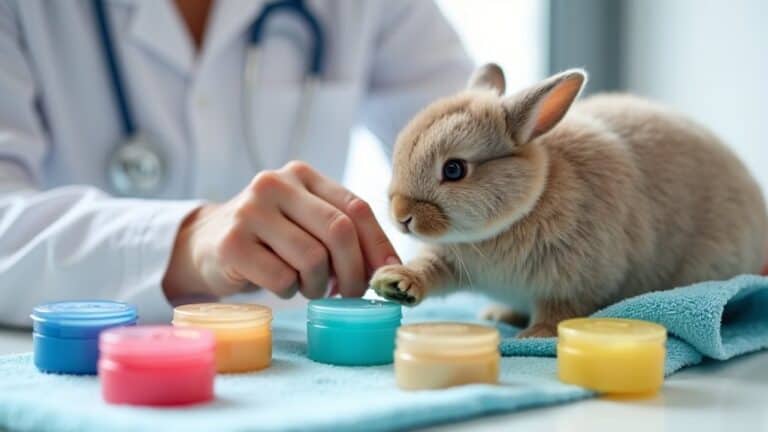
Veterinarians can prescribe appropriate medications specifically formulated for rabbit pain.
Don’t give human painkillers, as they’re often toxic to bunnies!
Some owners find success with gentle alternative approaches like acupuncture therapy, which can reduce inflammation and improve mobility in aging rabbits.
Certain herbal remedies may also provide relief, but always consult your exotic vet before trying anything new.
Regular massage and warm compresses can comfort your rabbit between treatments.
Nutritional Support During End-of-Life Care
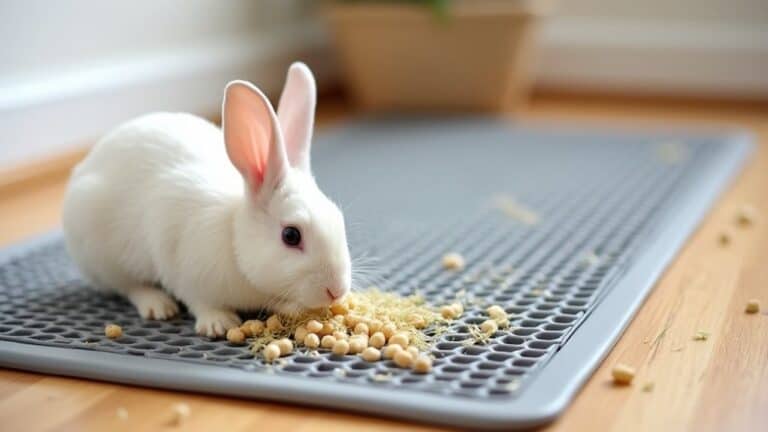
When your rabbit enters end-of-life care, you’ll need to adapt your feeding approach with specialized techniques like syringe feeding or offering smaller, more frequent meals.
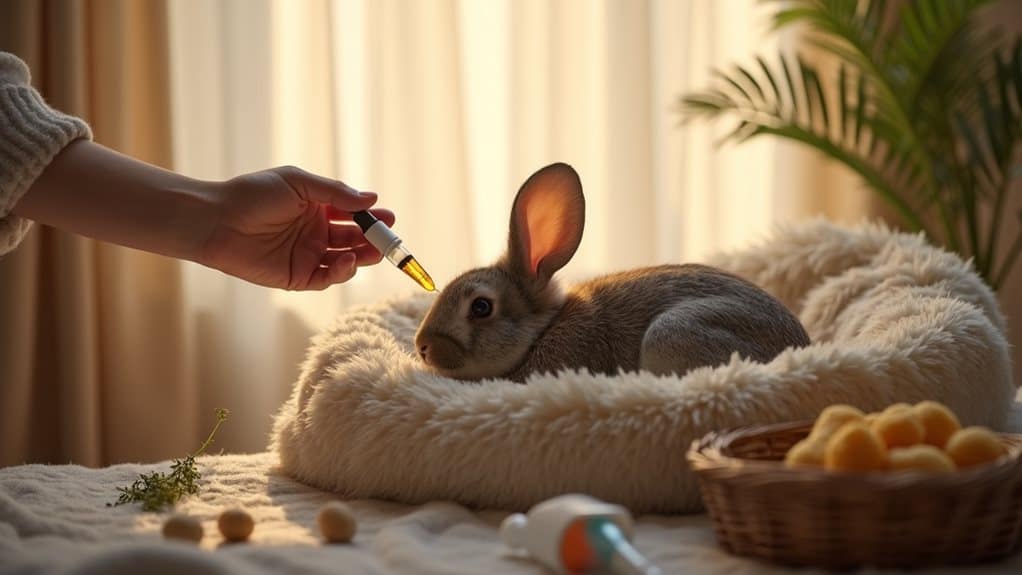
You can provide hydration without causing stress by offering water-rich vegetables or using a dropper for direct moisture intake.
Remember to include palatable comfort foods that your bunny has always enjoyed, as familiar tastes can provide emotional comfort while guaranteeing they receive necessary nutrition during this sensitive time.
Specialized Feeding Techniques
Maintaining proper nutrition becomes a critical challenge during a rabbit’s end-of-life care. When your bunny struggles to eat normally, you’ll need to adapt your approach with creativity and patience. A special diet of soft, easily digestible foods can make a notable difference in their comfort and strength.
Consider adjusting feeding schedules to smaller, more frequent meals that align with times when your rabbit seems most alert. You might need to use specialized tools like feeding syringes for critical nutrition delivery.
Many caregivers find that gently warming pureed vegetables or critical care formula increases palatability.
Hydration Without Stress
Proper hydration ranks just as high as nutrition for your aging rabbit, yet many bunnies resist drinking enough in their final days.
You’ll need gentle hydration techniques that don’t cause additional stress. With your vet’s guidance, you can guarantee your rabbit stays comfortable while getting needed fluids.
Try these stress-reduction approaches for hydration:
- Offer water in a shallow dish instead of a bottle, making it easier for weak rabbits to drink without straining their neck.
- Use a clean syringe (without needle) to slowly drip small amounts of water into the side of your bunny’s mouth.
- Add moisture-rich vegetables like cucumber or lettuce to their diet when they’re still eating.
Palatable Comfort Foods
Rabbits in their final days often experience considerable appetite changes, creating a challenging balance between nutrition and comfort. When your bunny’s appetite wanes, offering comfort food options becomes crucial to maintain their quality of life.
Fresh herbs like basil, cilantro, and mint often entice even the most reluctant eaters. Try offering your rabbit’s favorite treats in small, manageable portions throughout the day. Mashed banana on a spoon, small pieces of apple, or a nibble of dried papaya might spark interest when regular pellets don’t appeal.
Don’t worry if your rabbit becomes selective during this time. The goal isn’t perfect nutrition but rather comfort and positive experiences. Sometimes, just the familiar scent of a beloved treat can provide meaningful stimulation when eating becomes difficult.
Mobility Assistance and Physical Comfort Techniques
As your beloved rabbit enters their final life stage, providing thoughtful mobility assistance becomes essential for their dignity and comfort.
When mobility decreases, gentle handling techniques and appropriate mobility aids can greatly improve your bunny’s quality of life.
- Create a “bunny nest” using soft towels arranged in a donut shape that supports their body while preventing pressure sores.
- Implement custom mobility aids like rolled towels under weak limbs or cardboard “bumpers” to prevent them from getting stuck in corners.
- Practice gentle lifting techniques—supporting both front and hind ends simultaneously—to minimize discomfort during necessary movements.
You’ll notice your rabbit responding positively to these accommodations.
Regular repositioning every few hours helps prevent stiffness, while soft massages stimulate circulation in their aging bodies.
When to Consider Hospice vs. Euthanasia
Making the decision between hospice care and euthanasia for your rabbit represents one of the most difficult crossroads in pet guardianship.
When evaluating hospice criteria, consider whether your bunny still enjoys treats, seeks interaction, and maintains reasonable comfort with pain management. If your rabbit can eat independently and shows moments of their normal personality, hospice care might be appropriate.
Euthanasia considerations become more pressing when your rabbit shows consistent signs of suffering that medications can’t control.
Watch for prolonged appetite loss, inability to maintain proper position, or distressed breathing. Trust your instincts—you know your companion best. Sometimes, the kindest choice is saying goodbye before suffering becomes severe.
Saying Goodbye: Preparing for the Final Moments
When saying goodbye to your rabbit, you’ll want to create a calm, peaceful space where your pet feels secure and comfortable.
You can prepare by guaranteeing familiar bedding, favorite toys, and perhaps some gentle music to maintain a soothing atmosphere during these final moments.
Remember that your rabbit’s needs come first—watch for signs of pain or distress, and be ready to adjust your approach accordingly to assure your furry friend’s dignity and comfort.
Creating Peaceful Environment
The final moments you spend with your beloved rabbit deserve to be as peaceful and comforting as possible. Creating a calm environment shows your dedication to rabbit companionship until the very end. Your presence provides vital emotional support during this change, making your furry friend feel safe and loved.
Consider these elements to create a soothing atmosphere:
- Dim lighting with soft natural light or gentle lamps instead of harsh overhead fixtures
- Comfortable bedding with your rabbit’s favorite blankets and a fresh layer of soft hay
- Familiar sounds like quiet music your bunny enjoys or the natural household noises they’re used to
Keep the room at a comfortable temperature and minimize disruptions. Speak in soft tones and maintain gentle physical contact if your rabbit seems comforted by your touch.
Recognizing Rabbit’s Needs
As your rabbit approaches their final moments, recognizing their specific needs becomes crucial for guaranteeing dignity and comfort during this sensitive change.
Watch for subtle shifts in rabbit behavior, such as seeking isolation or craving more closeness—both are valid responses to their condition.
Your bunny’s emotional needs might be different now; some prefer quiet surroundings while others want your constant presence.
Offer gentle strokes if they seem comforted by touch, but respect their space if they pull away.
Keep their favorite treats nearby, even if appetite has diminished. A soft blanket that carries your scent can provide reassurance when you can’t be right beside them.
Coping With Grief After Losing Your Rabbit Companion
Losing your beloved rabbit companion can release a tidal wave of emotions that may feel overwhelming at first.
Remember that grief is a natural response to loss, and seeking grief support from friends, family, or even pet bereavement counselors can provide comfort during this difficult time.
Consider honoring your rabbit’s memory with thoughtful memorial ideas that celebrate the joy they brought to your life:
- Create a memory box with favorite toys, photos, and a lock of fur
- Plant a garden or special flower in a spot your bunny loved
- Make a donation to a rabbit rescue in your pet’s name
You’ll find that expressing your feelings and commemorating your rabbit’s life helps transform raw grief into cherished memories that will comfort you in time.
Final Thoughts
Like a delicate flower that gradually closes its petals, your rabbit’s final passage deserves tenderness and respect. You’ll face difficult decisions, but remember that you’ve given them a life filled with love. As you traverse this emotional path, be gentle with yourself. The bond you’ve shared isn’t measured in years but in the quiet moments of connection that will remain in your heart forever.