
Affiliate Disclaimer: This site is a participant in the Amazon Services LLC Associates Program, an affiliate advertising program designed to provide a means for sites to earn advertising fees by advertising and linking to Amazon.com. We are compensated for referring traffic and business to Amazon and other companies linked to on this site. We may also do this with other affiliate schemes
As a rabbit owner, you’re legally bound by local zoning laws that may classify your bunny as either a pet or livestock. You’ll need to provide proper housing, nutrition, and veterinary care to meet animal welfare standards. Check your lease for pet restrictions, as landlords might charge additional deposits. Don’t forget that abandoning rabbits is illegal—proper surrender protocols exist. Understanding these regulations not just protects you from penalties but guarantees your furry friend thrives in your care.
Local Zoning Laws and Housing Restrictions
Before setting up a cozy home for your new bunny companion, you’ll need to guide through the maze of local zoning laws and housing restrictions that might affect rabbit ownership. Many municipalities classify rabbits differently—some consider them livestock, while others treat them as pets, dramatically affecting where you can keep them.
Check your city’s ordinances about pet rabbits, as some areas limit the number you can own or require special permits. If you’re renting, your lease might’ve specific pet clauses that need attention.
Don’t worry if regulations seem strict; zoning variances are often available for responsible owners.
Housing compliance isn’t just about following rules—it’s about creating the right environment for your bunny while respecting community standards.
Contact your local animal control office for guidance on rabbit-specific regulations in your area.
Registration Requirements and Licensing Exceptions
Unlike dogs and cats, rabbits typically don’t require formal registration or licensing in most U.S. jurisdictions, saving you considerable paperwork and fees.
You’ll find these registration exemptions particularly helpful when you’re already busy setting up your bunny’s living space and care routine.
However, it’s worth checking if your specific area has any unique rules. Some communities with agricultural concerns might’ve different requirements.
In rare cases, you might need to explore licensing alternatives if you own multiple rabbits or use them for breeding purposes.
The good news? Even when documentation is required, it’s usually simpler and less expensive than what dog owners face.
Just keep your receipts from purchase or adoption—they often serve as adequate proof of ownership in most situations.
Animal Welfare Laws Applicable to Rabbits

You’ll need to know the key animal welfare laws that protect your fluffy companions, starting with minimum housing requirements that guarantee proper space and shelter.
Anti-cruelty provisions prohibit neglect and abuse, with penalties that vary by state but often include fines and potential criminal charges.
When traveling with your rabbit, you’re subject to transport regulations that require adequate ventilation, protection from extreme temperatures, and access to food and water during extended trips.
Minimum Housing Requirements
When bringing a rabbit into your home, you’ll need to comply with specific housing requirements designed to protect these sensitive animals.
While exact regulations vary by location, your rabbit enclosure should provide adequate housing space for movement, stretching, and play. Most guidelines suggest a minimum of 8-12 square feet for a medium-sized rabbit.
Your bunny’s home isn’t just about size—it’s about safety too! Make sure the flooring won’t harm their sensitive feet (no wire bottoms), and provide shelter from extreme temperatures.
Remember, rabbits can’t sweat, making them vulnerable to heat stroke.
Don’t forget enrichment opportunities within their living space. Tunnels, hiding spots, and chew toys aren’t just fun—they’re crucial for your rabbit’s mental health and may be required by some jurisdictions’ animal welfare standards.
Anti-Cruelty Provisions
Most states consider rabbits protected under general anti-cruelty statutes, though they’re often classified differently than dogs and cats.
You’re responsible for understanding these laws to guarantee you’re providing proper care. Animal rights advocates have successfully pushed for stronger protections, recognizing that rabbits experience pain and distress like other pets.
Understanding natural rabbit behavior is vital to avoiding unintentional cruelty. For example, keeping a social rabbit isolated could constitute neglect in some jurisdictions.
You must provide adequate food, water, shelter, and veterinary care to avoid legal consequences.
If you witness rabbit abuse, you’re encouraged to report it to local animal control.
Transport Regulations
Moving beyond general anti-cruelty laws, transport regulations provide specific protections for rabbits when they’re on the move.
Whether you’re relocating across state lines or traveling to a show, you’ll need to maneuver a maze of interstate regulations that vary greatly by location.
Many states require transport permits when bringing rabbits across their borders.
These permits often include health certificates from a veterinarian, confirming your bunny is disease-free and fit for travel.
You’ll want to check requirements well in advance, as processing times can stretch to several weeks.
Property Damage and Liability Considerations

As a rabbit owner, you’ll need to evaluate how your insurance covers pet-related damages, especially since chewed baseboards or wiring can lead to costly repairs.
Your standard renter’s or homeowner’s policy mightn’t fully protect you from liability if your bunny causes property damage or injures someone, so exploring specialized pet coverage is worth the investment.
If you’re renting, your lease may contain specific limitations regarding pet ownership, including deposits, restricted areas, or even breed restrictions that could affect your rights to keep a rabbit on the property.
Insurance Coverage Options
While many rabbit owners don’t consider insurance a priority, your furry friend could potentially cause unexpected damage to your home or injure visitors. Your standard homeowner’s or renter’s insurance policy might cover some rabbit-related incidents, but it’s worth checking your coverage limits specifically.
Many insurance policy options now offer pet-specific add-ons that can protect you from liability if your rabbit damages a neighbor’s property or nips a guest.
When shopping for coverage, look for policies that explicitly include exotic pets or small animals. You’ll want to verify the coverage limits are sufficient for potential scenarios—whether that’s replacing chewed electrical wires or covering medical bills if someone has an allergic reaction.
Don’t wait until after an incident to discover what’s covered—a quick call to your insurance agent can clarify your protection.
Tenant Rights Limitations
Tenants who keep rabbits face specific legal limitations regarding property damage and liability that extend beyond insurance considerations.
Your lease agreement likely contains clauses about pet ownership that directly impact your rights as a rabbit owner. Understanding these tenant obligations is essential before bringing your fluffy friend home.
When reviewing your rental situation, pay attention to:
- Damage deposits that may be higher for pet owners to cover potential carpet, baseboard, or wall damage
- Restrictions on free-roaming that could limit your rabbit’s exercise space
- Special cleaning requirements upon move-out that address rabbit hair and odor concerns
You’ll need to balance your pet’s needs with your landlord’s property rights.
Many tenants successfully negotiate reasonable accommodations by demonstrating responsible rabbit ownership and maintaining open communication.
Legal Limits on Rabbit Breeding and Sales
Many rabbit owners don’t realize that breeding and selling rabbits comes with specific legal requirements until they’re facing potential penalties.
Before you start a breeding program, you’ll need to check if breeding permits are required in your area. Some municipalities limit the number of rabbits you can own or breed, while others mandate specific housing conditions.
Sales regulations vary widely too. You can’t simply sell rabbits at any location—many states restrict sales at flea markets or parking lots.
If you’re selling commercially, you might need a business license and may be subject to USDA inspections. Don’t forget about health certificates if you’re shipping across state lines!
These rules aren’t meant to discourage you from sharing your love of rabbits—they’re designed to guarantee proper care and prevent abandonment.
Abandonment Laws and Surrender Protocols
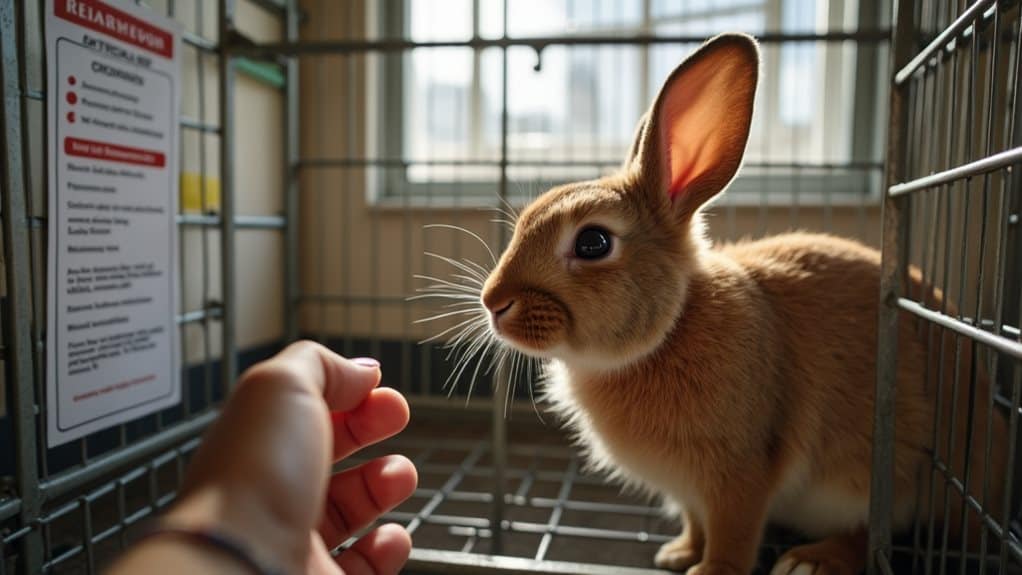
Releasing pet rabbits into the wild isn’t just harmful—it’s actually illegal in most states under animal abandonment laws.
You could face abandonment penalties including fines up to $1,000 or even misdemeanor charges in severe cases. Instead, responsible rabbit owners should follow proper surrender processes when they can no longer care for their pets.
When you need to rehome your rabbit, consider these humane options:
- Contact local rabbit rescues or shelters that accept surrendered pets with minimal judgment
- Reach out to rabbit-specific Facebook groups where adopters actively seek pets
- Schedule an appointment with animal services, who can guide you through legal surrender procedures
Travel Regulations and Interstate Transport
Before commencing on a trip with your rabbit, you’ll need to understand the complex web of regulations that govern rabbit transport across state lines. Each state has its own rules, and you don’t want to face fines or have your bunny quarantined!
Most states require travel documentation for rabbits, which may include health certificates signed by a vet within 30 days of travel. You’ll also need to research interstate permits, as some states have specific requirements to prevent the spread of diseases like RHDV2.
Don’t assume your home state’s rules apply everywhere!
Keep your rabbit’s comfort in mind too. A proper carrier, familiar bedding, and stress-reducing techniques can make the expedition easier for your furry friend.
Medical Care Standards and Veterinary Requirements

When you bring a rabbit into your home, you’re legally responsible for providing appropriate medical care based on established standards.
Your veterinary obligations include regular checkups, emergency care, and preventative treatments. Many states now consider neglect of proper healthcare for rabbits a form of animal cruelty, potentially resulting in fines or other penalties.
Healthcare standards for rabbits vary by location, but generally include:
- Annual wellness exams with a rabbit-savvy veterinarian
- Prompt treatment for common issues like dental problems, GI stasis, or respiratory infections
- Proper documentation of vaccinations where required by local regulations
You’ll find that meeting these requirements not only keeps you on the right side of the law but also guarantees your fluffy friend lives a longer, healthier life.
Final Thoughts
You’ve discovered that rabbit ownership isn’t just about cuddles and carrots—it’s a legal expedition with a mountain of responsibilities. By understanding your local laws, housing requirements, and welfare obligations, you’re setting yourself up for success. Remember, your bunny depends on you to steer through these regulations while providing proper care. When you’re prepared legally and practically, you’ll create a safe, happy home where both you and your rabbit can thrive together.