
Affiliate Disclaimer: This site is a participant in the Amazon Services LLC Associates Program, an affiliate advertising program designed to provide a means for sites to earn advertising fees by advertising and linking to Amazon.com. We are compensated for referring traffic and business to Amazon and other companies linked to on this site. We may also do this with other affiliate schemes
Rabbits are the third most popular pet in the United States, yet nearly 80% of bunnies purchased or adopted don’t make it past their first year in their new home. That staggering statistic isn’t because rabbits are fragile, it’s because most people drastically underestimate what bunny ownership actually entails. So is owning a bunny worth it? The answer depends entirely on whether you’re prepared for a decade-long commitment that looks nothing like the fluffy, low-maintenance fantasy most people imagine.
This guide cuts through the Instagram-worthy moments to examine the genuine costs, time demands, behavioral realities, and emotional rewards of rabbit ownership. Drawing on behavioral research and the lived experiences of long-term bunny parents, we’ll explore what makes rabbits uniquely challenging pets, and why, for the right person, they’re absolutely worth every chewed baseboard and 3 a.m. hay refill.
Key Takeaways
- Financial reality: First-year costs typically range from $1,500-$2,500, with annual expenses of $800-$1,200 thereafter, far more than most small pets
- Time commitment: Rabbits require 2-4 hours of daily interaction, exercise, and habitat maintenance for 8-12 years
- Behavioral complexity: Bunnies are intelligent, social animals with specific needs that differ dramatically from cats or dogs
- Housing demands: Proper rabbit care requires significant indoor space (minimum 32 square feet) and extensive bunny-proofing
- Veterinary challenges: Rabbits need exotic vets, which are scarcer and more expensive than standard veterinary care

The Real Financial Cost of Bunny Ownership
Let’s start with the numbers, because this is where the gap between expectation and reality hits hardest.
Initial Setup Costs ($500-$1,000)
Before your bunny even arrives home, you’ll need:
- Proper housing: A quality enclosure or safe playpen setup runs $150-$300. Those tiny pet store cages? Completely inadequate and potentially harmful.
- Litter supplies: Large litter boxes, rabbit-safe litter, and initial hay supply: $80-$120
- Food and water equipment: Heavy ceramic bowls, water bottles or bowls, hay feeders: $40-$60
- Enrichment items: Tunnels and tubes, hiding houses, chew toys: $100-$150
- Grooming tools: Quality brushes, nail clippers, grooming gloves: $50-$80
- Bunny-proofing materials: Cable protectors, corner guards, exercise pen panels: $80-$150
First-Year Veterinary Expenses ($400-$800)
Here’s where many prospective owners get blindsided. Rabbits require exotic animal veterinarians, not regular small-animal vets. This specialized care costs significantly more:
- Initial wellness exam: $75-$150
- Spay/neuter surgery: $200-$500 (essential for behavioral and health reasons)
- Vaccinations (where applicable): $50-$100
- Emergency fund: You should budget at least $500 for unexpected health issues
🐰 Reality check: A single episode of GI stasis, a common and life-threatening condition, can cost $300-$800 in emergency care. Preventing GI stasis requires consistent daily attention to diet and behavior.
Ongoing Monthly Costs ($60-$100)
- Hay: $20-$30/month (rabbits need unlimited timothy hay, which dominates a healthy rabbit’s diet)
- Fresh vegetables: $15-$25/month
- Pellets: $10-$15/month
- Litter: $10-$20/month
- Replacement toys and supplies: $5-$10/month
Annual total after first year: $800-$1,200, not including veterinary care or emergencies.
The 10-Year Perspective
Over a rabbit’s typical 8-12 year lifespan, you’re looking at $10,000-$15,000 in total costs. That’s comparable to dog ownership and significantly more than cats, hamsters, or guinea pigs.
Time Commitment: Is Owning a Bunny Worth It for Your Schedule?
Money is only half the equation. The time demands of proper rabbit care surprise even experienced pet owners.
Daily Time Requirements (2-4 hours)
Morning routine (30-45 minutes):
- Fresh water and pellet portion
- Hay refill and quality check
- Litter box spot-clean
- Quick health check (eating, pooping, behavior)
- 15-20 minutes of interaction
Evening routine (1-2 hours):
- Fresh vegetable preparation and feeding
- Full litter box clean (every 1-2 days)
- Supervised exercise time in bunny-proofed space
- Interactive play and enrichment
- Grooming session (2-3 times weekly)
Weekly tasks (2-3 hours):
- Deep habitat cleaning
- Hay storage area maintenance
- Nail trimming (every 4-6 weeks)
- Weight monitoring
- Toy rotation and enrichment updates
The Exercise Paradox
Unlike hamsters that run on wheels or fish that swim in tanks, rabbits need supervised floor time in a bunny-proofed living space. You can’t just open the cage and walk away, you need to actively supervise to prevent:
- Electrical cord chewing (potentially fatal)
- Baseboards and furniture destruction
- Carpet digging and ingestion
- Access to toxic houseplants
- Escape attempts
This means your evenings are genuinely committed. No spontaneous after-work plans. No casual weekend getaways without arranging specialized pet care.
Vacation and Travel Challenges
Finding qualified rabbit sitters is significantly harder than finding dog or cat sitters. Your options:
- Experienced rabbit sitter: Rare and expensive ($40-$60/day)
- Boarding at rabbit-savvy facility: Limited availability, $30-$50/day
- Friend or family: Requires extensive training on rabbit care specifics
Many long-term bunny owners report that travel becomes their biggest lifestyle compromise.
Behavioral Reality: What Living With a Bunny Actually Looks Like
This is where the psychology background becomes crucial. Rabbits aren’t “starter pets” or “easier than dogs.” They’re complex, intelligent animals with specific behavioral needs that many owners aren’t prepared for.
Rabbits Are Prey Animals
This fundamental fact shapes everything about bunny behavior:
- They startle easily: Loud noises, sudden movements, and overhead approaches trigger fear responses
- They hide illness: By the time a rabbit looks sick, they’re often critically ill
- They require patience: Building trust takes weeks or months, not days
- They have specific body language: Ignoring bunny body language can lead to serious behavioral problems
The Destruction Factor
Rabbits are obligate chewers. Their teeth grow continuously, so they must chew to maintain dental health. This means:
✅ What you can expect:
- Baseboards will get nibbled
- Furniture legs may show teeth marks
- Carpets will be dug at and potentially damaged
- Any accessible paper, cardboard, or fabric will be “redecorated”
Even with extensive bunny-proofing and providing appropriate chew toys and enrichment, some destruction is inevitable. If you’re a perfectionist about your home’s appearance, rabbit ownership will test your limits.
Social Needs and Bonding
Rabbits are highly social but on their own terms:
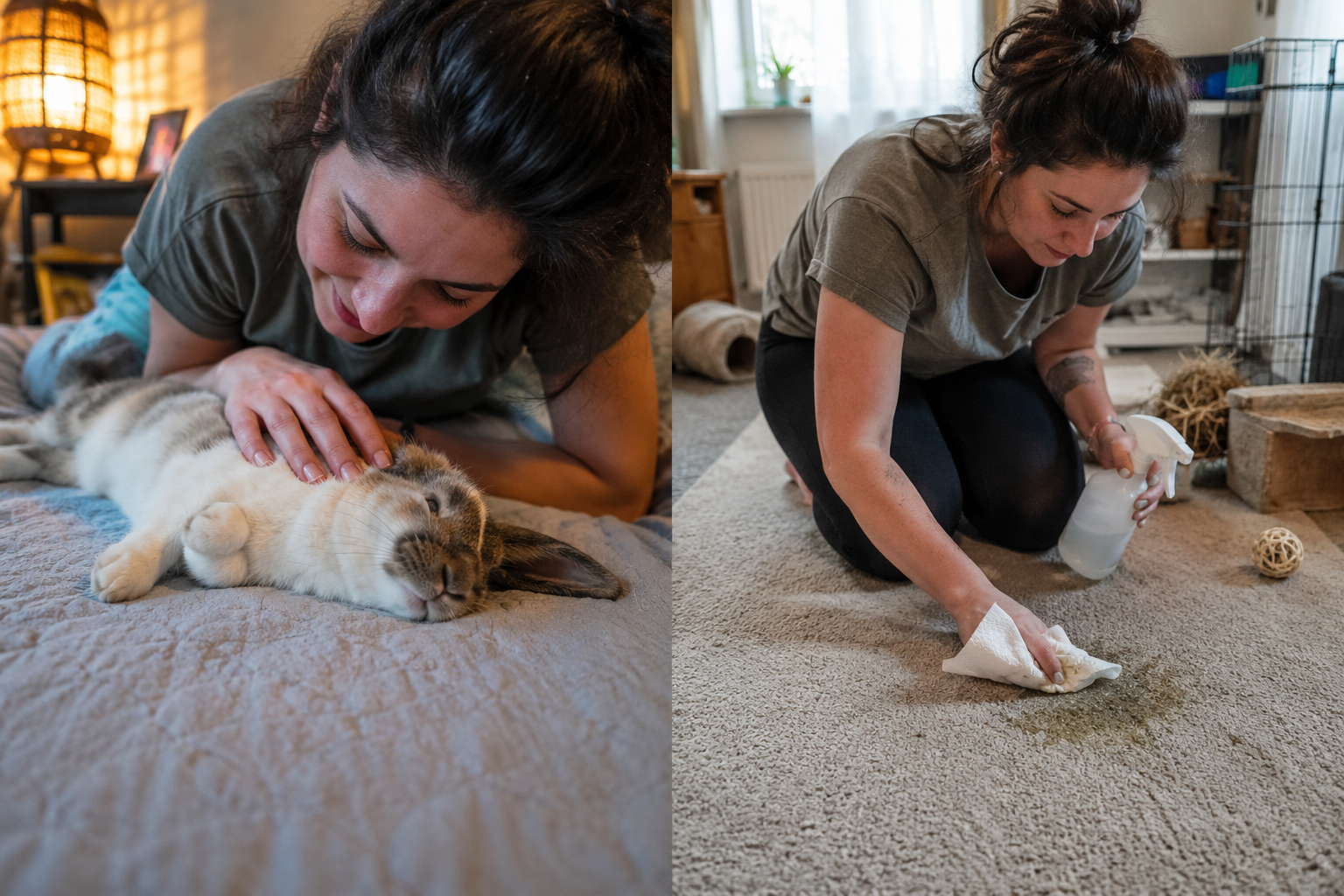
- They often don’t enjoy being picked up or cuddled (prey animal instinct)
- They prefer sitting beside you rather than on your lap
- They need daily interaction but may ignore you when they’re busy
- They can be territorial and may nip or grunt when annoyed
The honest truth: If you want a pet that enthusiastically greets you, cuddles on demand, and shows obvious affection, a dog is a better choice. Rabbits show love through subtle behaviors, sitting near you, grooming your hand, doing “binkies” (happy jumps), that require you to learn their language.
Space Requirements: Do You Have Room for a Bunny?
The “rabbits can live in small cages” myth has caused immeasurable suffering. Here’s what rabbits actually need:
Minimum Space Standards
- Enclosure: 32 square feet minimum (4ft × 8ft) for a single rabbit
- Exercise area: Additional 32+ square feet for daily supervised play
- Vertical space: Multi-level setups with ramps for enrichment
For reference, that’s roughly the footprint of a small bathroom, and that’s just the enclosure. You’ll also need:
- Storage space for hay (bulky and needs to stay dry)
- Area for litter box supplies
- Room for grooming supplies and first aid kit
The Indoor-Only Requirement
Modern rabbit care standards strongly recommend indoor-only housing because:
- Outdoor rabbits face predator stress even in “secure” hutches
- Temperature extremes are dangerous (rabbits are sensitive to heat)
- Outdoor rabbits receive less socialization and enrichment
- Veterinary care is delayed when problems aren’t noticed quickly
This means dedicating significant indoor living space to your rabbit, not a small corner, but a genuine portion of your home.
Health Considerations: The Exotic Pet Challenge
Rabbits have unique health needs that many veterinarians aren’t trained to handle.
Finding Qualified Veterinary Care
The challenge: Regular dog-and-cat vets often lack rabbit expertise. You need an exotic animal veterinarian, and they’re:
- Less common (may require 30+ minute drives)
- More expensive ($75-$150 for basic exams vs. $50-$75 for dogs/cats)
- Sometimes booked weeks in advance for non-emergencies
Common Health Issues
Rabbits are prone to several serious conditions:
- GI stasis: Potentially fatal digestive slowdown requiring immediate care
- Dental disease: Overgrown teeth causing pain and eating difficulty
- Respiratory infections: Can progress rapidly in rabbits
- Uterine cancer: Affects 50-80% of unspayed females over age 4
- E. cuniculi: Parasitic infection affecting nervous system
The financial reality: A rabbit with chronic health issues can easily cost $2,000-$5,000 annually in veterinary care.
Preventive Care Requirements
Proper rabbit health maintenance includes:
- Twice-yearly wellness exams (minimum)
- Regular weight monitoring at home
- Daily poop checks (seriously, poop tells you everything about rabbit health)
- Dental checks during every vet visit
- Spay/neuter surgery (not optional for health and behavior)
The Rewards: Why Bunny Owners Say It’s Worth It
After all those challenges, why do devoted bunny parents insist their rabbits are worth every bit of effort?
Unique Personality and Intelligence
Rabbits are genuinely smart animals that:
- Learn their names and come when called
- Can be litter trained (with patience)
- Develop distinct personalities and preferences
- Play games and solve puzzles
- Form deep bonds with their humans
Quiet Companionship
Unlike dogs, rabbits:
- Don’t bark or make loud noises
- Are naturally clean and groom themselves extensively
- Adapt well to apartment living (with proper space)
- Keep regular schedules that match many work-from-home lifestyles
The “Binky” Factor
There’s something uniquely rewarding about earning a rabbit’s trust. When a bunny does a “binky”, that joyful twist-jump that signals pure happiness, it’s because they feel safe and content. That moment of visible joy is earned through consistent, patient care.
Long-Term Bonding
Rabbits live 8-12 years, giving you a decade-long relationship. Owners report that the bond deepens significantly after the first year, once trust is fully established.
“My rabbit Clover ignored me for the first three months. Now, five years later, she follows me room to room, grooms my hand every evening, and does binkies when I come home from work. That evolution from wary prey animal to trusting companion is unlike any other pet relationship I’ve experienced.”, Long-term bunny owner
Is Owning a Bunny Worth It? The Decision Framework
Let’s synthesize this into a practical decision tool.
You’re a Good Candidate for Bunny Ownership If:
✅ You have $1,500-$2,500 for first-year expenses and $800-$1,200 annually thereafter
✅ You can commit 2-4 hours daily to rabbit care and interaction
✅ You have 60+ square feet of indoor space to dedicate to a rabbit
✅ You’re home most evenings and don’t travel frequently
✅ You can accept home damage (chewed furniture, dug carpets) philosophically
✅ You have access to an exotic animal veterinarian within reasonable driving distance
✅ You’re patient and willing to learn rabbit-specific body language and behavior
✅ You want a quiet, intelligent companion rather than an enthusiastically affectionate pet
✅ You’re prepared for an 8-12 year commitment
You Should Reconsider Bunny Ownership If:
❌ You’re looking for a low-maintenance or “starter” pet
❌ You want a cuddly pet that enjoys being held
❌ You travel frequently or have an unpredictable schedule
❌ You’re renting and your landlord has strict pet policies
❌ You have young children who want a hands-on pet
❌ You’re not prepared for significant home damage
❌ You don’t have access to exotic veterinary care
❌ Your budget is tight and can’t accommodate unexpected $500+ vet bills
Alternative Considerations
If you’re drawn to rabbits but the commitment seems overwhelming, consider:
- Volunteering at a rabbit rescue: Get hands-on experience without the full commitment
- Fostering: Help rabbits temporarily while learning about their care
- Adopting an adult rabbit: Older bunnies have established personalities and may be less destructive
Common Mistakes That Make Bunny Ownership Harder
Learning from others’ experiences can help you avoid the pitfalls that lead to that 80% first-year failure rate.
Mistake #1: Buying on Impulse
Seeing a cute bunny at a pet store or during Easter season leads to unprepared ownership. Proper preparation before bringing a rabbit home is essential.
Mistake #2: Inadequate Housing
Starting with a too-small cage and planning to “upgrade later” creates behavioral problems and stress that are hard to reverse.
Mistake #3: Poor Diet Research
Many new owners make critical nutrition mistakes that lead to serious health issues. Rabbits need unlimited hay, limited pellets, and specific vegetables, not carrots and lettuce as primary foods.
Mistake #4: Skipping the Spay/Neuter
Intact rabbits are significantly more difficult to live with: territorial, aggressive, prone to spraying, and at high risk for reproductive cancers. The $200-$500 surgery cost is non-negotiable for successful bunny ownership.
Mistake #5: Expecting Dog or Cat Behavior
Rabbits aren’t “like cats but easier” or “like small dogs.” They’re a completely different species with unique needs and behaviors. Approaching them with wrong expectations leads to frustration on both sides.
FAQ
How much does it really cost to own a bunny per month?
Expect $60-$100 monthly for food, litter, and supplies, plus $50-$100 monthly if you’re budgeting for annual veterinary care. This doesn’t include unexpected health emergencies, which can add $300-$800 at any time.
Can rabbits be left alone during the day while I work?
Yes, rabbits can be alone during standard work hours (8-9 hours), but they need substantial interaction before and after work. They cannot be left alone for full weekends or extended periods without specialized care.
Are rabbits good pets for apartments?
Rabbits can be excellent apartment pets because they’re quiet and don’t need outdoor access. However, you need enough space for proper housing (60+ square feet total) and must be prepared for some property damage despite bunny-proofing efforts.
Do rabbits actually bond with their owners?
Yes, but differently than dogs. Rabbits show affection through subtle behaviors: sitting near you, grooming your hand, following you around, and doing happy “binkies.” They rarely enjoy being held or cuddled, which disappoints owners expecting more obvious affection.
What’s the hardest part of owning a rabbit?
Most long-term owners cite three challenges: (1) finding qualified veterinary care, (2) managing the time commitment without flexibility for spontaneous plans, and (3) accepting inevitable home damage despite best bunny-proofing efforts.
Is it better to get one rabbit or two?
Rabbits are social and often thrive in bonded pairs, but bonding rabbits is a complex process requiring time, space, and expertise. First-time owners should start with one rabbit, master basic care, then consider adding a companion after consulting with a rabbit-savvy rescue organization.
Conclusion
So, is owning a bunny worth it? For the right person, someone with adequate time, space, financial resources, and realistic expectations, rabbits offer a uniquely rewarding decade-long companionship. They’re intelligent, personality-filled animals that form deep bonds with patient owners who respect their prey-animal nature.
But they’re absolutely not the low-maintenance, cuddly, cage-dwelling pets that popular culture suggests. They’re expensive, time-intensive, destructive, and require specialized care that many communities lack easy access to.
Your next steps:
- Assess honestly: Review the decision framework above and be brutally honest about your lifestyle, budget, and expectations
- Research deeply: Spend time on comprehensive rabbit care guides and join online rabbit owner communities to see daily reality
- Visit a rescue: Meet actual rabbits and talk to experienced owners about the unglamorous details
- Prepare thoroughly: If you decide to proceed, set up your complete habitat and supplies before bringing a rabbit home
- Consider adoption: Rescue organizations provide support, education, and already-spayed/neutered rabbits with known personalities
The rabbits who make it past that first year typically live long, healthy lives with devoted owners who wouldn’t trade the experience for anything. The question isn’t whether rabbits are worth it in general, it’s whether they’re worth it for you, with your specific circumstances and expectations. Answer that question honestly, and you’ll make the right decision for both yourself and any potential bunny in your future.