
Affiliate Disclaimer: This site is a participant in the Amazon Services LLC Associates Program, an affiliate advertising program designed to provide a means for sites to earn advertising fees by advertising and linking to Amazon.com. We are compensated for referring traffic and business to Amazon and other companies linked to on this site. We may also do this with other affiliate schemes
Caring for special needs rabbits requires thoughtful adaptations to your home environment. You’ll need to create accessible spaces with non-slip surfaces, low-sided litter boxes, and clear pathways. Modify feeding techniques for bunnies with dental issues, and establish consistent cleaning routines for incontinent pets. Don’t forget daily health monitoring—track weight, appetite, and behavior changes. With patience and the right setup, you can build meaningful bonds with your differently-abled bunny companion. The path ahead offers rewarding connections you never imagined possible.
Adapting Your Home for Mobility-Challenged Rabbits
When your bunny has mobility challenges, transforming your home into a rabbit-friendly haven becomes essential for their wellbeing.
Start by creating designated safe spaces with non-slip mats and low-sided litter boxes for easy access. Remove obstacles and create clear pathways throughout areas your rabbit frequents.
Consider investing in mobility aids like small ramps for short inclines and custom slings for bunnies who need assistance getting around.
Soft padding in resting areas will prevent pressure sores, while arranging food and water stations at comfortable heights eliminates unnecessary straining.
Specialized Feeding Techniques for Rabbits With Dental Issues
Because dental problems can severely impact a rabbit’s ability to eat properly, specialized feeding techniques become fundamental for their care.
You’ll need to modify your bunny’s diet to guarantee they’re getting proper nutrition despite their dental challenges. Offering soft diets like pureed vegetables and fruits can make eating more comfortable for them.
Don’t forget to introduce chew-friendly treats that are gentle on their teeth but still provide necessary grinding action.
For rabbits with dental issues, consider these critical approaches:
- Provide dental toys specifically designed to help maintain tooth health without causing pain
- Incorporate nutritional supplements to ascertain they’re not missing important nutrients
- Monitor their weight weekly to catch any feeding problems early
With patience and these specialized techniques, your special needs bunny can still enjoy mealtime despite dental difficulties.
Daily Care Routines for Incontinent or Paralyzed Bunnies
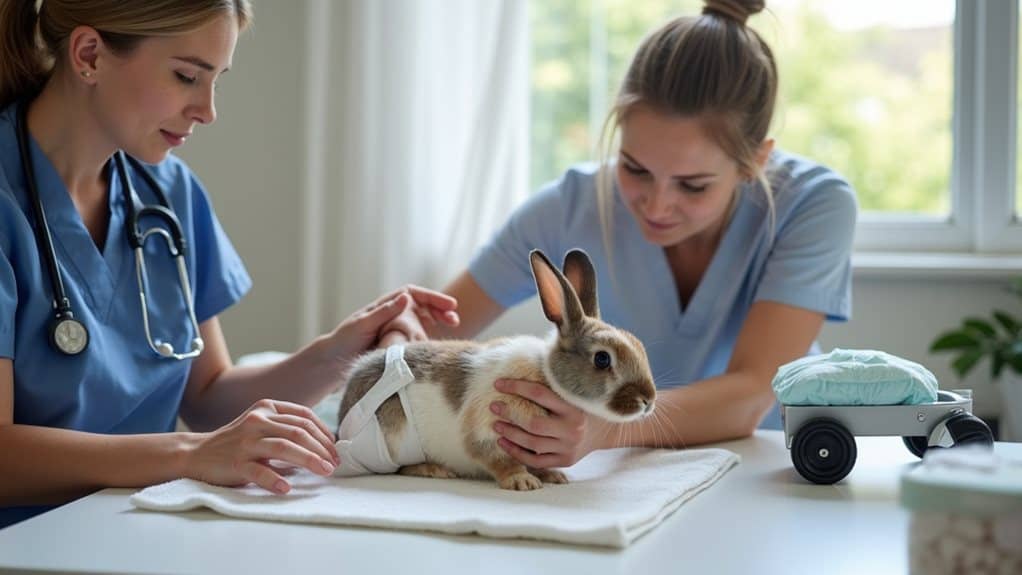
Caring for incontinent or paralyzed rabbits requires dedicated attention and specialized routines that’ll become second nature with practice.
You’ll need to establish a consistent schedule for checking and changing bedding throughout the day, as these bunnies can’t access a traditional litter box. Line their resting areas with absorbent, soft materials that you can easily replace when soiled.
Basic hygiene practices make all the difference in preventing painful skin issues. Gently clean your bunny’s bottom twice daily with unscented baby wipes, and thoroughly dry the area to prevent urine scald.
Apply a thin layer of pet-safe barrier cream to protect delicate skin. Remember, those sweet furry bottoms need your help to stay healthy!
Position your rabbit differently every few hours to prevent pressure sores—think of it as bunny physical therapy with a side of cuddles.
Building Social Connections: Bonding With Special Needs Rabbits
Despite their physical limitations, disabled rabbits crave social connections just as much as their able-bodied counterparts.
When developing social enrichment for your special needs bunny, remember that patience is key. They may take longer to trust you, but the bond you’ll create will be incredibly rewarding.
Try these bonding activities to strengthen your connection:
- Gentle grooming sessions that accommodate their specific disability
- Quiet time together where you sit at their level and let them approach you
- Adaptive play using modified toys that work with their abilities
You’ll notice your special bunny’s personality shine through as they become more comfortable.
Their disability doesn’t define them—it’s just one part of what makes your furry friend uniquely special.
Medical Monitoring and When to Seek Veterinary Intervention
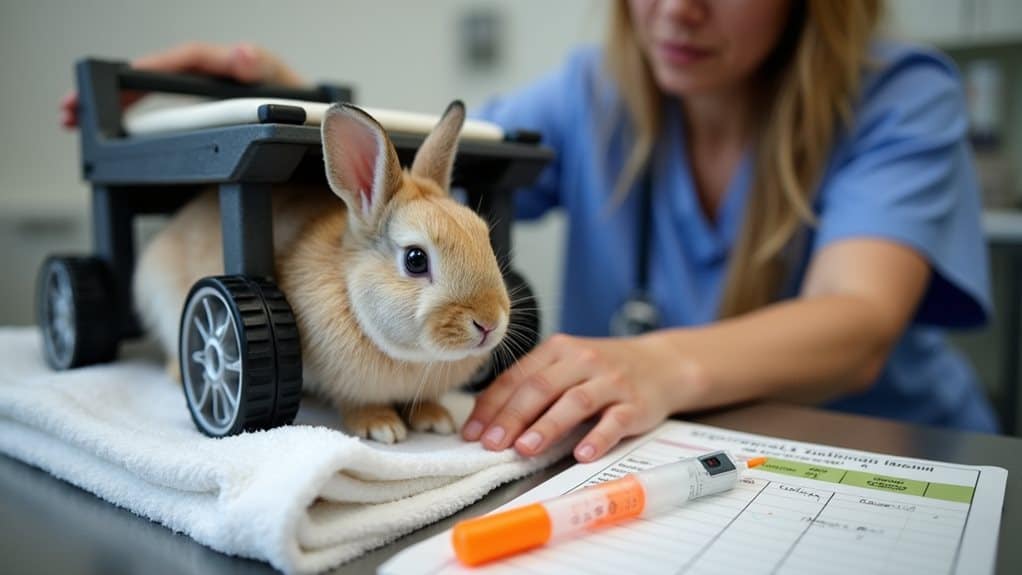
While your disabled rabbit may seem stable, regular health monitoring is essential for catching potential issues before they become emergencies.
Learn to recognize subtle changes in your bunny’s behavior, appetite, and mobility patterns. These early warning signs often speak volumes about their health status.
Maintain a daily log of your rabbit’s weight, medication schedule, and any unusual symptoms. This record becomes invaluable for veterinary communication during appointments. Your observations provide significant context that helps your vet make informed decisions about your furry friend’s care.
Don’t hesitate to contact your veterinarian if you notice changes in eating habits, unusual lethargy, or signs of pain.
Trust your instincts—you know your rabbit best! With special needs bunnies, it’s always better to seek help early rather than waiting until a minor issue becomes a serious concern.
Final Thoughts
You’ve now got the tools to give your special needs bunny a fulfilling life. Remember, these little warriors may hop to a different beat, but their capacity for joy remains boundless. With your patience, creativity, and love, you’re creating a world where your rabbit can thrive despite challenges. Keep learning, stay flexible, and cherish the unique bond you’re building—it’s worth every adapted feeding station and modified hutch you’ll create.