Affiliate Disclaimer: This site is a participant in the Amazon Services LLC Associates Program, an affiliate advertising program designed to provide a means for sites to earn advertising fees by advertising and linking to Amazon.com. We are compensated for referring traffic and business to Amazon and other companies linked to on this site. We may also do this with other affiliate schemes
Creating enriching play areas for your house rabbit means catering to their natural instincts for digging, exploring, and foraging. Include rabbit-safe flooring like cotton rugs, cardboard tunnels for burrowing, and DIY toys made from toilet paper tubes stuffed with hay. Add vertical elements like shelves with ramps to encourage climbing, and rotate toys weekly to maintain interest. Watch for relaxed ears and self-grooming—these happy signals show you’re on the right track to bunny bliss.
Understanding Your Rabbit’s Natural Behaviors
When you first bring a rabbit into your home, you’ll quickly discover they’re not just cute companions but complex creatures with fascinating natural instincts.
These rabbit instincts drive their daily activities and shape their play behaviors in ways you might find surprising.
In the wild, rabbits dig, forage, and stay alert for predators. Your house bunny hasn’t forgotten these instincts! You’ll notice them “digging” at carpets, exploring every corner of your home, and occasionally darting away when startled.
These aren’t bad behaviors—they’re your rabbit being a rabbit.
Understanding these natural tendencies helps you create appropriate play opportunities. Tunnels satisfy burrowing instincts, while foraging toys engage their curious minds.
When you work with their natural behaviors rather than against them, you’ll both be happier!
Essential Elements of a Rabbit-Safe Play Space
When creating your rabbit’s play space, you’ll need to start with appropriate flooring that prevents slipping while protecting your bunny’s sensitive paws.
Incorporate several hiding spots and tunnels throughout the area, as these mimic your rabbit’s natural burrowing instincts and provide security during playtime.
Your furry friend will appreciate these thoughtful elements that transform an ordinary space into an engaging playground where they can hop, explore, and feel safe.
Safe Flooring Options
The foundation of any rabbit play area starts with proper flooring that protects your bunny’s sensitive paws while preventing injuries. Your rabbit’s delicate feet need soft, non-slip surfaces that won’t cause joint strain or painful sores.
Consider natural flooring materials like untreated grass mats, cotton rugs, or fleece blankets that provide comfortable traction. Hard surfaces like tile and hardwood can lead to splayed legs and slipping, so cover them with rabbit-friendly alternatives.
Don’t forget flooring maintenance tips: rotate materials regularly, spot clean daily, and deep clean weekly to prevent odors and bacteria buildup.
You’ll want to avoid adhesive-backed tiles, carpet with loops, or rough surfaces that might damage paws or tempt chewing. When your bunny has proper footing, they’ll zoom, binky, and play with confidence!
Hide and Tunnel Zones
Beyond safe flooring, rabbits need special hiding spots and tunnels that satisfy their natural instincts to burrow and seek shelter.
Your bunny will thank you for creating these cozy retreats where they can feel secure and entertained.
For tunnel materials, consider cardboard tubes, PVC pipes (unglued), or flexible fabric tunnels designed for small pets.
Make sure they’re wide enough for your rabbit to move through comfortably without getting stuck.
You’ll find your furry friend zooming through these passages with delightful enthusiasm!
Hideaway designs can range from simple cardboard boxes with entrance holes to wooden structures that double as resting platforms.
Place multiple hideouts throughout the play area, giving your rabbit choices.
DIY Enrichment Toys on a Budget
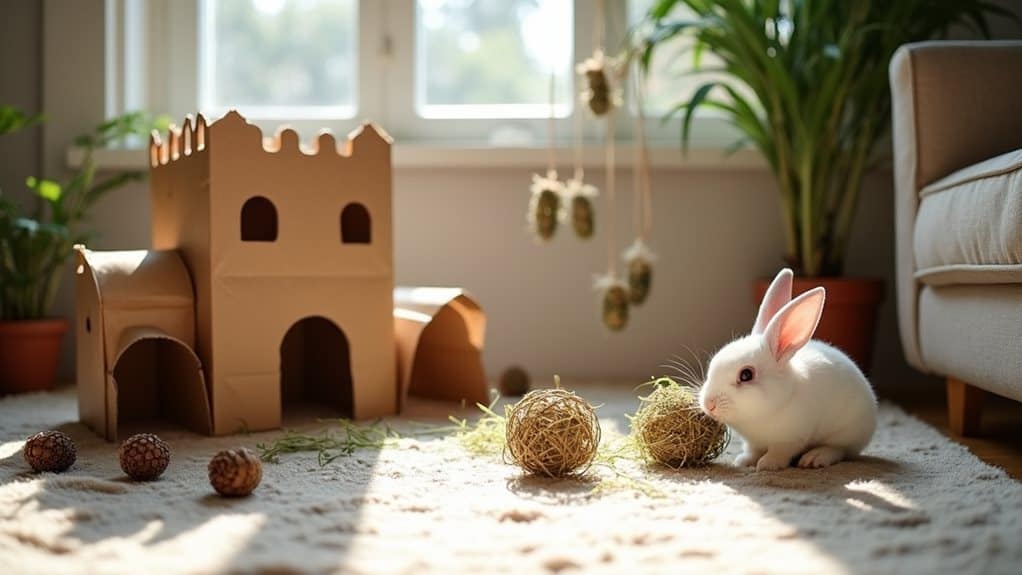
Creating enrichment toys for your rabbit doesn’t require spending a fortune at pet stores. With a few household items and some creativity, you’ll have your bunny entertained for hours.
Transform empty cardboard boxes into diy cardboard castles by cutting doorways, windows, and connecting multiple boxes with tunnels. Your rabbit will love exploring these customizable structures that you can rebuild when they get worn.
Homemade chew toys are just as easy to make. Twist untreated paper bags into ropes, or stuff them with hay for foraging fun.
Apple tree branches (thoroughly dried and pesticide-free) make excellent natural chew toys that help maintain dental health. Even toilet paper tubes stuffed with hay become instant treasures for your furry friend.
Creating Multi-Level Play Zones
Rabbits naturally crave vertical territory, and you’ll notice their joy when they can hop to different levels in their play space.
You can transform your bunny’s habitat by creating multi-tier structures using pet-safe shelves, ramps, and platforms that encourage climbing and exploration.
With some basic carpentry skills, you can build custom wooden platforms or repurpose furniture like bookcases and end tables to create an exciting vertical playground that satisfies your rabbit’s natural instincts.
Vertical Space Benefits
While ground-level play areas are essential, your bunny’s quality of life dramatically improves when you incorporate vertical elements into their environment.
Rabbits naturally enjoy climbing opportunities, and utilizing vertical space advantages can transform their habitat from basic to extraordinary. Your furry friend will develop stronger muscles and better coordination while satisfying their innate curiosity.
Consider adding these vertical elements to your rabbit’s play area:
- Multi-tiered platforms connected by ramps for safe exploration
- Sturdy wooden boxes of different heights arranged as “rabbit stairs”
- Cozy raised hideaways where they can observe their surroundings
You’ll notice your bunny becoming more active and confident as they master their three-dimensional playground.
Their natural jumping abilities will shine as they hop from level to level, bringing joy to both of you!
Multi-Tier Construction Ideas
Now that you understand the importance of vertical space, let’s explore specific ways to build multi-level playgrounds for your bunny.
Creating a network of multi level platforms connected with climbing ramps gives your rabbit both exercise and mental stimulation.
You don’t need expensive equipment—repurpose sturdy cardboard boxes, wooden crates, or low bookshelves as platforms.
Secure them to prevent tipping, and cover with non-slip material so your bunny can hop confidently.
Connect these levels with gently sloped ramps (about 30-45 degree angles) lined with carpet for better traction.
Rotating Toys to Maintain Interest
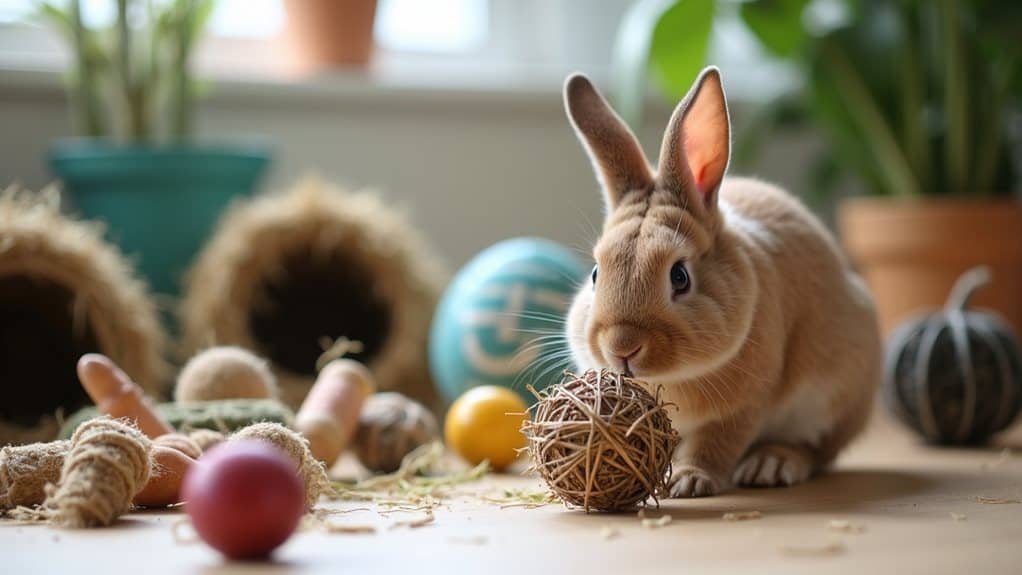
Just as children grow bored with the same toys day after day, your fluffy companions will quickly lose interest in playthings that never change.
Implementing a consistent toy rotation schedule keeps your rabbit’s environment fresh and stimulating. Every week, swap out a few toys while keeping favorites accessible, creating a balance between novelty and comfort.
Interest maintenance doesn’t require expensive purchases. Simply store toys in three separate containers and rotate them monthly to make old toys feel new again.
- Create a calendar reminder for toy rotation days to establish a consistent schedule
- Note which toys generate the most excitement so you can strategically reintroduce them
- Include seasonal items that offer different textures and experiences
Your rabbit’s curious nature thrives on variety. When they hop excitedly toward a rediscovered toy, you’ll know your rotation system is working perfectly!
Foraging Activities for Mental Stimulation
Beyond rotating toys, rabbits benefit immensely from activities that engage their natural foraging instincts. You’ll notice your bunny’s excitement when you introduce foraging techniques that challenge their problem-solving abilities.
Try hiding small treats in crumpled paper, cardboard tubes, or specialized puzzle toys to stimulate their curiosity and reward their persistence.
Creating a sensory exploration zone doesn’t need to be complicated. Scatter herbs like basil, cilantro, and mint around their play area, encouraging them to seek out these aromatic treasures.
You can also build a simple dig box using shredded paper or chemical-free soil where they’ll happily excavate hidden vegetables.
These activities not just prevent boredom but also reduce stress by allowing your rabbit to express natural behaviors.
Watch how quickly they transform from lazy loungers to enthusiastic foragers when given the opportunity!
Social Enrichment and Bonding Opportunities
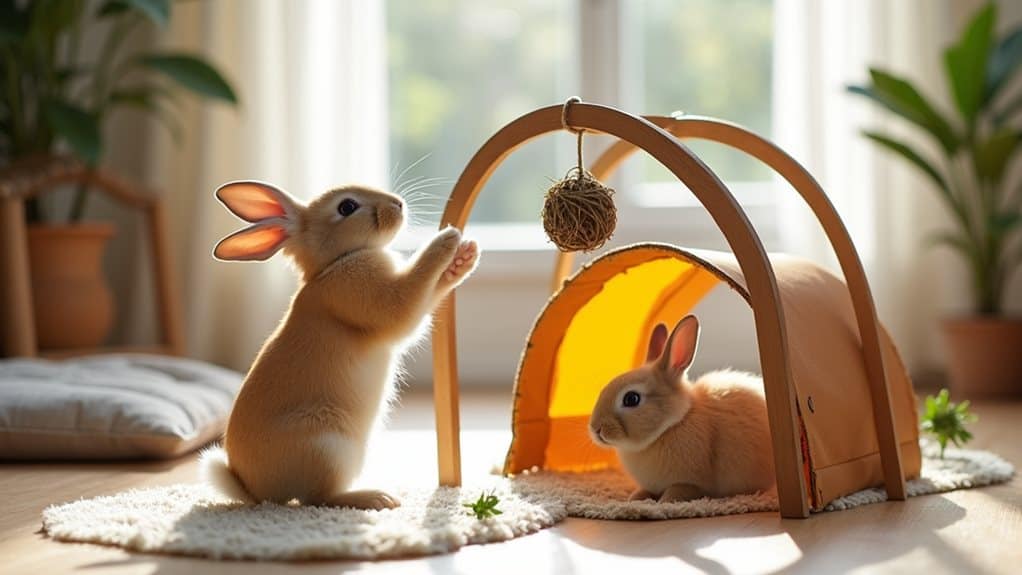
While toys and foraging activities provide essential mental stimulation, rabbits thrive on meaningful social interaction as the cornerstone of their emotional wellbeing.
You’ll notice your bunny perking up during bonding games like gentle petting sessions or shared quiet time on the floor. These social interactions help build trust between you and your furry friend, reducing stress and creating a happier home environment.
Consider incorporating these bonding opportunities into your rabbit’s play area:
- Floor time where you sit quietly, allowing your rabbit to approach and explore you
- Gentle grooming sessions that mimic how bonded rabbits care for each other
- Interactive play with you as a participant, rather than merely an observer
Signs Your Rabbit Is Enjoying Their Play Area
A rabbit happily engaged in play tells a story through body language and behavior. When your bunny is content, you’ll notice the “binky” – those joyful jumps and mid-air twists that signal pure happiness.
Look for relaxed ears, either upright or gently laid back, never flat against their back (which indicates fear).
Curious rabbits will explore enthusiastically, nudging toys and digging in designated areas. Understanding rabbit body language helps you recognize when they’re thriving.
Playful behaviors include zooming around at high speeds (often called “zoomies”), tossing toys, and performing happy hops.
Your rabbit might also show contentment by flopping on their side – a vulnerable position that means they feel safe in their environment.
When your bunny grooms themselves or even tries to groom you, they’re expressing comfort and trust.
Final Thoughts
You’ll find that creating enriching play areas isn’t just good for your bunny—it’s rewarding for you too! Just yesterday, as I finished setting up a cardboard castle, my own rabbit zoomed through it with such joy that we both ended up playing for hours. Remember, your efforts matter deeply to your furry friend’s happiness. By understanding their needs and revitalizing their environment regularly, you’re building a stronger bond that’ll last for years to come.