Affiliate Disclaimer: This site is a participant in the Amazon Services LLC Associates Program, an affiliate advertising program designed to provide a means for sites to earn advertising fees by advertising and linking to Amazon.com. We are compensated for referring traffic and business to Amazon and other companies linked to on this site. We may also do this with other affiliate schemes
Rabbits are naturally clean animals that instinctively choose specific bathroom spots in the wild, a trait that makes them surprisingly trainable house pets. Yet many new rabbit owners struggle with litter training, especially when their bunny seems determined to ignore the perfectly good litter box sitting right there. The truth is, successful litter training isn’t about forcing compliance; it’s about understanding rabbit psychology and working with their natural instincts rather than against them.
Learning how to litter train a rabbit transforms your relationship with your pet. A litter-trained rabbit can enjoy supervised free-roam time, reducing cage confinement and behavioral issues. The process requires patience, consistency, and the right setup, but even rabbits with stubborn personalities can master this essential skill when approached correctly.
Key Takeaways
- Rabbits naturally prefer designated bathroom areas, making them easier to litter train than many people expect, with success rates above 90% for spayed or neutered adults
- The right litter box setup matters enormously: corner boxes with high backs, paper-based litter, and unlimited hay access create an irresistible bathroom destination
- Spaying or neutering dramatically improves training success by reducing territorial marking behaviors that interfere with consistent litter habits
- Stubborn rabbits usually need smaller spaces initially, with gradual expansion only after they’ve established reliable litter habits in confined areas
- Positive reinforcement and patience beat punishment every time,rabbits don’t respond to scolding but thrive with gentle redirection and reward-based training
Understanding Why Rabbits Use (or Ignore) Litter Boxes
Rabbits aren’t being difficult when they miss the litter box, they’re following deeply ingrained instincts. In the wild, rabbits designate specific latrine areas away from their sleeping and eating spaces to avoid attracting predators. This natural behavior is exactly what makes domestic rabbits trainable, but several factors can interfere with this instinct.
Hormonal influences play a massive role. Unaltered rabbits experience strong territorial urges that manifest as marking behavior, small amounts of urine or scattered droppings used to claim space. This isn’t the same as normal bathroom habits and won’t respond to traditional litter training. Spaying or neutering typically resolves 80-90% of marking issues within 4-6 weeks post-surgery as hormone levels stabilize.
Age affects trainability significantly. Adult rabbits (over 6 months) generally train faster than babies because they have better bladder control and more established bathroom preferences. Young rabbits under 4 months may physically lack the control needed for consistent litter habits, though you can still begin the training process.
Health issues sometimes masquerade as training problems. Urinary tract infections, bladder stones, arthritis, or digestive upset can cause accidents. If a previously reliable rabbit suddenly stops using the litter box, a veterinary check should be your first step, not additional training. For guidance on recognizing health concerns, review these warning signs your rabbit needs immediate veterinary attention.
Stress and environmental changes disrupt litter habits temporarily. Moving to a new home, introducing new pets, loud construction noise, or changes in routine can cause regression. Understanding these triggers helps you respond appropriately rather than assuming your rabbit has “forgotten” their training.
Essential Supplies for How to Litter Train a Rabbit
The right equipment makes training exponentially easier. Rabbits have specific preferences, and meeting them reduces resistance significantly.
Choosing the Perfect Litter Box
Size matters more than most people realize. Your rabbit should be able to sit comfortably inside with room to turn around. For medium-sized rabbits (4-8 pounds), look for boxes at least 15 inches long. Larger breeds need correspondingly bigger boxes. Our guide to the 5 best rabbit litter boxes covers specific size recommendations for different breeds.
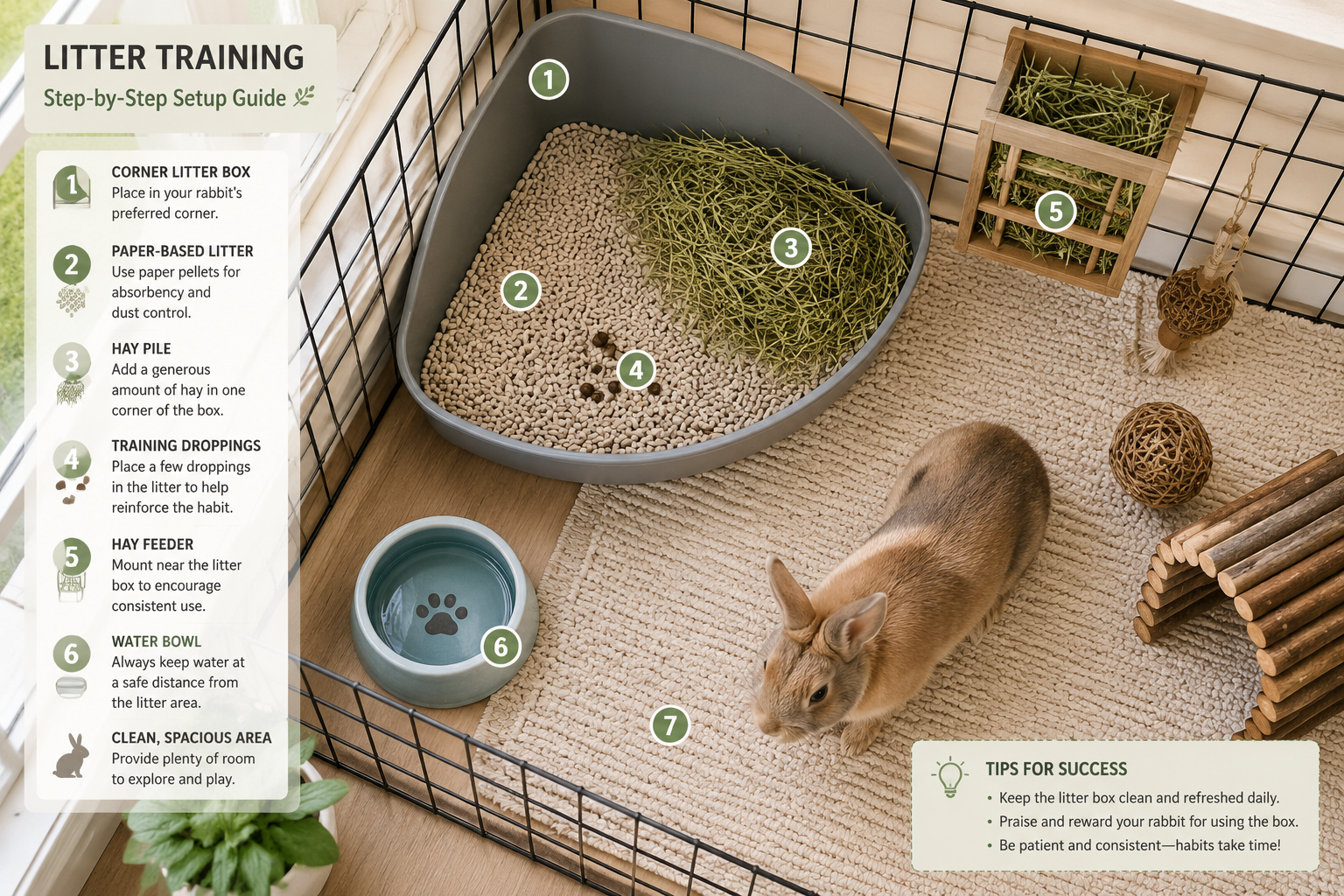
Corner boxes with high backs work exceptionally well because rabbits naturally back into corners to eliminate. The high back wall catches spray (especially important for male rabbits) and contains mess. Low-entry front edges accommodate rabbits with mobility issues or older bunnies with arthritis.
Multiple boxes become necessary for free-roam rabbits or multi-level housing. Place one in each area your rabbit frequents. Expecting a rabbit to travel across an entire house to use a single box sets them up for failure.
Selecting Safe, Effective Litter
Never use clay-based cat litter, clumping litter, or cedar/pine shavings. These materials cause serious respiratory problems and digestive blockages if ingested. Rabbits groom their feet and will inevitably consume small amounts of whatever litter you use.
Paper-based pellets (like Yesterday’s News or similar brands) are the gold standard. They’re highly absorbent, control odor effectively, safe if eaten in small quantities, and easy to clean. They’re also dust-free, protecting your rabbit’s sensitive respiratory system.
Aspen shavings work as a budget-friendly alternative, though they’re less absorbent and require more frequent changes. They’re safe and comfortable but create more mess than pellets.
Avoid using hay as litter. While some guides suggest this, it teaches rabbits that hay is for eliminating on rather than eating, potentially reducing their crucial fiber intake. Instead, place hay in a feeder directly above or beside the litter box.
The Hay Connection
Here’s a secret that dramatically accelerates training: rabbits naturally eat and eliminate simultaneously. Their digestive system triggers bowel movements during eating. Placing unlimited hay directly beside or in a hay rack above the litter box creates an irresistible bathroom destination.
This setup serves multiple purposes:
- Encourages extended time in the litter box
- Ensures adequate fiber intake for digestive health
- Makes the litter box a positive, rewarding place
- Reduces boredom during bathroom time
Invest in a quality hay feeder that prevents waste and positions hay at the perfect height for comfortable eating while sitting in the litter box.
Cleaning Supplies
Enzyme-based cleaners are non-negotiable for accidents outside the box. Regular household cleaners don’t eliminate the urine scent that rabbits can still detect, which encourages repeat accidents in the same spot. Enzyme cleaners break down the organic compounds completely, removing the scent marker.
A litter mat placed in front of the box catches stray litter pellets and reduces tracking throughout your home. This small investment saves considerable cleanup time.
Step-by-Step: How to Litter Train a Rabbit Successfully
Phase 1: Confinement and Observation (Days 1-7)
Start in a small, confined space, either a large cage or a small exercise pen area (approximately 4×4 feet). This isn’t punishment; it’s strategic. In limited space, rabbits naturally choose one corner for bathroom purposes, making it easy to identify their preferred spot.
Place the litter box in the corner your rabbit chooses, not where you think it should go. Watch for 24-48 hours to see where they naturally eliminate, then position the box there. Fighting their instinctive preference creates unnecessary resistance.
Collect all droppings and urine-soaked bedding and place them in the litter box. This scent-marking tells your rabbit “this is the bathroom.” Rabbits rely heavily on scent cues, and this simple step communicates the box’s purpose in their language.
Remove all other bedding except what’s in the litter box. If the entire floor is soft and absorbent, there’s no incentive to use the box specifically. Use washable fleece blankets or mats in sleeping areas, but keep them distinct from the litter zone.
Observe without interfering. Note when your rabbit uses the box successfully and when accidents occur. Most rabbits eliminate after waking up, after eating, and during active play periods. These patterns help you anticipate and reinforce good habits.
Phase 2: Positive Reinforcement (Ongoing)
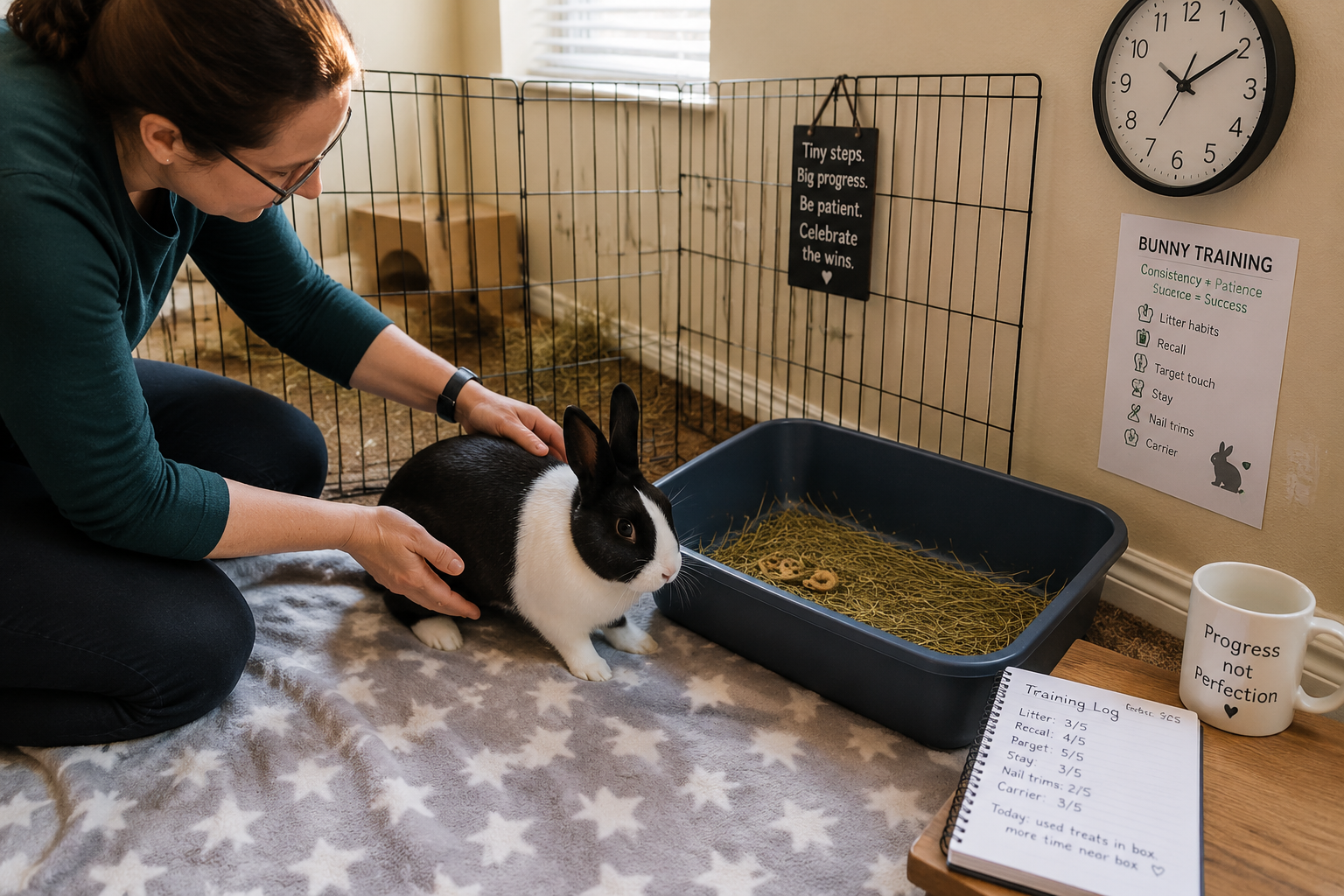
Reward immediately when you catch your rabbit using the litter box correctly. Use a small piece of their favorite vegetable, a tiny pinch of pellets, or enthusiastic verbal praise. Timing is critical, the reward must come within 2-3 seconds of the behavior to create the association.
Never punish accidents. Rabbits don’t understand punishment and will only learn to fear you, not to use the litter box. Yelling, nose-tapping, or confinement as punishment damages trust and can worsen behavioral issues. Simply clean accidents thoroughly with enzyme cleaner and move on.
Redirect gently if you see your rabbit starting to eliminate outside the box. Calmly pick them up and place them in the litter box. If they finish there, reward them. This teaches the correct location without creating negative associations.
Phase 3: Gradual Space Expansion (Weeks 2-4)
Once your rabbit consistently uses the litter box in their confined space for 7-10 days straight, you can begin expanding their territory, but slowly. This is where many people rush and undo weeks of progress.
Add 2-3 square feet of space to their area. Monitor for several days. If they maintain perfect litter habits, add a bit more space. If accidents occur, reduce the space again temporarily. This isn’t failure; it’s information about your rabbit’s current capability.
Add additional litter boxes as you expand space. For free-roam rabbits, place boxes in every room they access regularly. The general rule is one box per room, plus one extra. Making the litter box convenient removes excuses for accidents.
Block off areas where accidents occur repeatedly. If your rabbit insists on eliminating under a specific piece of furniture, either place a litter box there or make that spot inaccessible. Sometimes accepting their preferred location is easier than fighting it.
Special Strategies for Stubborn Rabbits
Some rabbits resist training despite perfect setups and consistent methods. These individuals need modified approaches.
The Multiple Box Method
Stubborn rabbits often have strong preferences for specific locations. Instead of fighting this, place litter boxes in every spot where accidents occur. Yes, this means you might have 4-5 boxes initially. Once your rabbit reliably uses all boxes, you can gradually remove one at a time, starting with the least-used box.
This approach works because it removes the conflict. You’re not trying to change their preferred bathroom locations; you’re simply making those locations appropriate. Many rabbits eventually consolidate to 1-2 preferred boxes as they mature.
The Scent Transfer Technique
For rabbits who seem confused about the litter box’s purpose, intensify scent cues. Place a handful of soiled litter from a successful litter-trained rabbit (if you have access to one) in your rabbit’s box. The scent of another rabbit using the box as a bathroom provides a powerful example.
Alternatively, save a small amount of your rabbit’s urine-soaked litter each time you clean and add it back to the fresh litter. This maintains the bathroom scent while keeping the box clean enough to be appealing.
The Restricted Diet Approach
This sounds counterintuitive, but temporarily feeding your rabbit exclusively in or directly beside the litter box can break stubborn resistance. Since rabbits naturally eliminate while eating, this creates repeated successful experiences in the box.
Once habits improve, gradually move the food bowl away from the litter box over several weeks. Maintain the hay placement beside the box permanently, but the pellet bowl can eventually return to a separate feeding station.
Addressing Territorial Marking
If your rabbit is spayed or neutered but still marking, consider whether they feel insecure in their environment. Territorial marking increases with stress, perceived threats, or competition for resources.
Solutions include:
- Providing more hiding spots and elevated perches for security
- Ensuring adequate space (minimum 8 square feet of living area)
- Separating bonded pairs temporarily if one is bullying the other
- Reducing exposure to outdoor animals visible through windows
- Maintaining consistent routines to reduce anxiety
For rabbits in multi-pet households, sometimes the presence of dogs or cats triggers marking behavior. Creating rabbit-only zones where other pets can’t access may resolve the issue.
Common Mistakes That Sabotage Training
Cleaning the litter box too frequently removes the scent cues your rabbit needs. During initial training, clean only once every 2-3 days (assuming proper litter depth). Once habits are established, daily cleaning is fine, but always leave a small amount of soiled litter as a scent marker.
Expanding space too quickly is the number one reason for training regression. Patience during the gradual expansion phase prevents having to restart the entire process. Think weeks, not days, for each expansion increment.
Using the wrong litter box size frustrates rabbits. A box that’s too small is uncomfortable and won’t be used consistently. Bigger is almost always better, you can’t really go too large unless the box won’t fit in the designated space.
Expecting perfection immediately sets you up for disappointment. Even well-trained rabbits occasionally have accidents, especially during illness, stress, or hormonal fluctuations. A 90-95% success rate is excellent; 100% is unrealistic.
Ignoring the spay/neuter factor dooms training efforts for intact rabbits over 6 months old. Hormonal marking behaviors are nearly impossible to train away. If you’re struggling with an unaltered rabbit, surgical intervention should be your first priority, not additional training techniques.
Maintaining Long-Term Success
Once your rabbit is reliably litter trained, maintenance becomes straightforward but still requires consistency.
Establish a cleaning routine that works for your schedule. Most rabbit owners find that scooping droppings daily and completely changing litter 2-3 times weekly keeps odor controlled and the box appealing. Using a dedicated pooper scooper makes daily maintenance quick and easy.
Watch for regression signals that might indicate health issues. Sudden changes in litter habits, straining to urinate, blood in urine, or excessive drinking warrant immediate veterinary attention. Bladder sludge and urinary tract infections are common in rabbits and present initially as litter box avoidance.
Maintain the hay-beside-box setup permanently. This isn’t just a training tool; it’s an ongoing strategy that supports both litter habits and digestive health. Rabbits should consume their body size in hay daily, and the litter box placement encourages this essential behavior.
Refresh your enzyme cleaner supply and treat any accidents immediately. Even well-trained rabbits may have occasional mishaps during stressful periods, and quick cleanup prevents the spot from becoming a new bathroom location.
Consider digestive support if your rabbit’s droppings become inconsistent in size or frequency, as this can affect litter box habits. Quality digestive supplements can help maintain the regular elimination patterns that support good litter habits.
Troubleshooting Persistent Problems
Problem: Urinates in Box but Poops Everywhere
This is actually normal rabbit behavior to some extent. Rabbits scatter some droppings as territorial markers even when litter trained. However, if your rabbit leaves large piles of droppings outside the box, they may need:
- More time in the confined training space
- Additional litter boxes in areas where poop piles appear
- More frequent rewards for pooping in the box specifically
- Evaluation for digestive issues causing urgency
Problem: Uses Box Perfectly in Cage, Ignores It During Free Time
Your rabbit isn’t being spiteful, they simply haven’t generalized the behavior to the larger space yet. Solutions:
- Reduce free-roam space significantly and rebuild gradually
- Add multiple litter boxes throughout the free-roam area
- Supervise free time closely and redirect to the box every 15-20 minutes initially
- Limit free-roam sessions to 30-60 minutes until habits improve
Problem: Started Great, Then Suddenly Stopped
Sudden regression in a previously trained rabbit almost always indicates:
- Medical issues (urinary tract infection, bladder stones, arthritis making box entry painful)
- Environmental stress (new pet, construction noise, schedule changes)
- Litter box aversion (box too dirty, litter type changed, box moved to scary location)
- Territorial challenges (new rabbit in household, outdoor animals visible)
Address the underlying cause rather than retraining. Once the trigger is resolved, habits typically return quickly.
Problem: Spraying Urine on Walls
This is classic territorial marking, most common in unneutered males but possible in any rabbit. Solutions:
- Spay/neuter if not already done
- Use litter boxes with higher backs (12+ inches)
- Place boxes in corners where spraying occurs
- Reduce territorial stress by providing adequate space and resources
- Consider whether bonding issues with other rabbits are triggering competition
FAQ
How long does it take to litter train a rabbit?
Most rabbits show significant progress within 1-2 weeks of consistent training, with reliable habits established by 4-6 weeks. Spayed or neutered adults train fastest, often within days. Young rabbits under 6 months may take 2-3 months to develop complete bladder control. Stubborn individuals occasionally need 8-12 weeks of patient, consistent work. The key is gradual space expansion, rushing this phase causes most training failures.
Can you litter train an older rabbit?
Absolutely. Adult rabbits often train more easily than babies because they have better bladder control and more established bathroom preferences. Age itself isn’t a barrier; however, older rabbits with arthritis may need boxes with lower entry points and softer litter. Senior rabbits sometimes develop medical issues affecting continence, so veterinary clearance is wise before assuming training problems are behavioral.
Do all rabbits naturally use litter boxes?
Rabbits have a natural instinct to designate bathroom areas, but this doesn’t automatically translate to using a human-provided litter box. Training is still necessary to direct this instinct to the specific location you want. Unaltered rabbits have much stronger marking behaviors that override bathroom training. While most rabbits can be litter trained successfully, individual personality, health status, and hormonal factors affect how easily they learn.
What if my rabbit keeps eating the litter?
Switch to a different litter type immediately. Paper-based pellets are generally safe if small amounts are consumed, but eating litter in quantity suggests either boredom or nutritional deficiency. Ensure your rabbit has unlimited hay access, which should satisfy their chewing needs. Some rabbits eat litter when they’re not getting enough fiber. Review your rabbit’s overall diet and consider whether they need more hay variety or better quality forage.
Should I use a covered or open litter box?
Most rabbits prefer open boxes that don’t restrict their vision and escape routes. Covered boxes can trap odors and make rabbits feel vulnerable, reducing their willingness to use them. However, some rabbits who spray urine benefit from high-backed corner boxes that provide partial coverage. Observe your individual rabbit’s preferences, if they consistently avoid a covered box, switch to an open design.
Can you train two rabbits to share a litter box?
Yes, bonded rabbit pairs typically share litter boxes without issues and may even prefer it, as rabbits are social animals who often eliminate near each other. Provide boxes large enough for both rabbits to use simultaneously (at least 24 inches long for medium-sized pairs). Some pairs need multiple boxes to prevent territorial disputes. Monitor the situation, if one rabbit guards the box or bullying occurs, add a second box in a different location.
Conclusion
Learning how to litter train a rabbit successfully comes down to understanding rabbit psychology, creating the right environment, and maintaining patient consistency. Even stubborn rabbits respond to these methods when given adequate time and appropriate space management. The investment in proper training pays dividends in reduced cleaning time, better rabbit-owner relationships, and the ability to give your rabbit more freedom in your home.
Start with confinement in a small space, use the right supplies (especially paper-based litter and strategic hay placement), and expand territory only after establishing reliable habits. Remember that spaying or neutering dramatically improves success rates by eliminating hormonal marking behaviors. Most importantly, work with your rabbit’s natural instincts rather than against them, place boxes where they want to go, not just where you prefer.
Your next steps: Assess your current setup against the guidelines in this article, make any necessary adjustments to litter type or box placement, and commit to the gradual expansion timeline. If you’re starting fresh with a new rabbit, begin the confined training phase immediately. For stubborn cases, try the multiple box method or intensified scent cues before assuming your rabbit simply can’t be trained. With the right approach, nearly every rabbit can master this essential skill, transforming them into the clean, enjoyable house pets they’re naturally inclined to be.