Affiliate Disclaimer: This site is a participant in the Amazon Services LLC Associates Program, an affiliate advertising program designed to provide a means for sites to earn advertising fees by advertising and linking to Amazon.com. We are compensated for referring traffic and business to Amazon and other companies linked to on this site. We may also do this with other affiliate schemes
Proper Angora rabbit maintenance requires weekly blowing sessions with a powerful blower to prevent mats, especially during heavy shedding seasons. You’ll need quality tools like a slicker brush, rounded-tip scissors, and a non-slip grooming table. Feed a high-protein diet (16-18%) with Timothy hay to support wool quality. Create a calm environment during grooming and use rewards to reduce stress. The right techniques will transform your routine and your rabbit’s magnificent coat.
Understanding Angora Wool Growth Cycles
When you first bring home an Angora rabbit, you’ll quickly discover that understanding their wool growth cycles is essential to proper care.
These fluffy companions don’t just grow their magnificent coats overnight—they follow distinct patterns that you’ll need to monitor.
Typically, Angora wool growth cycles through four phases: active growth, changeover, rest, and shedding.
You’ll notice your bunny’s coat grows about 1-2 inches monthly during active phases, then slows down before entering a brief resting period.
After that comes the dreaded shedding stage, when you’ll find wool everywhere!
Essential Tools for Professional Angora Grooming
Four essential tools stand between you and a well-groomed Angora rabbit.
First, invest in a high-quality slicker brush that’s gentle enough for daily use but effective at preventing mats in different fiber types.
Second, sharp grooming scissors with rounded tips allow you to safely trim problem areas without risking your rabbit’s sensitive skin.
Don’t overlook a sturdy grooming table with non-slip surface—your back will thank you during those marathon grooming sessions!
Finally, a powerful blower (not a vacuum) helps separate fibers and remove loose wool between major harvests.
Preventative Blowing Techniques to Minimize Matting
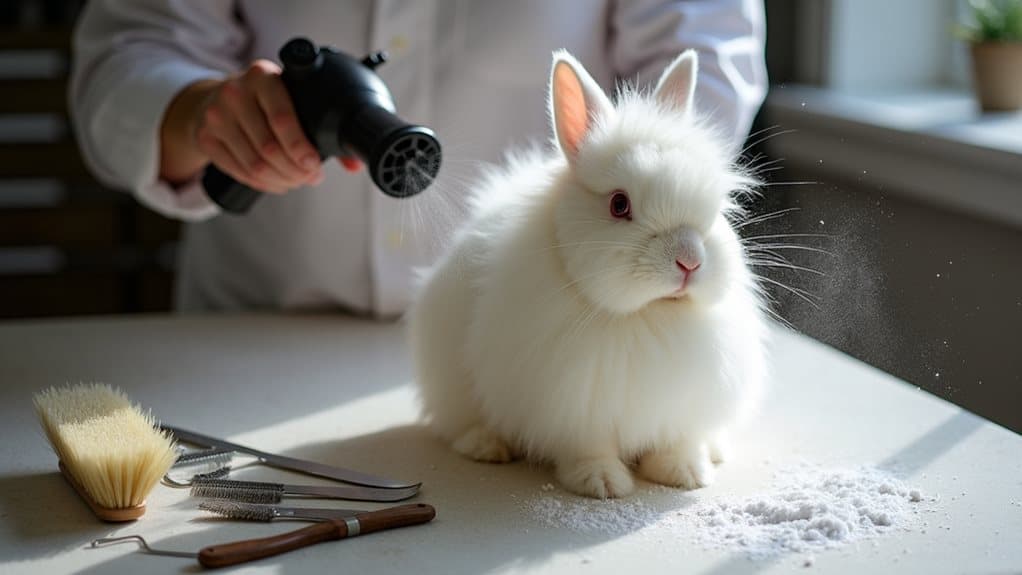
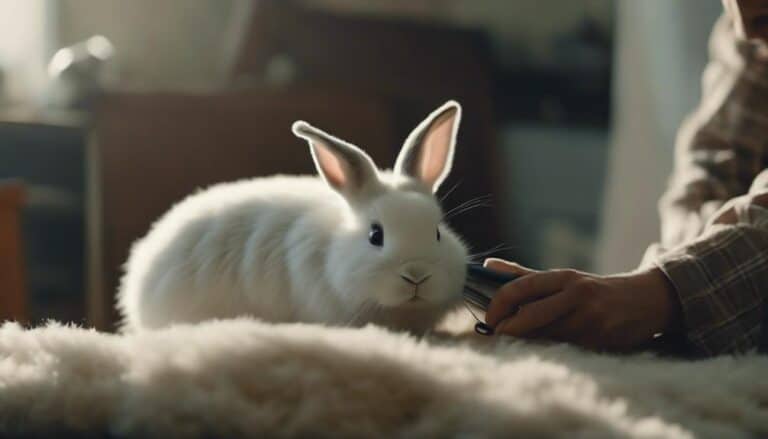
Regular blowing sessions are your secret weapon against the dreaded wool mats that plague Angora rabbits. Using a good-quality blower, you’ll separate fibers and remove loose wool before it creates problems.
These preventative techniques don’t just save time—they’ll keep your bunny comfortable and its coat in prime condition.
- Set up a weekly blowing schedule, increasing frequency during heavy shedding seasons
- Hold your rabbit securely but gently on a non-slip surface during sessions
- Start with low air pressure and gradually increase as your rabbit becomes comfortable
- Work systematically from head to tail, paying special attention to trouble spots
- Follow blowing with a quick comb-through to catch any remaining matting solutions
You’ll soon notice fewer mats and a happier, healthier Angora companion!
Line Brushing Methods for Maximum Wool Preservation
Line brushing stands as the cornerstone technique for preserving your Angora rabbit‘s precious wool. This method involves carefully working through small sections of your bunny’s coat, starting at the skin and moving outward.
You’ll want to hold a section of fur at the base, then gently brush through it with a fine-toothed comb to avoid painful tugging.
For effective wool preservation tips, establish a routine of line brushing twice weekly, focusing on problem areas like behind the ears and under the chin.
Don’t rush this process! Patience pays off in healthier wool and a happier rabbit. Remember, each stroke should be deliberate and gentle.
Your Angora will thank you with better quality wool and fewer mats, which means less wool waste during harvesting season.
Specialized Clipping Patterns for Show-Quality Coats
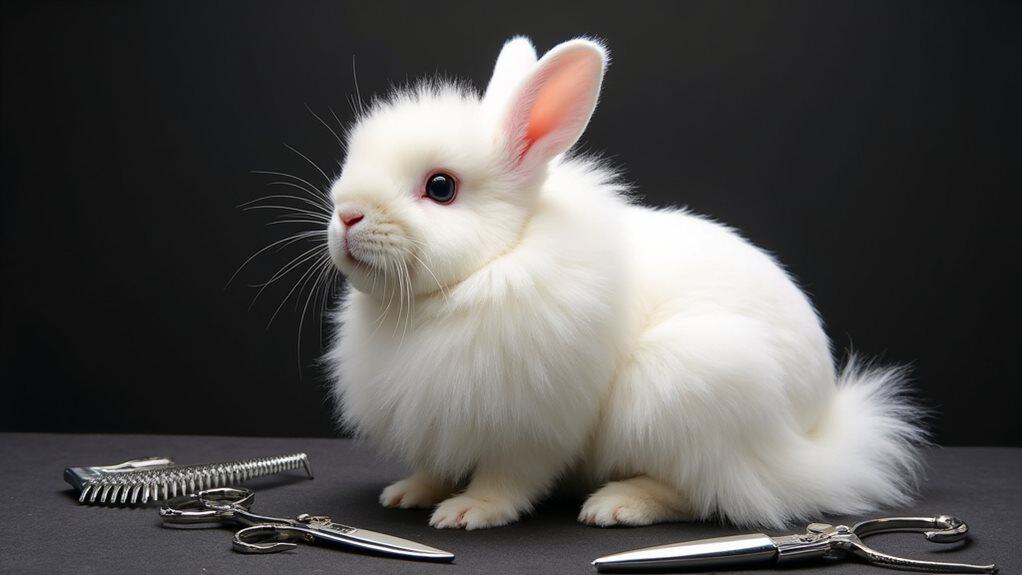
Achieving that perfect show-quality coat for your Angora rabbit requires mastering specialized clipping patterns that highlight your bunny’s best features.
When you’re preparing for competition, you’ll need to follow specific show standards while developing your clipping techniques. Remember, judges look for symmetry and precision in every tuft!
- Start with the “lion cut” pattern, leaving the head and shoulders full while trimming the body.
- Maintain a 2-inch uniform length around the rabbit’s midsection for the “English style” presentation.
- Shape the hindquarters in a rounded “pom-pom” formation for French Angoras.
- Trim facial wool in a perfect halo shape, being careful around sensitive areas.
- Create clean, crisp lines between different length sections for that wow-factor judges love.
Managing Seasonal Molts and Wool Blocks
While grooming and show preparation are important, your Angora’s health depends on properly managing their seasonal molts and preventing dangerous wool blocks.
Angoras typically experience four molting cycles annually, with more intense shedding during spring and fall. You’ll notice changes in wool health when molting begins—the coat may appear dull or feel slightly different under your fingers.
Don’t panic! This is nature’s way of revitalizing your bunny’s magnificent coat.
During heavy molts, increase your grooming frequency to daily sessions. This prevents your rabbit from ingesting excessive fur while self-grooming, which can lead to potentially fatal wool blocks in their digestive system.
Keep fresh hay available at all times, as the fiber helps move ingested wool through their system.
Bathing and Conditioning Protocols for Fiber Quality
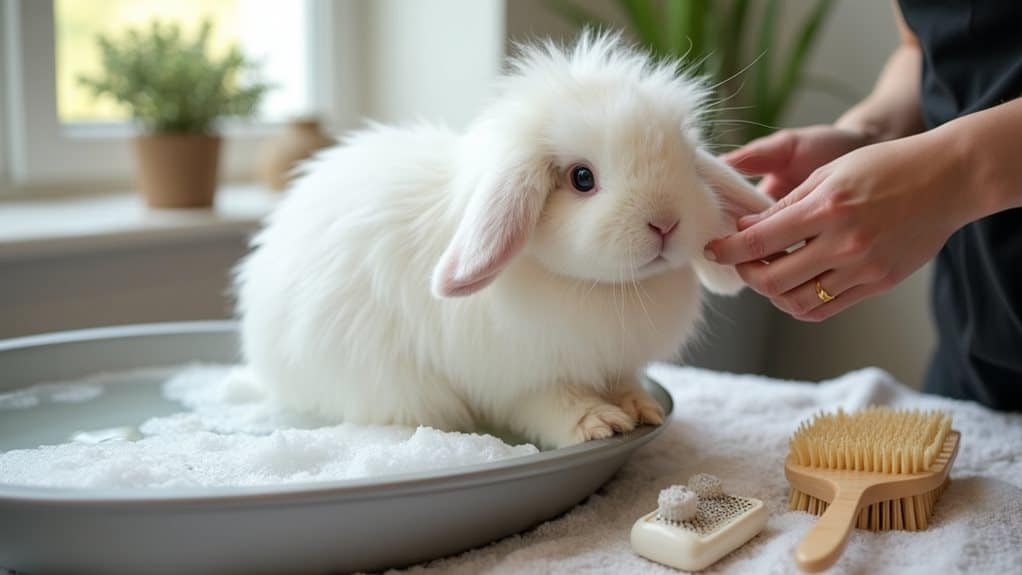
You’ll want to establish a seasonal bathing schedule for your Angora rabbits, typically washing them once before each major molt to prevent matting and keep their wool pristine.
During these baths, silk protein treatments can dramatically improve fiber texture, creating softer, more lustrous wool that’s prized by spinners and crafters.
Remember to thoroughly dry your rabbit after each bath, as damp wool can lead to skin problems and decrease the overall quality of your harvest.
Seasonal Bathing Schedules
When should you bathe your Angora rabbit? Contrary to popular belief, regular bathing isn’t necessary for these fluffy friends. Your seasonal grooming routine should focus on brushing rather than bathing, as too frequent baths can actually stress your rabbit and damage their delicate coat.
Most Angoras only need 1-2 baths per year, typically aligned with their seasonal molts.
- Spring bath helps remove winter undercoat and prepares for summer weather
- Fall bath removes summer dust before dense winter coat grows in
- Bath frequency should decrease during extreme temperature months
- Post-show baths can be scheduled separately from your seasonal routine
- Emergency spot cleaning works better than full baths for localized soiling
Silk Protein Treatments
Although silk protein treatments sound luxurious, they’re actually harmful for your Angora rabbit’s delicate coat.
Despite marketing claims about silk benefits, these products contain chemicals that can irritate your bunny’s sensitive skin and damage their wool fibers.
When you’re tempted by fancy protein applications promising shinier fur, remember that Angora rabbits already produce exquisite wool naturally.
Your rabbit’s coat doesn’t need these synthetic improvements! Instead, stick to gentle, rabbit-safe grooming tools and plain water for occasional cleaning.
If you’re concerned about coat quality, focus on proper nutrition and regular brushing instead.
A healthy diet rich in quality hay will do more for your bunny’s gorgeous fur than any silk treatment ever could.
Your Angora will thank you with happier behavior and healthier wool!
Dietary Influences on Wool Texture and Production
The quality of your Angora rabbit’s wool depends greatly on what’s in their food bowl each day. Your fluffy friend needs specific nutrients to grow that luxurious coat you love. Proper dietary supplements can dramatically improve fiber quality, turning mediocre wool into premium fibers that spinners dream about.
- High-protein feeds (16-18%) support strong, resilient wool growth
- Timothy hay provides crucial roughage that prevents wool block
- Omega-3 fatty acids create shinier, more elastic fibers
- Biotin supplements reduce brittleness and breakage
- Fresh, clean water (changed daily) prevents dehydration that makes wool coarse
You’ll notice the difference in just a few weeks—softer texture, fewer breaks, and more vibrant color. Your rabbit will feel better too, with less shedding and more consistent wool production year-round.
Stress Reduction Strategies During Intensive Grooming Sessions
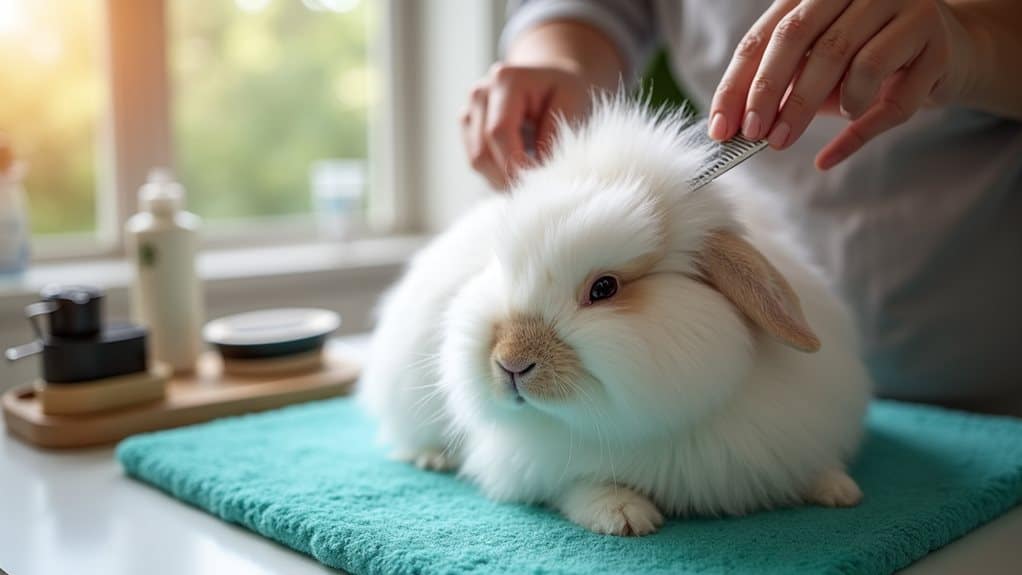
Creating a calm environment before you begin grooming your Angora rabbit will greatly reduce their stress and make the process more seamless for both of you.
How you handle your fluffy friend matters – gentle, confident movements and supportive positioning will help them feel secure during these necessary but sometimes lengthy grooming sessions.
You’ll find your rabbit becomes more cooperative when you incorporate a reward-based approach, offering small treats or praise throughout the grooming process to create positive associations.
Calm Environment Setup
Making certain your Angora rabbit feels secure during grooming sessions starts with a thoughtfully designed environment that minimizes stress. Your bunny’s comfort directly affects how well grooming techniques work and how pleasant the experience is for both of you.
Environment enrichment isn’t just about fancy toys—it’s about creating a sanctuary where your fluffy friend feels safe enough to relax during necessary handling.
- Choose a quiet room away from household traffic and loud noises
- Use a non-slip mat on your grooming surface so your rabbit feels secure
- Keep the room at a comfortable temperature (65-75°F is ideal)
- Have familiar toys or a small treat nearby as positive reinforcement
- Maintain soft, diffused lighting rather than harsh, direct light
You’ll notice your Angora’s demeanor change when these elements come together properly!
Handling Techniques Matter
When handled properly during grooming sessions, Angora rabbits respond with remarkable calmness that makes the entire process more seamless for everyone involved.
Your handling techniques directly influence how your fluffy friend experiences grooming, which affects both their health and wool quality.
Always approach your rabbit from above rather than head-on, which can seem threatening. Support their hindquarters while cradling their body against yours—this creates security and prevents struggling.
You’ll notice the grooming benefits immediately: less shed wool, fewer mats, and a happier bunny.
Before lengthy sessions, try wrapping your Angora in a soft towel “bunny burrito” style, leaving only the section you’re working on exposed.
This gentle restriction provides comfort while you tackle those challenging woolly areas.
Reward-Based Grooming Approach
A well-timed treat can transform your Angora’s grooming experience from a stressful ordeal into a positive interaction. When you incorporate grooming rewards and positive reinforcement, you’ll build trust while maintaining their luxurious coat. Your rabbit will actually look forward to these sessions rather than fearing them.
- Begin with small grooming periods, offering a favorite veggie immediately after
- Keep special treats (like a tiny piece of banana) exclusively for grooming time
- Speak in a soothing voice throughout the session to calm your bunny
- Create a consistent routine so your Angora knows what to expect
- Take breaks during longer sessions, rewarding patience with gentle pets and treats
Collecting and Processing Harvested Angora Wool
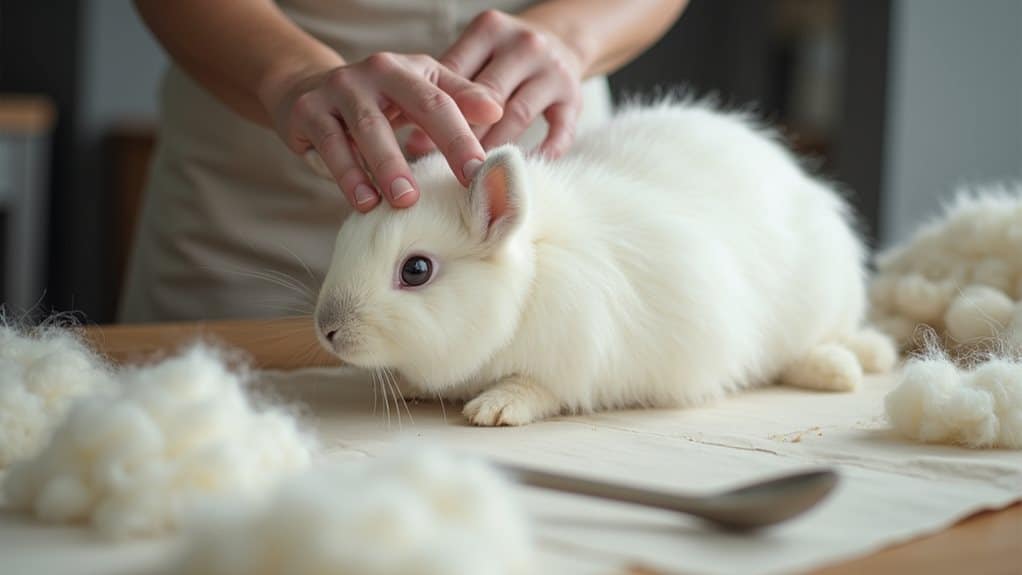
Three essential steps transform freshly harvested Angora wool into a usable fiber for spinning and crafting.
First, you’ll need to sort the wool immediately after collection, removing any debris or matted sections. Proper harvesting techniques make this easier—whether you’re plucking, shearing, or using the gentle combing method that many breeders prefer.
Next, wash your wool with mild soap in lukewarm water. Don’t scrub too vigorously or you’ll risk felting those precious fibers! The wool processing continues with thorough drying on a flat, clean surface away from direct sunlight.
Finally, card the wool to align the fibers in the same direction. You’ll be amazed at how your rabbit’s fluffy coat transforms into luxurious, spinnable fiber that’s four times warmer than sheep’s wool!
Final Thoughts
You’ve now got the full toolkit to keep your fluffy friend looking their best! With regular attention to their cloud-like coat, you’ll prevent those pesky “wool challenges” before they start. Remember, your rabbit’s gorgeous fleece is a reflection of your dedicated care. When you’re elbow-deep in grooming, your patience pays off in both your bunny’s health and those luxurious fibers you’ll treasure for years to come.