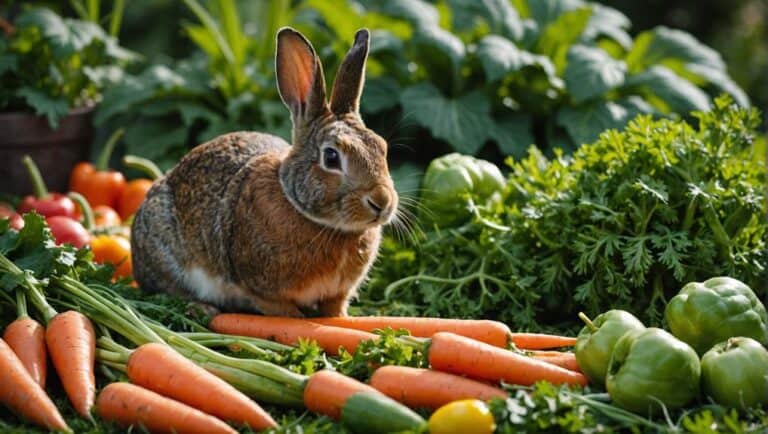
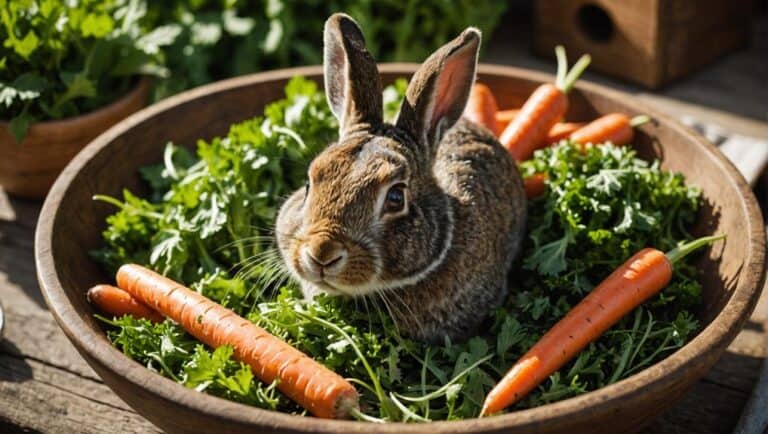
Wild rabbits thrive on a varied diet that changes with the seasons. You'll find them munching on fresh grass, clover, and dandelions in spring and summer, while they switch to bark, twigs, and dried plants during fall and winter. They're particularly fond of garden favorites like lettuce, carrots, and herbs, but they know to avoid toxic plants like foxglove and nightshade. These clever foragers have quite the menu to explore in nature's buffet.
Contents
Natural Vegetation in a Wild Rabbit's Diet
Wild rabbits are nature's expert foragers, thriving on an impressive variety of plants found in their natural habitats.
You'll find these resourceful creatures adapting their dietary preferences to match what's available in their environment, from tender grass shoots to leafy greens and aromatic herbs.
In spring and summer, they'll munch on clover, dandelions, and wild grasses that meet their nutritional needs.
As seasons change, they'll switch to heartier fare like bark, twigs, and dried vegetation.
It's amazing how they instinctively know which plants are safe to eat – you won't catch them nibbling on toxic varieties!
These smart little foragers maintain a balanced diet by sampling different plant parts, including stems, leaves, flowers, and even some fruits when they're in season.
Seasonal Food Sources for Wild Rabbits
Throughout the changing seasons, rabbits adapt their foraging habits to make the most of nature's shifting menu. Their seasonal availability of food depends on what's naturally growing in their environment, and you'll notice their forage preferences change as different plants emerge throughout the year.
Here's what wild rabbits typically seek during different seasons:
- Spring: Fresh grass shoots, tender flower buds, and emerging herbs
- Summer: Abundant grasses, clovers, and wild vegetables
- Fall: Fallen fruits, seeds, and mature plant stems
- Winter: Tree bark, twigs, and any remaining dried vegetation
You'll find that wild rabbits are resourceful creatures who've mastered the art of finding nourishment year-round. They'll adjust their diet based on what's available, guaranteeing they get the nutrients they need to thrive in their natural habitat.
Garden Plants That Attract Wild Rabbits
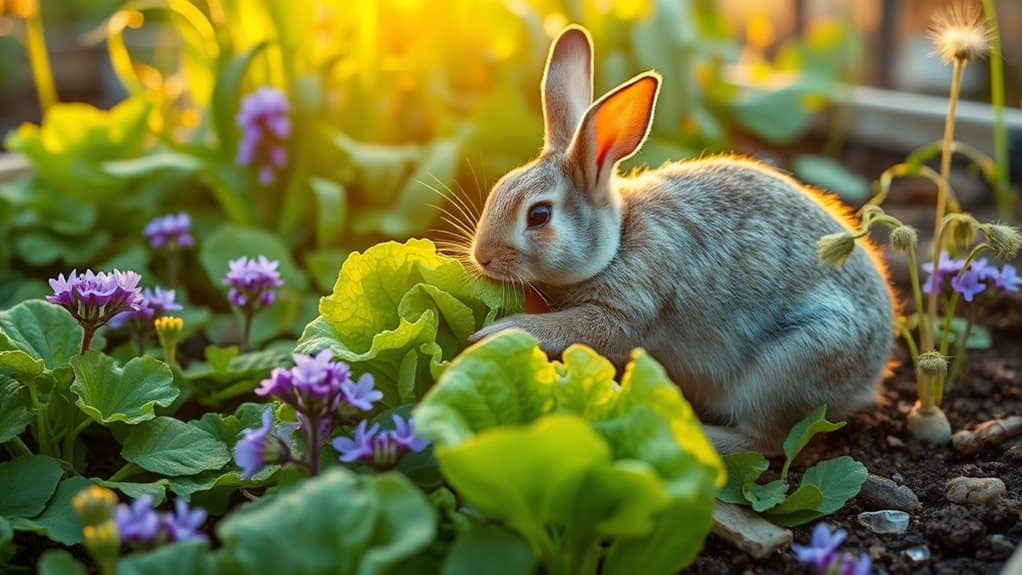
When you're planning your garden, it's important to know which plants might become an all-you-can-eat buffet for local rabbits.
These furry visitors are particularly drawn to tender leafy greens like lettuce, spinach, and kale, which they'll happily munch on throughout the growing season.
Your flowering herbs aren't safe either – rabbits love to nibble on parsley, basil, and cilantro.
You'll often find rabbits sampling your vegetable garden favorites, including carrots, peas, and beans.
They're also attracted to flower beds, especially petunias, pansies, and marigolds.
While it might be frustrating to share your garden with these hungry guests, you can protect your precious plants by installing fencing or using natural deterrents like strong-smelling herbs that rabbits tend to avoid.
Toxic Plants Wild Rabbits Must Avoid
While rabbits enjoy feasting on many garden favorites, nature has equipped them with instincts to avoid dangerous plants that could harm them.
Still, it's important to know which plants pose risks to these furry friends, especially if you're maintaining a yard or garden where wild rabbits visit.
Here are common toxic plants that wild rabbits should avoid:
- Foxglove and other poisonous flowers that contain cardiac glycosides
- Nightshade family plants, including toxic berries and leaves
- Lily of the valley, which can cause severe digestive issues
- Wild mushrooms that appear after rainfall
If you notice wild rabbits in your yard, consider removing these harmful plants to create a safer environment.
Foraging Habits and Feeding Patterns
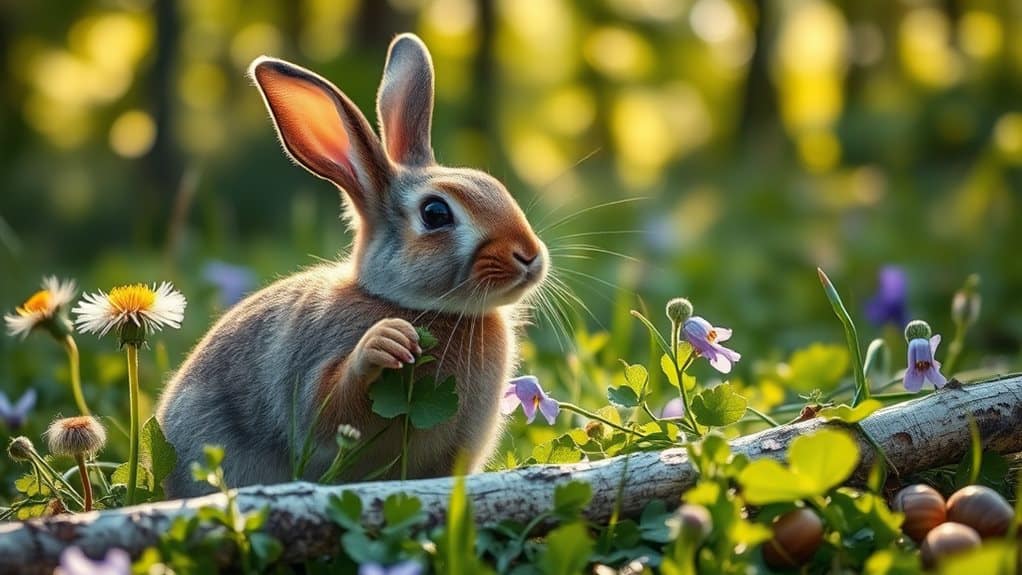
As daylight begins to fade, wild rabbits emerge from their hiding spots to follow predictable feeding patterns that keep them safe and well-nourished.
You'll notice their foraging behavior is most active during dawn and dusk, when they're safer from predators but can still see well enough to find food.
Wild rabbits are picky eaters with specific feeding preferences – they'll carefully choose the most nutritious plants while staying close to protective cover.
They'll nibble quickly, then hop a few feet away to their next snack, always keeping their surroundings in check.
It's like they're playing a careful game of "eat and retreat!"
Final Thoughts
You've learned about wild rabbits' diverse diet, from tender spring shoots to hardy winter bark. As you're watching these fuzzy foragers in your yard, you'll notice they're naturally drawn to the same herbs and leafy greens you might grow in your garden. By understanding their feeding patterns and avoiding toxic plants, you can create a safe environment where these charming creatures thrive alongside your outdoor space.