Rabbit vaccination needs vary dramatically by region. While U.S. domestic rabbits rarely need vaccines, those in the UK and Europe require protection against myxomatosis and RHD. Start core vaccinations at 10-12 weeks with annual boosters thereafter. Watch for mild side effects like lethargy after shots, providing a quiet recovery space. Finding a rabbit-savvy vet who’ll partner with you on healthcare decisions is essential. The right preventative care strategy could save your bunny’s life.
Contents
Core Vaccines for Domestic Rabbits
Unlike dogs and cats that require several vaccinations, domestic rabbits don’t actually need core vaccines in most countries. This surprises many first-time rabbit owners who assume all pets need similar preventative care.
Despite the lack of core vaccine importance in places like the United States, it’s vital to understand that vaccination myths often circulate online. You’ll find plenty of misinformation suggesting rabbits need regular shots, but that’s simply not true for most domestic bunnies.
Your fuzzy friend doesn’t require distemper or rabies vaccines like your neighbor’s puppy does. However, if you’re in the UK, Australia, or parts of Europe, your rabbit should receive the myxomatosis and viral hemorrhagic disease vaccines.
These areas have specific threats that warrant protection, while North American rabbits face different health challenges.
Vaccination Schedule and Timing
When planning your rabbit’s vaccination routine, you’ll need to understand the difference between core vaccines (essential for all rabbits) and optional ones that depend on your pet’s lifestyle and risk factors.
Your veterinarian will recommend starting core vaccinations when your rabbit is about 10-12 weeks old, with boosters typically given annually thereafter.
The timing of these shots isn’t just a suggestion—it’s carefully calculated to provide ideal protection during the periods when your bunny might be most vulnerable to serious diseases.
Core vs. Optional Vaccines
Rabbit owners need to understand the critical difference between core and optional vaccinations when planning their furry friend’s healthcare.
Core vaccines are crucial for every rabbit, targeting the most common and deadly diseases like myxomatosis and viral hemorrhagic disease (RHDV), which can be fatal within days. These vaccine types form the foundation of proper disease prevention.
Optional vaccines, on the other hand, depend on your rabbit’s lifestyle and risk factors. If your bunny spends time outdoors or lives in an area with specific disease outbreaks, your vet might recommend additional protection.
Don’t skip the core vaccines to save money—they’re truly life-saving! Schedule a chat with your vet to create a customized vaccination plan that gives your fluffy companion the best protection while avoiding unnecessary treatments.
Age-Appropriate Timing
Just as understanding vaccine types is important, knowing the right timing for your bunny’s shots creates the foundation for effective protection.
Your rabbit’s age milestones directly influence their vaccination schedule, with most veterinarians recommending initial vaccines around 8-12 weeks of age.
Don’t underestimate vaccination importance during your rabbit’s first year!
Young bunnies typically need their primary shots followed by boosters 2-4 weeks later, establishing immunity when they’re most vulnerable.
After this initial series, your furry friend will need annual boosters to maintain protection.
Understanding Rabbit Hemorrhagic Disease (RHD)
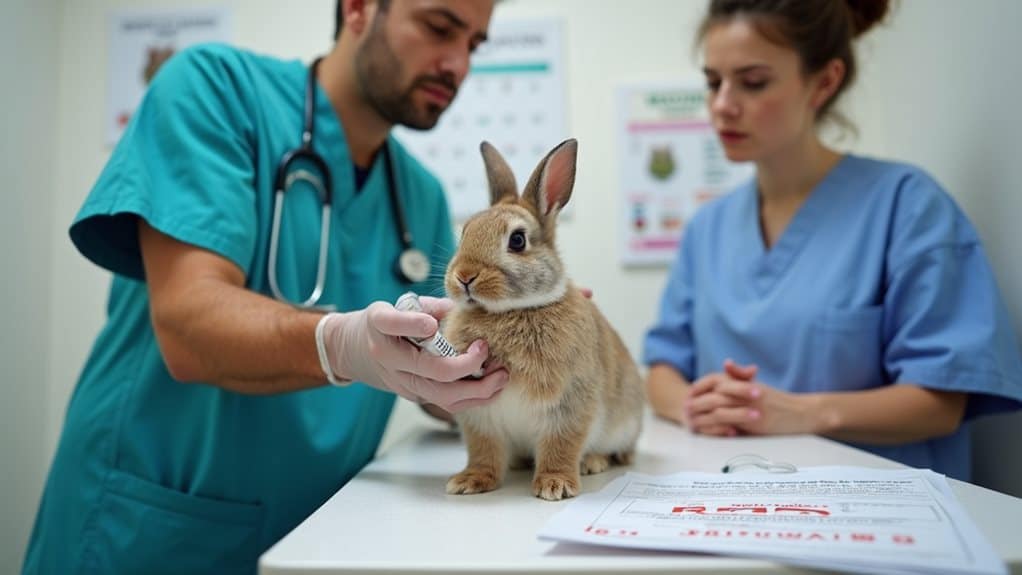
Despite its relatively recent emergence in many countries, Rabbit Hemorrhagic Disease has quickly become one of the most notable health threats to both wild and domestic rabbit populations worldwide.
When you’re caring for rabbits, it’s vital to recognize RHD symptoms early. Watch for fever, lethargy, and sudden death, often with no warning signs. Your bunny might show difficulty breathing or bloody discharge from the nose.
RHD transmission occurs through direct contact with infected rabbits, contaminated objects, or even insects acting as vectors. The virus is highly contagious and can survive in the environment for months.
You’ll want to protect your furry friend by keeping them away from wild rabbits and practicing good hygiene. Remember, prevention through vaccination is your best defense against this devastating disease. Your vet can provide guidance specific to your area’s risk level.
Myxomatosis: Prevention and Risk Factors
Although less common in some regions, myxomatosis poses another serious threat to your rabbit’s health that requires vigilant prevention. This viral disease spreads rapidly through insect bites, particularly mosquitoes and fleas, making outdoor rabbits especially vulnerable.
Myxomatosis transmission also occurs through direct contact with infected rabbits.
You’ll recognize myxomatosis symptoms by swelling around your bunny’s eyes, nose, and genitals, followed by lethargy and fever. Sadly, once these signs appear, treatment options are limited, with most cases proving fatal within two weeks.
Your best defense? Regular vaccinations starting at 5 weeks of age, with annual boosters.
Keep indoor rabbits away from windows during peak insect seasons, and use pet-safe insect repellents around hutches.
Don’t wait until there’s an outbreak—protection is your bunny’s lifeline.
Potential Side Effects and Aftercare
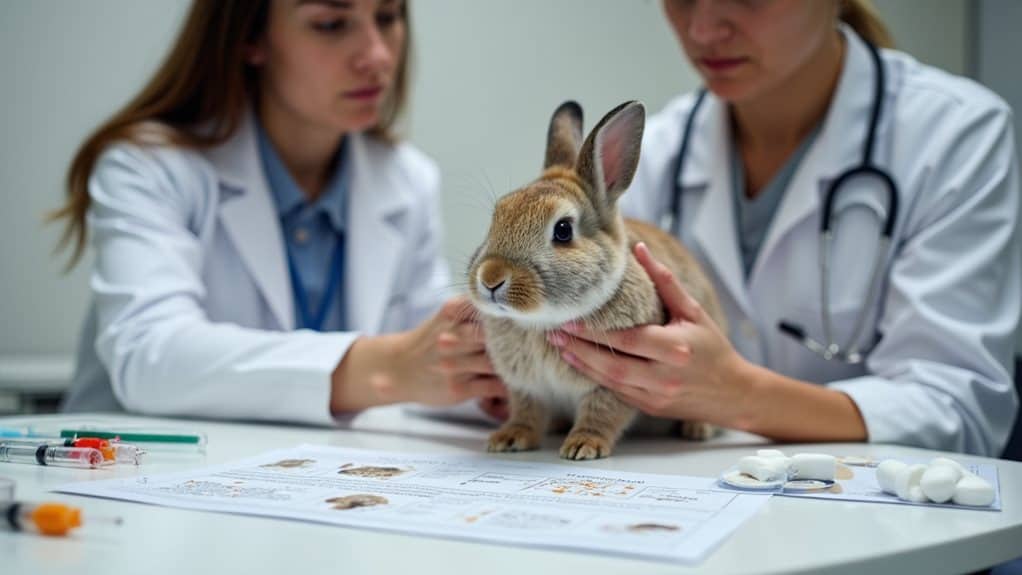
While most rabbits tolerate vaccinations well, you’ll want to be prepared for potential side effects that may occur afterward. Common reactions include temporary lethargy, mild fever, or a small lump at the injection site.
Don’t panic! These typically resolve within 24-48 hours, but if symptoms persist or your bunny seems unusually distressed, call your vet immediately.
For aftercare tips, create a quiet, stress-free environment where your furry friend can rest. Monitor food and water intake closely—rabbits should return to normal eating habits quickly.
Avoid handling your pet excessively for the first day, allowing them to recover in peace. Keep the injection area clean and dry, watching for any unusual swelling or discharge.
With proper attention, your rabbit will hop back to their playful self in no time!
Finding a Rabbit-Savvy Veterinarian
Finding a rabbit-savvy veterinarian who specializes in exotic pets is essential for your bunny’s vaccination and overall health needs.
You’ll want to prepare a list of questions to ask potential vets, including their experience with rabbits, vaccination protocols, and emergency availability.
Before your visit, gather your rabbit’s health history, note any concerns, and consider bringing a carrier that allows your pet to feel secure while traveling to the appointment.
Exotic Pet Specialists
Because rabbits have specialized health needs, locating a veterinarian with exotic pet expertise is crucial for your bunny’s wellbeing.
Exotic pet specialists understand rabbit behavior and can provide the customized care your furry friend requires. Unlike regular vets, these professionals have dedicated training in the unique health challenges rabbits face.
When searching for an exotic pet specialist, look for:
- Board certification in exotic pet care
- Experience with multiple rabbit patients
- Knowledge of the latest rabbit vaccination protocols
- Ability to perform rabbit-specific surgeries
- A clinic setup that minimizes stress for prey animals
You’ll notice the difference when you visit an exotic pet specialist—they’ll handle your rabbit differently, ask more targeted questions, and provide treatment plans specifically designed for lagomorphs rather than cats or dogs.
Questions To Ask Vets
How can you tell if a vet truly understands rabbit care? Start by asking specific questions about their experience with rabbits, not merely small animals in general.
A rabbit-savvy vet will comfortably discuss vaccination protocols customized to your bunny’s lifestyle and risk factors.
Don’t hesitate to bring up vaccination myths you’ve heard online or from other pet owners. A good vet won’t dismiss your concerns but will take time to explain the science behind their recommendations.
Effective vet communication is essential—they should speak clearly without rushing, using terms you understand.
Ask how many rabbits they typically treat each month, and inquire about their familiarity with common rabbit health issues beyond vaccinations.
The right vet will appreciate your thoughtful questions and demonstrate genuine interest in forming a partnership for your rabbit’s healthcare.
Vet Visit Preparation
Once you’ve prepared your questions for potential vets, it’s time to tackle the actual search for a rabbit-savvy veterinarian.
Finding the right vet is vital for your rabbit’s health and wellbeing. Not all veterinarians have experience with rabbits, so it’s worth putting in the effort to find one who specializes in exotic pets.
Before your vet visit, prepare a rabbit health checklist that includes:
- Your rabbit’s complete medical history and previous vaccinations
- Recent changes in eating habits, behavior, or bathroom habits
- A list of current medications or supplements
- Photos of your rabbit’s normal appearance for comparison
- A secure carrier with familiar bedding to reduce stress
Final Thoughts
Just like building a fortress around your home, vaccinations create a protective shield for your rabbit’s health. You’ll need to stay on top of their vaccination schedule, understand the risks of RHD and myxomatosis, and partner with a rabbit-savvy vet. Though there might be minor side effects, they’re nothing compared to the diseases they prevent. Your furry friend’s counting on you to make these important health decisions!