Rabbit emergency preparedness can save your furry friend’s life. Learn to recognize danger signs like labored breathing, severe pain, and gut stasis. Stock your first aid kit with towels, syringes, a thermometer, and pet-safe disinfectant. Master critical responses for common emergencies and safe transport techniques. Rabbit-proof your home by securing electrical cords and removing toxic plants. These crucial steps will help you act confidently when every second counts during a bunny crisis.
Contents
Recognizing Life-Threatening Emergency Signs in Rabbits
Five critical signs indicate your rabbit is experiencing a life-threatening emergency.
When recognizing distress in your furry friend, look for labored breathing, which may include open-mouth breathing or noticeable chest movement. A rabbit sitting hunched and motionless, unwilling to move even for treats, signals severe pain.
Sudden loss of balance or head tilt could indicate neurological issues requiring immediate attention.
When evaluating symptoms, pay close attention to your bunny’s eating habits—rabbits that stop eating for 12+ hours face potential gut stasis, a deadly condition.
Finally, watch for unusual discharge from eyes, nose, or rear end, which might indicate infection or blockage.
Trust your instincts—you know your rabbit best! If something seems off, it’s better to call the vet than wait until it’s too late.
Essential Components for Your Rabbit First Aid Kit
Preparedness can make all the difference when your bunny faces a health crisis. Assembling a dedicated rabbit first aid kit guarantees you’re ready to act quickly during those heart-stopping moments when your furry friend needs help.
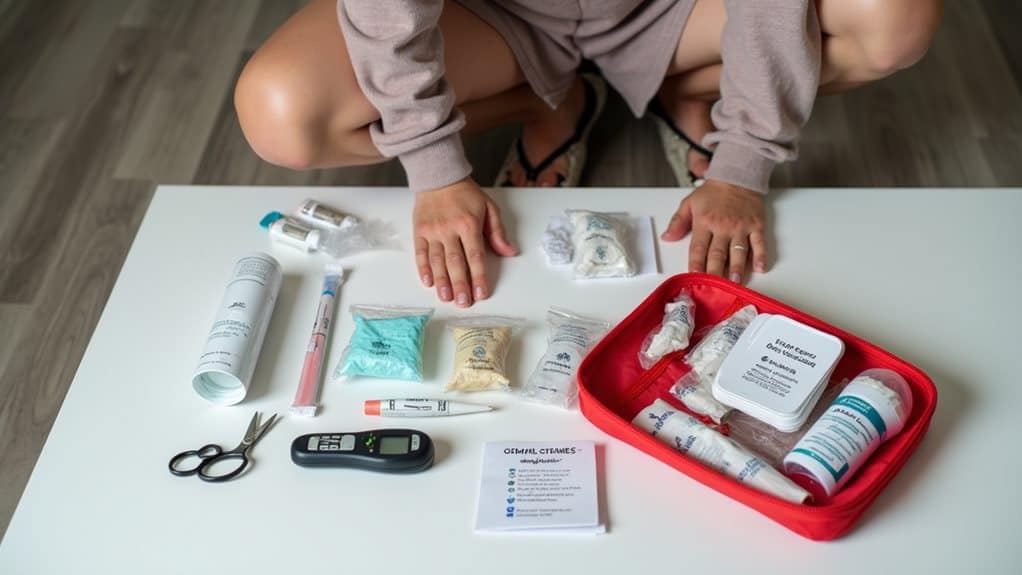
Your kit should include basic first aid supplies like clean towels, syringes (without needles) for fluid administration, digital thermometer, styptic powder for nail bleeding, and sterile gauze pads.
Don’t forget a pet-safe disinfectant, scissors with rounded tips, and tweezers for removing debris from fur.
Equally important are emergency contacts—keep your exotic vet’s number, after-hours emergency clinic, and poison control clearly listed.
Store these contacts in your phone and on a laminated card in your kit, so you’ll never waste precious minutes searching when seconds count.
Critical First Response Techniques for Common Rabbit Emergencies
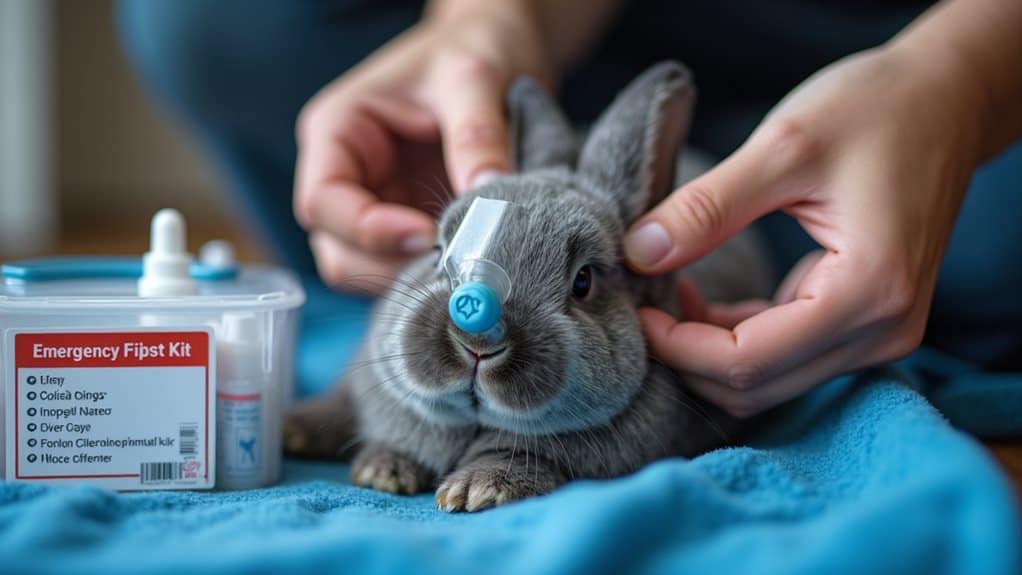
When your rabbit faces a medical emergency, knowing exactly what to do in those first vital minutes can mean the difference between life and death.
If your furry friend stops breathing, gently place them on their side and perform rescue breathing techniques by covering their nose and mouth with your lips, giving small puffs every 3-5 seconds.
For wounds, remember proper wound care is essential – clean the area with warm water and apply gentle pressure to stop bleeding before wrapping with sterile gauze.
Don’t panic if your bunny goes into shock – they’ll feel cold and appear lethargic.
Wrap them in a warm towel, keeping their nose and mouth uncovered. You’ll want to keep them calm while you contact your vet immediately.
These quick actions can save your rabbit’s life!
Safely Transporting an Injured Rabbit to Veterinary Care
After providing emergency first aid, your next critical step is getting your injured rabbit to a veterinarian quickly and safely.
Proper emergency transport techniques can mean the difference between life and death for your furry friend. When preparing for the trip, minimize stress by handling your rabbit gently and creating a secure environment.
- Line your rabbit carrier with soft towels that won’t slide around during transport, providing both comfort and stability for your injured pet.
- Keep the carrier warm (not hot) using a pre-warmed towel or heat pack wrapped in fabric – never apply heat directly to your rabbit.
- Position the carrier so it won’t shift during driving, and take a route with minimal bumps and stops to reduce additional trauma.
Preventative Measures to Reduce Emergency Risks
Taking proactive steps to rabbit-proof your home can dramatically reduce the risk of emergencies before they occur. Start by securing electrical cords—these are irresistible chewing targets that can cause severe burns or electrocution.
For environmental safety, remove toxic houseplants like lilies and tulips, and keep cleaning supplies locked away.
Dietary considerations are equally vital. Always have fresh hay available, as this promotes healthy digestion and prevents dangerous GI stasis.
Don’t forget to rabbit-proof furniture by covering wooden legs and removing small objects they might swallow.
You’ll also want to create a stress-free environment with hiding spots and safe toys.
Final Thoughts
As you’ve learned these emergency techniques, you’re now prepared to face the unexpected with your furry friend. Coincidentally, my neighbor used these same skills last month when her rabbit, Thumper, stopped eating suddenly. She quickly recognized the signs, used her pre-packed first aid kit, and got him to the vet within the critical window. Remember, your quick action can make all the difference between a close call and a tragedy.