Affiliate Disclaimer: This site is a participant in the Amazon Services LLC Associates Program, an affiliate advertising program designed to provide a means for sites to earn advertising fees by advertising and linking to Amazon.com. We are compensated for referring traffic and business to Amazon and other companies linked to on this site. We may also do this with other affiliate schemes
Lop-eared rabbits need special attention due to their droopy ears creating moisture-trapping environments. You’ll need to inspect their ears weekly for discharge, odors, or redness, and clean gently with a soft cloth and rabbit-safe solution. Keep their environment clean with 40-60% humidity, use dust-free bedding, and provide a fiber-rich diet with plenty of fresh water. Watch for head tilting or excessive scratching—these warrant immediate vet care. A consistent ear care routine guarantees your floppy-eared friend stays healthy and happy.
Understanding Lop-Eared Anatomy and Vulnerabilities
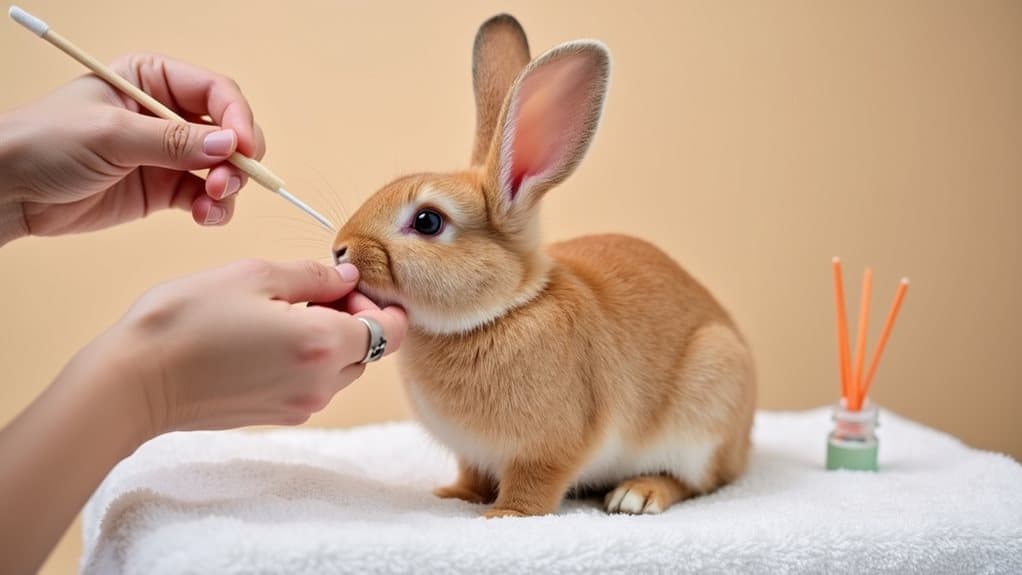
While many find the droopy ears of lop rabbits adorable, you’ll need to understand that this charming trait comes with specific care requirements.
The lop eared genetics that create those floppy ears actually result from a cartilage mutation that affects ear anatomy. Unlike wild rabbits with upright ears, your lop’s ears hang down, creating enclosed spaces where moisture can accumulate and air circulation is reduced.
This unique ear structure makes your bunny more susceptible to ear infections, mites, and wax buildup. The ear canal’s natural cleaning mechanism is compromised when ears don’t stand upright.
Think of it like folding a self-cleaning oven in half—it just can’t work as efficiently! You’ll need to be extra vigilant with ear inspections and cleaning to keep your floppy-eared friend healthy and comfortable.
Signs and Symptoms of Ear Problems to Watch For
Keeping a close eye on your lop-eared rabbit’s ear health means watching for tell-tale warning signs like unusual head tilting or constant scratching.
You’ll want to check regularly for discharge, redness, or unpleasant odors coming from their ears, as these often indicate infection or mites.
If your normally playful bunny suddenly becomes withdrawn, irritable, or loses interest in food, these behavior changes could signal they’re experiencing ear discomfort that needs veterinary attention.
Unusual Head Positioning
How your lop-eared rabbit positions their head can reveal important clues about their ear health.
If you notice your bunny tilting their head to one side consistently, this isn’t just a cute quirk—it’s often a warning sign of an ear infection or vestibular issues. This abnormal ear positioning disrupts their balance and spatial awareness.
Watch for head tilting accompanied by circling behavior, loss of balance, or reluctance to move. Your rabbit might also shake their head frequently or rub the affected ear against surfaces for relief.
In severe cases, they’ll struggle to hop straight or may roll onto their side unexpectedly.
Don’t wait to see if these symptoms resolve on their own. Head tilting requires prompt veterinary attention, as ear infections can progress rapidly in lop-eared bunnies.
Discharge and Odor
Beyond head tilting, discharge and odor from your lop-eared rabbit’s ears represent clear warning signals that something’s wrong.
When checking your bunny’s ears, pay attention to any discharge types—creamy yellow secretions often indicate infection, while dark brown, waxy buildup suggests ear mites. That crusty stuff isn’t just normal bunny business!
Odor causes are equally telling. Healthy rabbit ears shouldn’t smell like anything, really. If you notice a musty, yeasty, or sour smell (kind of like that forgotten yogurt in the back of your fridge), it’s time for a vet visit.
Behavior Changes
Even the most subtle changes in your rabbit’s behavior can signal developing ear problems that demand your attention. Your bunny’s actions speak volumes about their health, especially when they’re experiencing ear discomfort.
Pay close attention to these behavioral triggers that might indicate something’s wrong:
- Head tilting or shaking frequently, often accompanied by pawing at the ears
- Decreased appetite or reluctance to chew properly—pain can make eating uncomfortable
- Unusual irritability, hiding, or withdrawal from interaction with you
Proper stress management is vital, as anxiety can worsen ear-related behaviors.
Create a quiet environment when you notice these symptoms, and avoid sudden noises that might startle your lop-eared friend.
Weekly Ear Cleaning: Techniques and Best Practices
Regular ear cleaning is essential for your lop-eared rabbit’s health, since their distinctive droopy ears can trap moisture and debris more easily than upright ears.
You’ll need to establish a weekly cleaning routine to prevent infections and keep those adorable floppy ears in top condition.
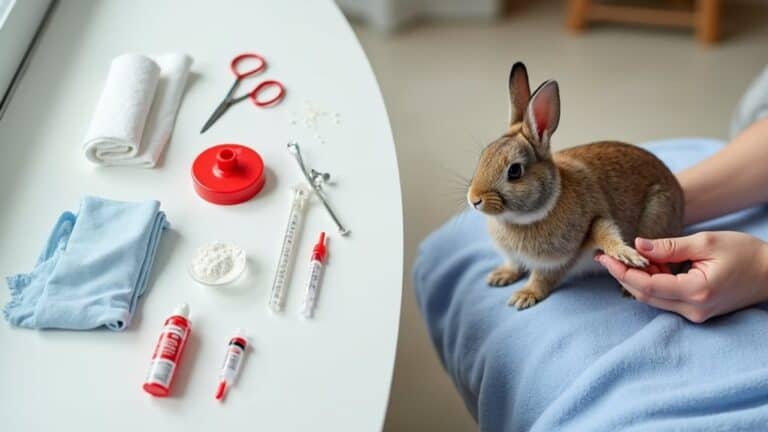
To clean your bunny’s ears effectively, gather a soft cloth, rabbit-safe ear cleaning solution, and treats for afterward.
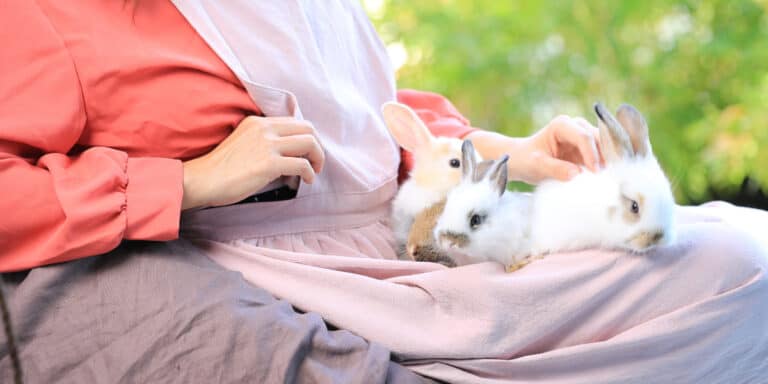
Gently hold your rabbit in your lap, fold back one ear at a time, and wipe the visible surfaces—never insert anything into the ear canal!
Look for redness, discharge, or unusual odors while cleaning. These ear cleaning techniques should be gentle and quick to minimize stress.
Recommended Cleaning Products and Tools
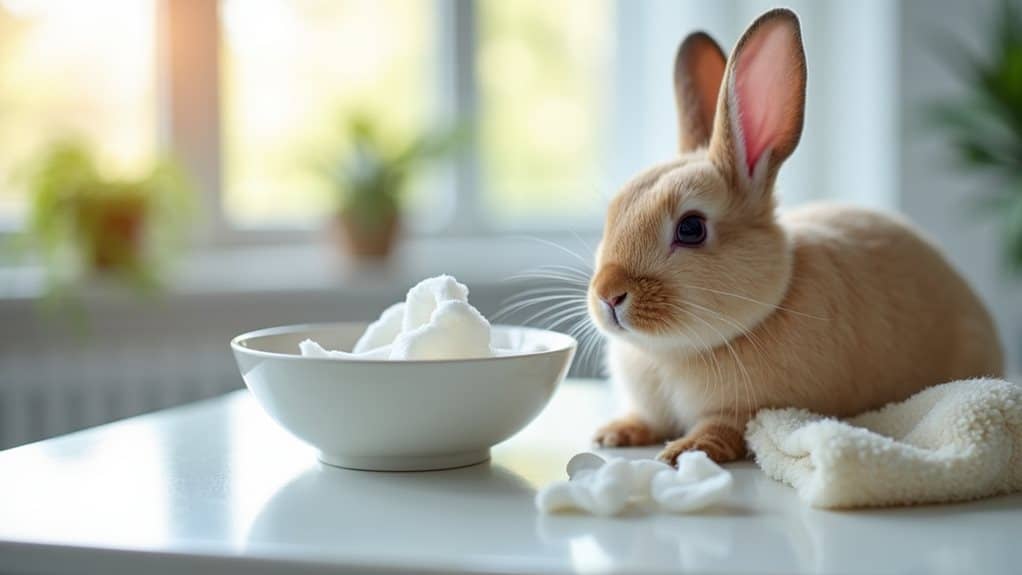
When caring for your lop-eared rabbit’s distinctive ears, choosing the right cleaning supplies makes all the difference between a stressful experience and a gentle, effective routine.
Maintaining regular cleaning schedules becomes easier when you’ve got the proper tools on hand.
- Soft cotton balls or pads that won’t irritate your bunny’s sensitive ear canals—avoid cotton swabs which can push debris deeper
- Veterinarian-approved ear cleaning solutions specifically formulated for rabbits—human products often contain harmful chemicals
- A small flashlight to help you see inside those floppy ears without missing spots where wax builds up
Environmental Factors That Impact Ear Health
Your lop-eared rabbit’s ear health depends greatly on the environment you create, with proper temperature and humidity levels helping prevent infections.
Keeping their cage clean isn’t just about appearance—it directly affects how healthy those adorable droopy ears remain, as bacteria thrive in dirty conditions.
When you let your bunny explore outdoors, you’ll need to be extra vigilant about checking their ears afterward, as exposure to extreme weather, dirt, and parasites can quickly lead to problems.
Temperature and Humidity Control
Because lop-eared rabbits have distinctive folded ears, they’re particularly sensitive to environmental conditions that can affect their ear health.
Maintaining proper temperature and humidity in your rabbit’s living space isn’t just for comfort—it’s crucial for preventing ear problems. Temperature fluctuations can stress your bunny’s immune system, making them more susceptible to infections, while extreme humidity levels create the perfect breeding ground for bacteria and fungi.
To create an ear-healthy environment for your lop-eared friend:
- Keep temperature consistent between 65-75°F (18-24°C), avoiding drafts and sudden changes
- Maintain humidity levels between 40-60%, using a hygrometer to monitor
- Provide proper ventilation without creating direct air currents that could dry out ear tissues
You’ll find your rabbit’s ears stay healthier when you control these environmental factors consistently.
Cage Cleanliness Matters
Maintaining a pristine living environment directly influences your lop-eared rabbit’s ear health, perhaps more than you might realize. Those adorable droopy ears hang closer to the cage floor, making them magnets for bacteria when cage hygiene is neglected.
You’ll want to clean your bunny’s home thoroughly at least once weekly. Soiled bedding creates the perfect breeding ground for harmful microorganisms that can travel into your rabbit’s ear canals.
Speaking of bedding choices, opt for dust-free, absorbent materials like paper-based products rather than cedar or pine shavings, which contain oils that irritate sensitive ear tissues.
Outdoor Exposure Risks
While indoor living provides ideal protection, many lop-eared rabbits enjoy supervised outdoor time that comes with hidden risks for their distinctive ears.
You’ll need to be vigilant about outdoor hazards that can affect your floppy-eared friend’s ear health. Weather conditions play a notable role in determining when it’s safe for your bunny to venture outside.
Watch out for these common outdoor risks:
- Wet grass and rain can lead to moisture buildup in their droopy ears, creating the perfect environment for bacterial growth
- Extreme temperatures—both hot and cold—can irritate ear tissue and compromise their natural defenses
- Plant debris, seeds, and small insects can become lodged in their ear canals, causing irritation or infection
Diet and Nutrition for Ear Disease Prevention
Although proper diet seems unrelated to ear health, the food you give your lop-eared rabbit directly impacts their susceptibility to ear infections and diseases. A balanced diet rich in fiber helps maintain your bunny’s immune system, which fights off potential ear infections before they start.
Consider adding dietary supplements like omega-3 fatty acids, which reduce inflammation that can affect the ears. Vitamin E supplements also promote healthy skin inside the ear canal, creating a stronger barrier against pathogens.
Don’t forget about hydration importance! When rabbits don’t drink enough water, their immune systems weaken, making ear infections more likely. Place fresh water near their feeding area and change it twice daily.
You’ll notice your rabbit’s ears looking healthier when their nutrition needs are fully met.
When to Seek Veterinary Attention
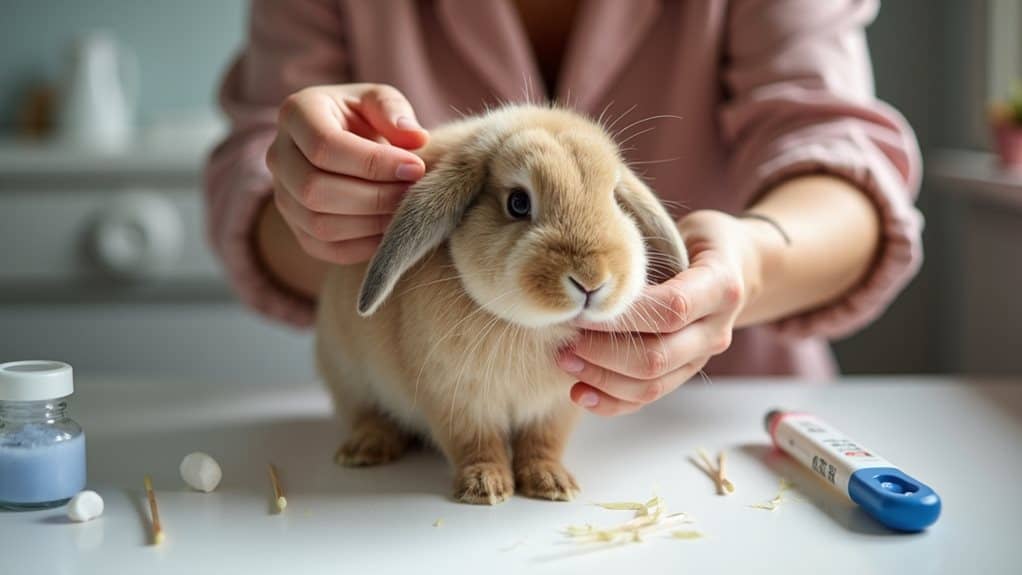
Even with perfect nutrition and care, your lop-eared rabbit may sometimes need professional medical help.
Knowing when to consult a vet can make the difference between a minor issue and a serious health crisis. Don’t hesitate to call your rabbit-savvy veterinarian if you notice any of these emergency signs:
- Head tilting or loss of balance, which could indicate an inner ear infection
- Scratching at ears excessively, paired with crusty discharge or strong odor
- Refusal to eat or drink for more than 12 hours, especially if accompanied by ear symptoms
Trust your instincts—you know your bunny best!
If something seems off with your floppy-eared friend, it’s better to make that call sooner rather than later. Your swift action might just save your rabbit’s life.
Integrating Ear Care Into Your Rabbit’s Routine
Since lop-eared rabbits have distinctive droopy ears that hang down instead of standing upright, they need special attention to prevent common ear problems.
Making ear care a natural part of your daily rabbit routine doesn’t have to be complicated!
Incorporate gentle ear grooming techniques during your regular bonding sessions. Once a week, carefully check each ear for redness, discharge, or unusual odor while your bunny enjoys a treat.
Those floppy ears can be quite the dust collectors, so a quick inspection goes a long way!
Schedule routine health checks that include ear examinations every 3-4 months with your exotic vet. They’ll spot issues you might miss.
Final Thoughts
Your lop’s adorable droopy ears are like velvet curtains that need special care to prevent the theater of infection from staging a painful show. By integrating regular cleaning, proper nutrition, and environmental management into your routine, you’re not merely caring for ears—you’re nurturing your bunny’s overall health. Remember, attentiveness is your compass; when in doubt, your vet is the North Star guiding your rabbit’s wellness path.