Affiliate Disclaimer: This site is a participant in the Amazon Services LLC Associates Program, an affiliate advertising program designed to provide a means for sites to earn advertising fees by advertising and linking to Amazon.com. We are compensated for referring traffic and business to Amazon and other companies linked to on this site. We may also do this with other affiliate schemes
Giant rabbit breeds need special care compared to standard bunnies. You’ll need sturdy housing with at least 24 square feet of space, plus daily exercise time. Their diet should be 80% hay with fresh greens and limited pellets. Groom them twice weekly (daily during shedding), and always support their hindquarters when lifting to prevent spine injuries. Regular vet checkups are crucial, as is early socialization. The following guide covers everything you’ll need for your gentle giant’s wellbeing.
Housing Requirements for Giant Rabbit Breeds
Space is the ultimate luxury your gentle giant deserves in their everyday life. Unlike their smaller cousins, giant rabbit breeds need considerably more room to stretch, hop, and live comfortably.
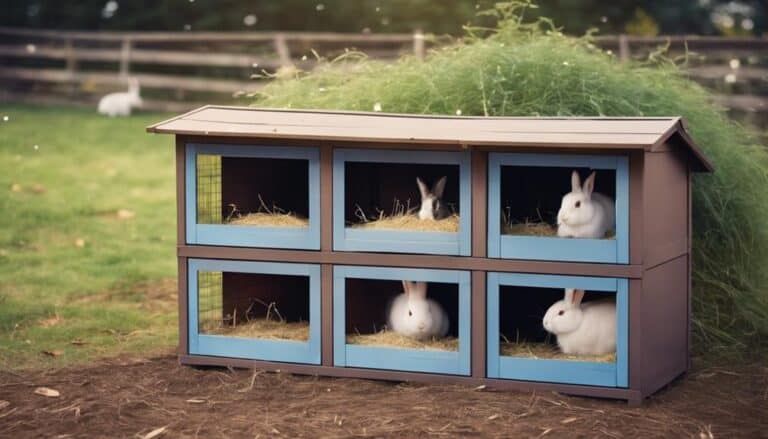
You’ll want to provide a hutch or enclosure that’s at least 4 feet by 2 feet—though bigger is always better! When considering indoor housing, dedicate a corner of a room or even a small room exclusively for your fluffy friend.
Don’t skimp on bedding materials either! Your giant bunny needs thick, absorbent layers to protect their sensitive feet from pressure sores.
Try paper-based products, aspen shavings, or specialized hemp bedding. Remember, these larger breeds generate more waste, so you’ll need to change bedding more frequently.
Creating a spacious, comfortable home isn’t just nice—it’s crucial for your giant rabbit’s physical and mental wellbeing!
Optimal Nutrition and Feeding Strategies
When it comes to giant rabbit breeds, nutrition plays an absolutely critical role in their overall health and longevity.
You’ll need to provide a diet rich in high-quality hay (about 80% of their intake), supplemented with leafy greens and a measured amount of pellets specifically formulated for large rabbits.
Establish a consistent feeding schedule, offering fresh hay daily, greens twice daily, and pellets once in the evening.
Your gentle giant’s weight needs careful monitoring—obesity can devastate their joints and heart!
While commercial pellets contain vital nutrients, vitamin supplements may be necessary during growth spurts, pregnancy, or recovery from illness.
However, don’t add supplements without consulting your vet first.
Exercise Needs and Space Considerations
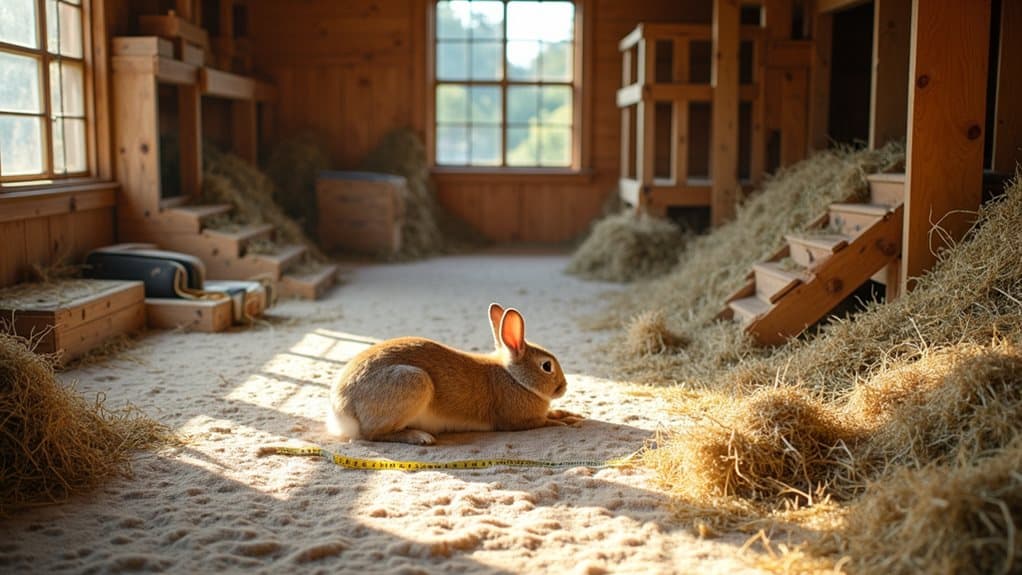
Your giant rabbit’s happiness depends on having enough room to hop, stretch, and play each day.
You’ll need to provide an enclosure that’s at least 24 square feet for a single rabbit, with daily opportunities for supervised exercise outside their main living space.
Setting up safe roaming areas free from electrical cords, toxic plants, and small objects they might ingest will guarantee your fluffy giant can burn energy while staying protected from household hazards.
Proper Enclosure Dimensions
Giant rabbit breeds require considerably more room than their smaller counterparts, both for physical health and emotional wellbeing. Your gentle giant needs an enclosure that’s at least 4 feet by 4 feet, with a minimum height of 2 feet to accommodate their size when they stand up.
When selecting enclosure materials, prioritize sturdy wire mesh with small gaps that prevent escape while guaranteeing proper ventilation. Wood frames offer stability, but protect them with non-toxic sealant to prevent damage from chewing and urine.
Space optimization is vital when housing these magnificent rabbits. Consider multi-level hutches with ramps to maximize vertical space, giving your bunny exercise options without sacrificing floor space.
Daily Activity Requirements
Because they’ve evolved as active foragers in the wild, giant rabbit breeds require substantial daily exercise to maintain ideal health and happiness. Your gentle giant needs at least 3-4 hours of supervised rabbit playtime outside their enclosure each day. This isn’t just a nice-to-have—it’s crucial for preventing obesity and behavioral problems.
Set up a bunny-proofed area where your fluffy friend can hop, explore, and stretch to their full impressive length. Activity enrichment should include tunnels, platforms, and toys that encourage natural behaviors like digging and chewing.
You’ll be amazed at how these large rabbits, despite their size, can display impressive bursts of speed and playful “binkies” when given proper space. Remember, a tired rabbit is typically a well-behaved rabbit—and watching them zoom around might become your favorite daily entertainment!
Safe Roaming Areas
When setting up safe roaming areas for giant rabbit breeds, prioritizing both space and safety becomes essential for their well-being. Your gentle giants need markedly more room than standard-sized rabbits to stretch, hop, and explore. A minimum area of 32 square feet allows them to exhibit natural behaviors and prevents obesity-related health issues.
For outdoor safety, always supervise your rabbit’s exploration time. Create a secure enclosure with fencing at least 4 feet high, as these powerful bunnies can jump surprisingly high! Bury the fence 6-12 inches deep to prevent digging escapes.
For roaming enrichment, incorporate tunnels, platforms, and hiding spots that accommodate their larger size. You’ll notice your rabbit’s happiness skyrocket when they’ve space to binky and zoom around.
Health Monitoring and Common Medical Issues
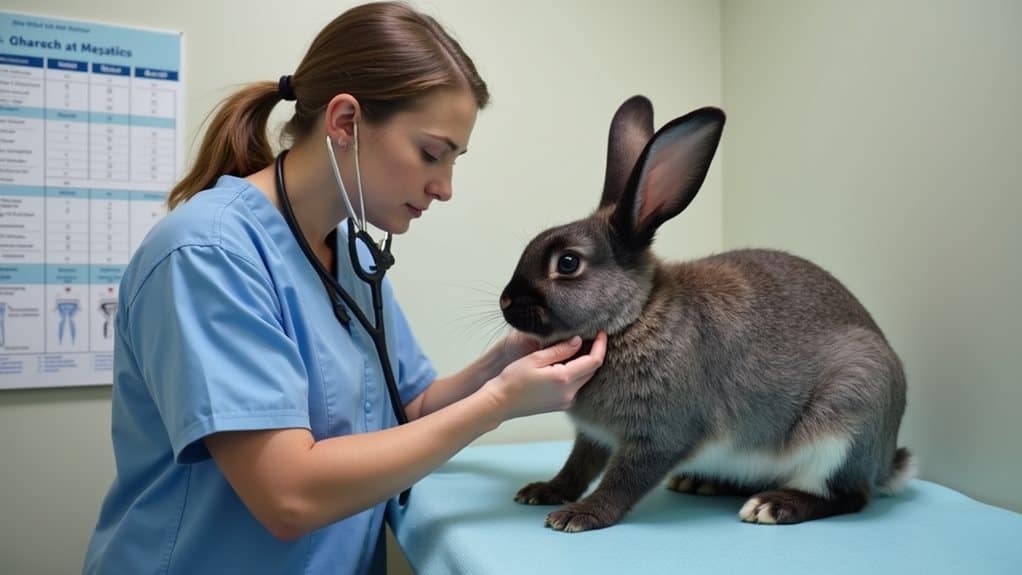
Regular health monitoring is vital for your giant rabbit’s wellbeing, as these magnificent creatures can hide illness until it’s advanced. Watch for subtle changes in eating habits, energy levels, or bathroom routines—these are often your first clues something’s wrong.
Schedule preventive care visits with a rabbit-savvy vet every six months, as giant breeds are more susceptible to joint issues and heart problems than their smaller cousins.
Health screenings should include weight checks, dental examinations, and thorough physical assessments. You’ll want to pay special attention to mobility issues, as these gentle giants can develop arthritis earlier than expected.
Keep a small notebook tracking your rabbit’s normal behaviors, so you’ll quickly notice when something’s off. Remember, catching health concerns early often means simpler, less expensive treatments and a happier, healthier bunny companion.
Handling Techniques for Large Rabbits
Properly handling your giant rabbit requires special techniques that differ markedly from those used with smaller breeds. Your gentle giant needs support under both the hindquarters and chest when lifted, preventing potential spine injuries.
Never pick up your rabbit by the ears or scruff—this causes pain and damages trust.
Before attempting to lift your rabbit, assess their temperament for the day. Even the sweetest giants have moody moments! Start by speaking softly and offering gentle pets to create a calm atmosphere.
When you’re ready to lift, squat down, place one arm under their chest and the other supporting their bottom, then slowly stand while holding them close to your body. This secure position reduces stress for both of you and prevents unexpected kicks or struggles that could lead to injuries.
Temperature Regulation and Climate Control
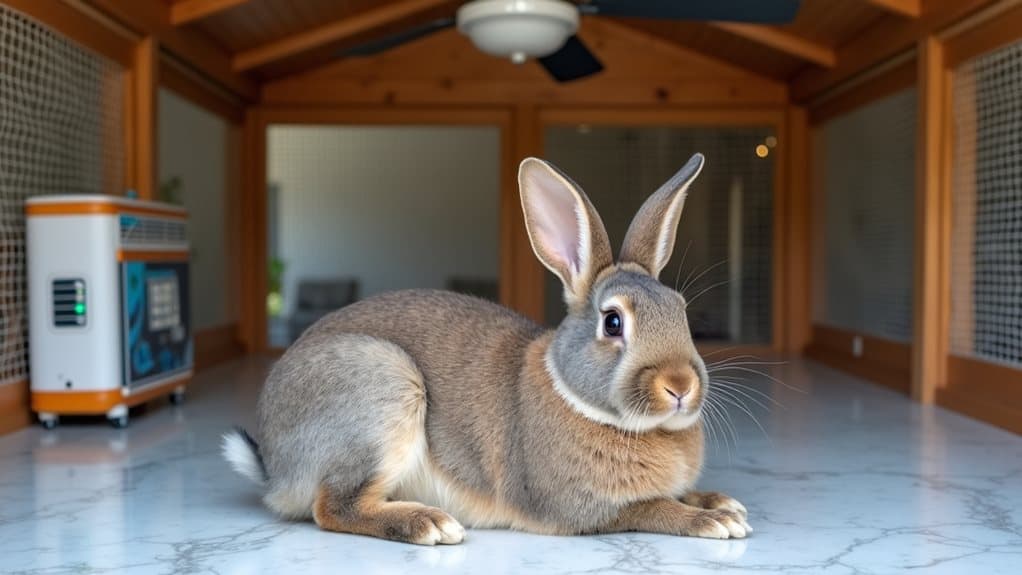
The gentle giants you’ve learned to handle properly also need special attention to their environment’s temperature. Giant rabbit breeds are particularly susceptible to heat stress, so you’ll have to monitor their comfort year-round.
During summer, provide indoor cooling through fans or air conditioning when temperatures exceed 80°F. Humidity control is equally important—aim for 40-60% to prevent respiratory issues. Your rabbit’s ability for climate adaptation varies by breed, but all struggle with rapid temperature fluctuations.
Seasonal care means different approaches: summer requires cooling solutions, while winter demands extra bedding and draft protection. For outdoor rabbits, make certain their shelter offers complete weather protection—think insulated hutches raised from cold ground.
Don’t forget to check daily for signs of discomfort as your fluffy friend’s size makes them more vulnerable to environmental extremes.
Socialization and Behavioral Management
When housing your giant rabbits together, you’ll need to understand their social hierarchy and provide enough space to prevent squabbles over territory.
Handling these larger breeds requires proper support and regular interaction, which builds trust and makes health checks much easier.
You’ll find that neutering or spaying your giant rabbits greatly reduces territorial marking and aggressive behaviors, especially when introducing new companions to your existing furry family.
Group Housing Dynamics
Since giant rabbit breeds naturally crave social interaction, housing them in groups requires careful planning and ongoing management.
When introducing rabbits, watch for signs of group compatibility and respect the social hierarchy that will naturally develop. You’ll notice your giants are happiest when they’ve companionship, though they’ll still need personal space within their shared environment.
- A dominant rabbit thumping its powerful hind leg to establish territory
- Two bonded giants grooming each other’s ears and faces
- A submissive bunny lying flat with ears back in acceptance
- Multiple rabbits snuggling together during naptime in a large hay pile
- A group peacefully sharing a salad plate, each nibbling their favorite greens
Never force incompatible rabbits to live together—some personalities simply don’t mesh!
Handling Large Rabbits
Properly handling your giant rabbit requires special techniques that differ greatly from those used with smaller breeds. When approaching your hefty bunny, move slowly and speak softly to avoid startling them.
Always support their hindquarters when lifting, keeping their spine aligned to prevent injury. You’ll need to crouch down and use both arms—one under the chest and one supporting the bottom.
Watch for behavioral cues that indicate stress or discomfort, like ear-flattening or thumping. Your gentle giant may resist being picked up entirely, which is perfectly normal! Instead, try interacting at ground level where they feel secure.
Consistent handling techniques build trust over time, making health checks easier for both of you. Remember, even the largest breeds appreciate gentle handling and will reward your patience with affection and cooperation.
Preventing Territorial Aggression
Despite their gentle nature, giant rabbit breeds can develop territorial behaviors that might surprise unprepared owners. Understanding their territorial boundaries and common aggression triggers will help you maintain a harmonious household.
You’ll need to recognize when your fluffy giant is marking their space and respond appropriately with consistent, gentle training.
- A once-cuddly rabbit suddenly charging at you when you approach their hutch
- Your giant bunny grunting and thumping their powerful back feet in warning
- Finding fresh territorial droppings in new places around your home
- Your rabbit lunging or nipping when you reach into their favorite hiding spot
- Observing intense circling behaviors as they establish their domain
Early socialization and neutering/spaying are your best strategies for preventing these behaviors before they become habits.
Grooming Challenges for Giant Breeds
The massive size of giant rabbit breeds creates unique grooming challenges that you won’t encounter with their smaller counterparts. With more fur to manage across their expansive bodies, you’ll need to adapt your grooming techniques to keep your gentle giant looking their best.
A wide-bristled brush works wonders for daily fur maintenance, preventing those troublesome mats that can form quickly in their dense coats.
During shedding season, you’ll be amazed (perhaps horrified!) at the sheer volume of fur your giant bunny can produce. What might be a small molting process in dwarf breeds becomes a fur hurricane with giants.
Plan to groom at least twice weekly, and daily during heavy shedding periods. Your vacuum cleaner will thank you, and more importantly, your rabbit will avoid potentially dangerous hairballs that can develop when they groom themselves.
Special Equipment and Supplies
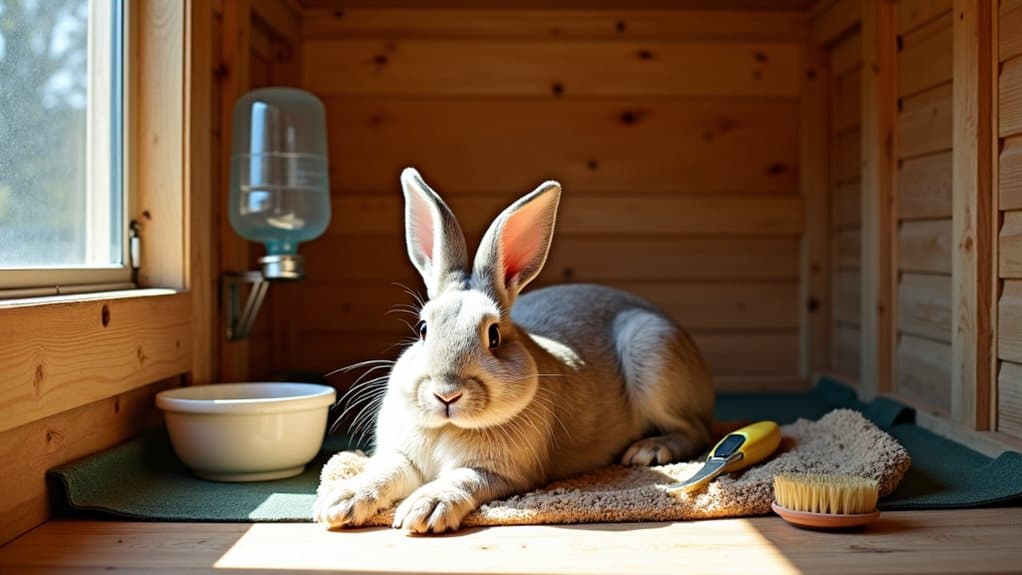
When caring for giant rabbit breeds, you’ll need special equipment designed to handle their impressive size and unique needs.
Reinforced housing solutions are crucial, as these hefty hoppers require sturdier cages and enclosures that won’t buckle under their weight or succumb to their powerful feet.
You’ll also want to invest in XL grooming tools, including larger brushes and combs, which make the task of maintaining your gentle giant’s coat much more manageable and comfortable for both of you.
Reinforced Housing Solutions
Giant rabbits require considerably sturdier housing than their smaller counterparts, given their impressive size and strength. When creating or purchasing a hutch for your gentle giant, focus on reinforced materials and structural stability to prevent escapes or collapses.
Your Flemish Giant or Continental Giant deserves a home that’s both spacious and secure.
- Solid wood frames with metal reinforcements at corners withstand chewing and pushing
- Wire mesh that’s at least 14-gauge thickness resists bending or breaking
- Robust latches with safety mechanisms prevent clever escape artists from opening doors
- Reinforced flooring with additional support beams handles heavier weight distribution
- Weather-resistant materials like treated wood or metal frames extend the hutch’s lifespan
Don’t underestimate your big bunny’s strength—what works for dwarf breeds simply won’t hold up!
XL Grooming Tools
Brushes designed for small pets simply won’t cut it when you’re tackling the magnificent coat of a giant rabbit breed. You’ll need specialized XL grooming tools that can handle the extensive fur surface area of your gentle giant.
Invest in a large slicker brush with a comfortable grip that won’t strain your hand during extended grooming sessions. Your grooming frequency will increase during shedding seasons, so having efficient tools saves time and reduces stress for both you and your bunny.
A sturdy metal comb with wide-set teeth works wonders for initial coat maintenance, followed by a finer comb to catch loose undercoat. Don’t forget jumbo-sized nail clippers designed for larger animals—regular rabbit trimmers mightn’t handle your giant’s thicker nails.
These specialized tools make grooming sessions faster, more effective, and even enjoyable!
Breeding and Growth Considerations
Before deciding to breed your giant rabbit, you’ll need to understand the unique challenges these magnificent creatures present during reproduction and development.
Giant breeds require special breeding techniques and monitoring throughout their extended growth milestones, which can last up to 18 months compared to standard rabbits’ 6-8 months.
- A pregnant doe’s nest box must be markedly larger, lined with extra straw for her comfort.
- Newborn kits gain weight rapidly, doubling their birth weight within the first week.
- Young giants need specialized calcium-to-phosphorus ratios during their vital bone development phase.
- Growth plates remain open longer in giant breeds, making them susceptible to injuries until fully mature.
- Their distinctive lopped ears typically begin dropping around 10-12 weeks, a heartwarming milestone to anticipate.
Final Thoughts
You’ll find your giant rabbit adventure both rewarding and challenging. Your gentle giant needs spacious housing, specialized nutrition, and regular health checks. They’ll thrive with proper handling, consistent socialization, and thorough grooming. When you invest in appropriate equipment, understand their unique behaviors, and respect their growth patterns, you’re setting yourself up for success. Remember, these magnificent creatures aren’t just bigger bunnies—they’re special companions requiring your dedicated care, patience, and love.