
Affiliate Disclaimer: This site is a participant in the Amazon Services LLC Associates Program, an affiliate advertising program designed to provide a means for sites to earn advertising fees by advertising and linking to Amazon.com. We are compensated for referring traffic and business to Amazon and other companies linked to on this site. We may also do this with other affiliate schemes
Watch for these urgent rabbit warning signs: food or water refusal over 12 hours, reduced or abnormal droppings, breathing difficulties, lethargy, head tilt, pain behaviors like teeth grinding, bloody urine, mobility changes, unusual swellings, and excessive drooling. Don’t wait—rabbits hide illness until it’s critical, and conditions like GI stasis can turn fatal quickly. Your quick action could save your bunny’s life when these symptoms appear.
Refusing Food or Water for More Than 12 Hours
When your rabbit stops eating or drinking for more than 12 hours, you’re facing a true emergency that requires immediate veterinary attention.
Rabbits have delicate digestive systems that need constant movement, and food refusal can quickly lead to a deadly condition called GI stasis.
Watch for subtle signs that your bunny isn’t eating normally—fewer droppings, untouched favorite treats, or a full water bottle that hasn’t changed level since yesterday.
Hydration importance can’t be overstated for these small mammals, as dehydration compounds digestive problems rapidly.
Don’t wait to see if your furry friend “bounces back” on their own.
Unlike some pets who might skip meals when feeling slightly off, your rabbit’s food refusal is never normal and always serious.
Trust your instincts—you know your bunny’s habits best!
Abnormal or Absent Stool Production
A healthy rabbit’s litter box tells you almost everything about their health status. Changes in stool production require immediate attention, as they often signal serious digestive issues.
Your bunny should produce round, firm pellets regularly throughout the day, and monitoring stool color and consistency should be part of your daily rabbit care routine.
- Small, dry pellets strung together like a pearl necklace, indicating dehydration
- Soft, mushy droppings that stick to your rabbit’s fur, resembling a mud pie
- Complete absence of droppings in the litter box, leaving it eerily empty
- Pellets with mucus coating, glistening like they’ve been dipped in slime
- Unusual stool colors—white, red, or black droppings standing out against normal brown
If you notice these changes lasting more than 4-6 hours, don’t wait—call your vet immediately.
Difficulty Breathing or Rapid Breathing
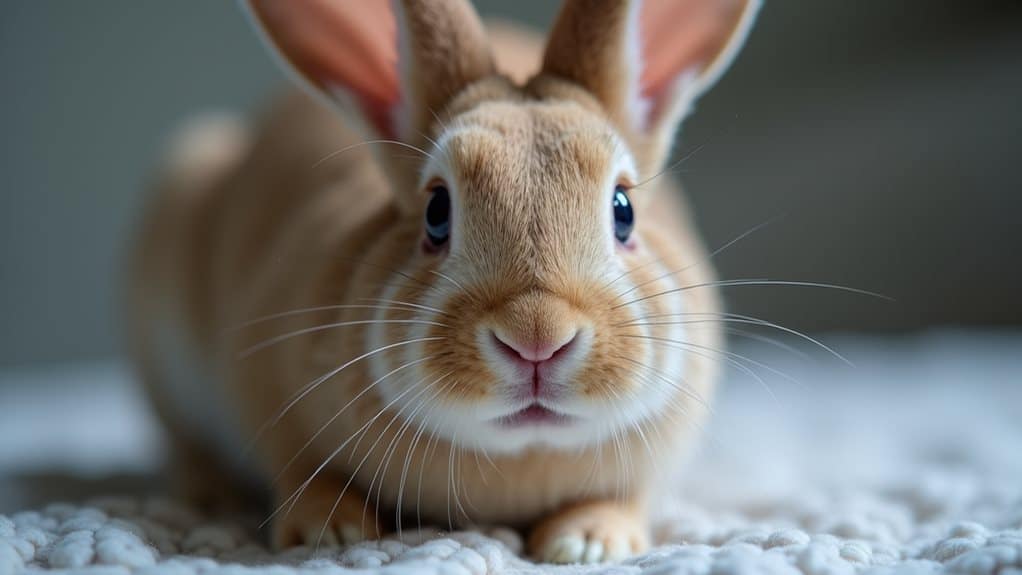
Respiratory distress in rabbits can quickly become life-threatening if you don’t recognize the warning signs early. Watch for flared nostrils, open-mouth breathing, or a bluish tint to your bunny’s lips, tongue, or gums—these are emergency signals that demand immediate action.
Your rabbit’s normal breathing should be gentle and barely noticeable. If you’re seeing your pet’s sides heaving, hearing wheezing sounds, or noticing they’re stretching their neck forward to breathe, don’t wait—call your vet right away. These symptoms often indicate pneumonia, allergic reactions, or heart problems.
At the veterinary clinic, your furry friend may need oxygen therapy to stabilize their condition while the underlying cause is diagnosed.
Unusual Lethargy or Unresponsiveness
While a healthy rabbit might be calm or nap occasionally, persistent lethargy or unresponsiveness is a serious red flag that requires immediate veterinary attention.
You’ll notice the difference between normal rest and concerning behavior when your usually active bunny doesn’t respond to favorite treats, playtime invitations, or gentle handling.
If your rabbit appears floppy, won’t move when approached, or seems disoriented, don’t wait to see if they’ll improve—these signs often indicate critical conditions like GI stasis, infection, or heat stroke that require emergency care.
Normal vs. Concerning Behavior
Recognizing the difference between normal rabbit behavior and concerning lethargy can save your bunny’s life. Your rabbit should engage in normal activities throughout the day, including hopping, exploring, grooming, and eating. When behavioral changes occur suddenly, it’s time to pay attention.
- A healthy rabbit will greet you with perked ears and curious eyes, often approaching for attention.
- Normal bunnies frequently switch between activity and rest, never staying motionless for extended periods.
- A concerning rabbit might lie flat with glazed eyes, showing no interest in favorite treats.
- Healthy rabbits maintain regular eating patterns, while lethargic ones abandon their food entirely.
- Normal rabbits respond to environmental changes, while unwell bunnies remain unresponsive to noises or movement.
Don’t ignore these warning signs—they could indicate serious health issues requiring immediate care.
Recognizing True Emergencies
Three critical situations demand immediate veterinary care for your rabbit: complete unresponsiveness, prolonged lethargy, and sudden collapse.
When your normally active bunny refuses to move or doesn’t react to your presence, something’s seriously wrong.
Healthy rabbits are curious creatures who respond to sounds, treats, and your voice.
If your furry friend won’t lift their head when you enter the room or offer their favorite snack, it’s time for emergency care.
Head Tilt or Loss of Balance
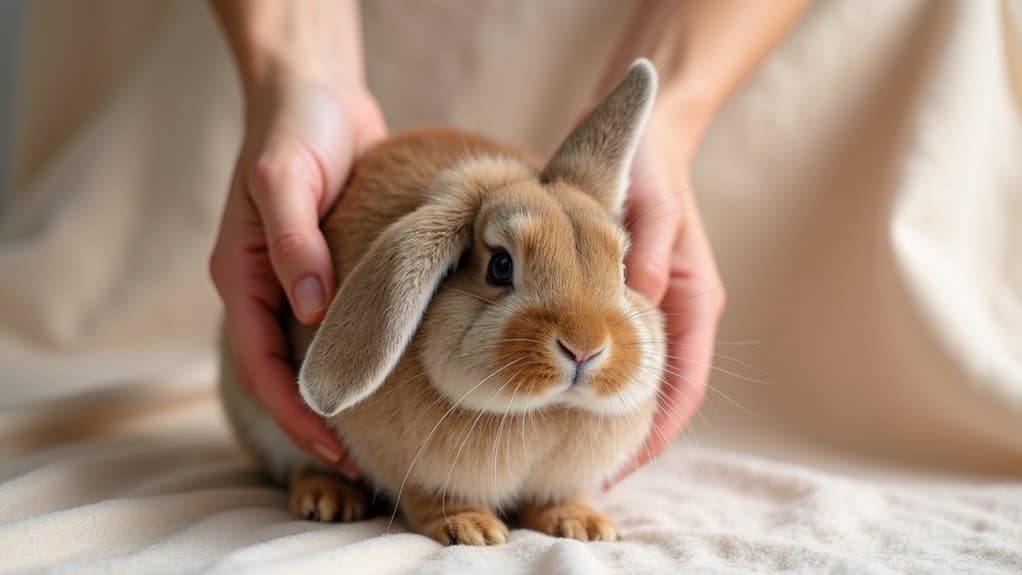
If you notice your rabbit’s head tilting to one side or struggling to maintain balance, you’re likely witnessing symptoms of a serious condition that requires immediate veterinary attention.
Head tilt in rabbits, often called “wry neck,” can stem from ear infections, parasites, or neurological issues that won’t resolve without proper treatment.
While you prepare for the vet visit, keep your bunny in a small, padded space with easy access to food and water to prevent injuries from falling or rolling.
Causes of Head Tilt
Head tilt in rabbits often stems from several serious underlying conditions that require prompt veterinary care. Your bunny’s head tilt could be indicating something that needs immediate attention.
When you notice your rabbit’s head tilting to one side, it’s important to understand what might be causing this concerning symptom.
- Ear infections that create inflammation and pressure in your rabbit’s inner ear
- Parasitic infections like E. cuniculi that attack the nervous system
- Neurological disorders affecting your bunny’s balance center
- Trauma or injury to the head that damages equilibrium
- Advanced dental disease that spreads infection to nearby structures
Don’t wait to see if the head tilt resolves on its own. These conditions can progress rapidly, causing your rabbit considerable discomfort and potentially leading to permanent disability if left untreated.
Recognizing Balance Problems
Why would your normally agile rabbit suddenly start wobbling, circling, or falling over? These movements aren’t just clumsy moments—they’re serious warning signs that require immediate attention.
If your bunny struggles to hop in a straight line or keeps tipping to one side, their balance system is likely compromised.
Watch for rabbits who can’t coordinate their movements, repeatedly fall when trying to sit upright, or spin in circles. These symptoms often indicate inner ear infections, head trauma, or even more serious neurological issues.
Don’t wait to see if things improve on their own! Your vet will likely perform balance assessments and neurological evaluations to determine the cause.
The sooner you seek help, the better your furry friend’s chances of recovery. Their wobbly movements are their way of telling you something’s seriously wrong.
Home Care Measures
When your rabbit shows signs of head tilt or balance problems, you’ll need to take immediate steps at home while arranging veterinary care.
Remember, these aren’t home remedies that replace professional treatment but supportive measures to keep your bunny comfortable during this emergency.
- Create a padded, single-level space with soft blankets to prevent injury from falling.
- Place food, water, and litter within easy reach—your bunny shouldn’t have to stretch or climb.
- Make dietary adjustments by offering favorite greens by hand if they’re struggling to eat.
- Keep your rabbit’s environment quiet and stress-free with minimal handling.
- Monitor and document symptoms—take videos of the head tilt to show your vet.
These temporary supports will help your furry friend while you get them to the veterinarian quickly.
Excessive Drooling or Wet Chin
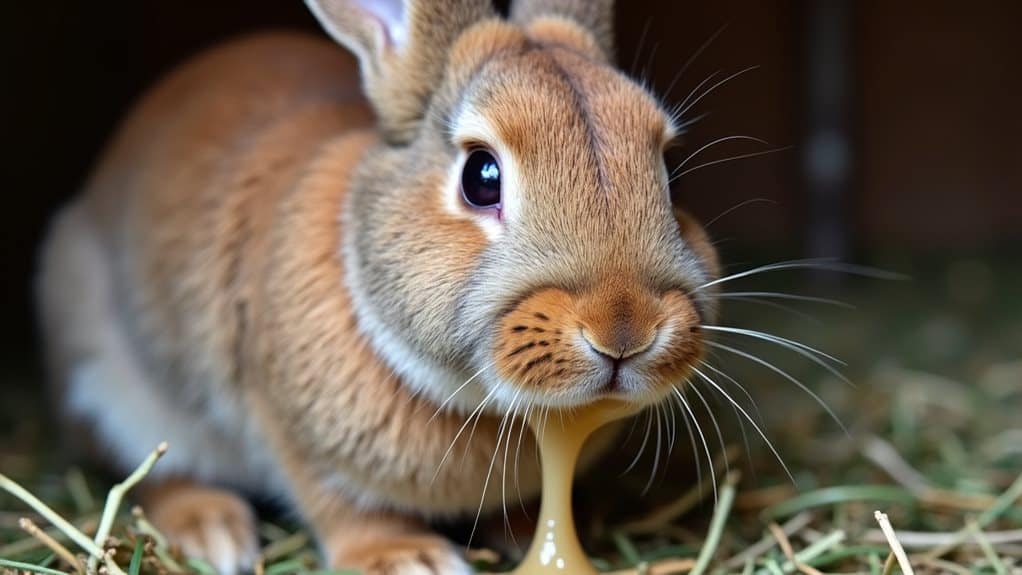
A rabbit’s chin that appears constantly wet or has obvious drooling is a serious warning sign that shouldn’t be ignored.
Normal rabbits have dry chins and minimal saliva production, so excessive moisture around the mouth area typically indicates an underlying health problem.
Most commonly, this symptom points to dental issues. Your bunny’s teeth grow continuously throughout life, and when they don’t wear down properly, painful spurs can develop.
These dental problems often lead to drooling because your rabbit can’t close its mouth properly or swallow normally.
Don’t try to wait this out or fix it yourself. When you notice a wet chin or drooling, contact your vet right away.
Left untreated, dental problems can worsen quickly, affecting your rabbit’s ability to eat and causing considerable pain.
Signs of Pain or Distress When Touched
Your rabbit’s body language can tell you a lot about their pain level, especially when touched.
If you notice your bunny hunching their body, grinding their teeth, or pulling away when you pet certain areas, they’re likely experiencing discomfort that needs attention.
These reactions aren’t just your rabbit being moody—they’re important signals that something might be wrong physically, requiring a prompt visit to your exotic pet veterinarian.
Hunched Posture Signs
Recognizing a hunched posture in rabbits often reveals underlying pain that requires immediate attention. When your bunny sits with their back arched and body tucked tightly, they’re trying to protect themselves from discomfort.
This defensive rabbit behavior isn’t normal and shouldn’t be ignored. You’ll notice they move less and seem withdrawn, possibly grinding their teeth quietly or breathing rapidly.
- Their spine forms a noticeable arch, almost like a frightened cat
- Front paws might tuck underneath their chest more tightly than usual
- Eyes appear partially closed or squinted in discomfort
- Body remains unnaturally still, avoiding any movement that causes pain
- Head positioning is low, often pressed against the floor or corner
Don’t wait to see if this resolves—hunched postures typically indicate serious issues like gas pain, digestive problems, or even potentially fatal conditions.
Teeth Grinding Behaviors
Subtle teeth grinding in rabbits often signals pain that many owners mistakenly overlook. When your bunny grinds their teeth loudly or persistently, they’re trying to tell you something’s wrong.
Unlike the gentle, content purring some rabbits make when relaxed, painful grinding sounds more harsh and is typically accompanied by a tense body posture.
Common teeth grinding causes include dental problems, digestive issues, or internal pain. If you notice this behavior, especially when touching certain areas of their body, it’s time for immediate action.
Teeth grinding solutions start with a veterinary visit—don’t attempt home remedies for this serious symptom. While waiting for your appointment, provide a quiet, stress-free environment with fresh water and their favorite foods.
Touch Withdrawal Reactions
Why do some rabbits suddenly flinch or pull away when you reach out to pet them? This touch sensitivity often signals pain or discomfort that requires immediate attention.
Your normally affectionate bunny becoming touch-averse is a serious red flag in rabbit behavior that shouldn’t be ignored.
- Your rabbit hunches up defensively when your fingers approach their abdomen
- They frantically hop away when you touch a specific area that was previously fine
- Their body tenses and freezes when your hand hovers over their back
- They nip or bite suddenly when touched in certain spots
- Their eyes widen with stress when you attempt normal handling
Don’t dismiss these withdrawal reactions as simple moodiness.
When your rabbit shows new touch sensitivity, it’s their way of saying “something hurts!” Call your vet right away for an examination.
Bloody Urine or Difficulty Urinating
When you notice red urine in your rabbit’s litter box, it’s natural to panic—but don’t rush to conclusions just yet. Sometimes what appears to be blood might actually be plant pigments from foods like beets or carrots that can temporarily color urine red or orange.
However, true bloody urine requires immediate veterinary attention, as it could indicate urinary infections or kidney stones.
Watch for these warning signs: straining to urinate, frequent attempts with little output, crying while using the litter box, or urine with an unusual odor. Your bunny might also lick their genital area excessively or show signs of pain when picked up.
Don’t wait to see if it resolves—urinary issues can quickly become life-threatening for rabbits. When in doubt, it’s always safer to have your vet check things out.
Sudden Change in Mobility or Paralysis
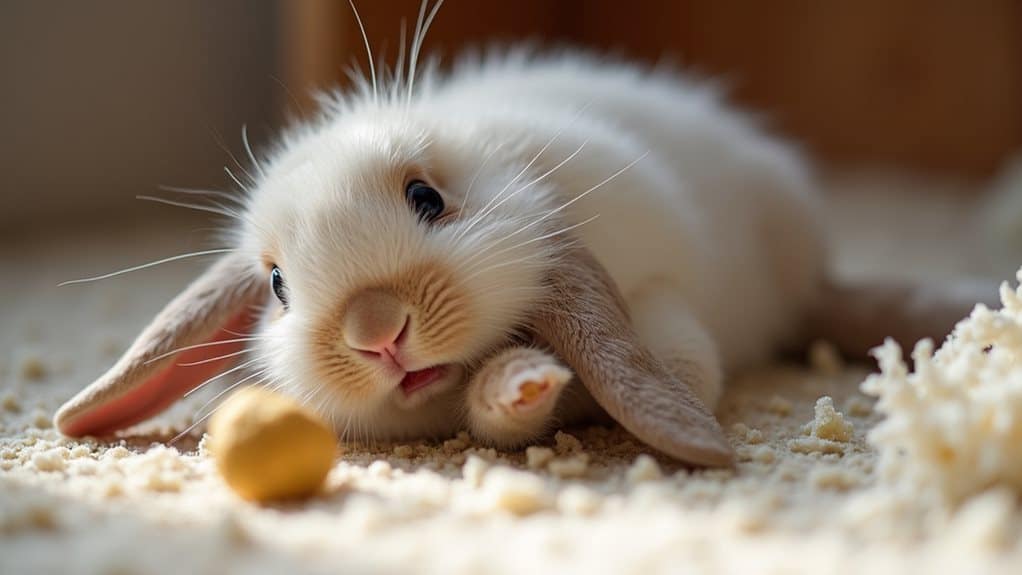
If your normally active rabbit suddenly becomes reluctant to move or develops partial or complete paralysis, you’re facing a true emergency that requires immediate veterinary care.
Sudden paralysis or mobility issues often indicate serious neurological conditions, spinal injuries, or toxicity that can worsen rapidly without treatment.
Watch for these warning signs:
- Your bunny drags their hind legs or appears to be “swimming” when trying to move
- They sit hunched in a corner, refusing to hop even for favorite treats
- Your rabbit falls over to one side repeatedly when attempting to stand
- Their head tilts at an unusual angle, affecting balance and coordination
- You notice trembling or uncontrolled muscle movements when they attempt to move
Don’t wait—these symptoms require same-day veterinary attention!
Unusual Swelling or Lumps on the Body
Much like mobility problems, physical abnormalities on your rabbit’s body deserve your immediate attention.
When you’re petting your furry friend, take time to feel for any unusual bumps or swellings that weren’t there before. These can develop quickly and indicate several concerning conditions.
Understanding swelling causes is essential—abscesses, tumors, and infected wounds are common culprits in rabbits.
Lump identification starts with noting the location, size, and whether it’s hard or soft. Is it painful when touched? Does your bunny flinch or seem bothered by it?
Don’t wait to see if it goes away on its own.
Rabbits are masters at hiding illness until it’s advanced, and what looks like a small lump today could become a serious health crisis tomorrow.
Final Thoughts
Watching for these warning signs is like being your bunny’s personal health detective—always on the lookout for clues that something’s wrong. You’re the first line of defense in your rabbit’s wellbeing, and quick action can make all the difference. Don’t hesitate to call your vet if you notice any of these symptoms. Your furry friend depends on you to speak up when they can’t.