Affiliate Disclaimer: This site is a participant in the Amazon Services LLC Associates Program, an affiliate advertising program designed to provide a means for sites to earn advertising fees by advertising and linking to Amazon.com. We are compensated for referring traffic and business to Amazon and other companies linked to on this site. We may also do this with other affiliate schemes
No, rabbits aren't nocturnal – they're actually crepuscular, which means they're most active during twilight hours at dawn and dusk. Your bunny's natural instinct is to be up and hopping around during these times, taking short naps throughout the day and resting at night. This behavior stems from wild rabbits' survival strategy, as twilight provides enough light to forage while staying safe from predators. Understanding this pattern will help you create the perfect schedule for your furry friend.
Contents
- 1 Understanding Crepuscular Behavior in Rabbits
- 2 The Natural Sleep-Wake Cycle of Wild Rabbits
- 3 Differences Between Nocturnal and Crepuscular Animals
- 4 Adapting Your Schedule to Your Pet Rabbit's Activity Pattern
- 5 Common Misconceptions About Rabbit Sleep Habits
- 6 Benefits of Dawn and Dusk Activity for Rabbits
- 7 Seasonal Changes in Rabbit Activity Patterns
- 8 Creating an Environment That Supports Natural Rabbit Behavior
- 9 Health Implications of Disrupted Sleep Cycles in Rabbits
- 10 Final Thoughts
Understanding Crepuscular Behavior in Rabbits
While many people believe rabbits are nocturnal animals, they're actually crepuscular creatures, meaning they're most active during twilight hours – dawn and dusk.
Understanding your rabbit's crepuscular instincts will help you provide better care and establish a routine that aligns with their natural behavior patterns.
You'll notice your furry friend becoming more energetic during these twilight periods, when they naturally engage in twilight foraging.
This behavior stems from their wild ancestors, who'd take advantage of the dim light to search for food while staying safe from predators.
If you want to bond with your rabbit, try scheduling playtime and feeding sessions during these peak activity hours.
You'll find they're more receptive to interaction and enrichment activities when you work with their natural rhythms.
The Natural Sleep-Wake Cycle of Wild Rabbits
As rabbits roam through nature's diverse terrains, they follow a fascinating sleep-wake pattern that's quite different from what you might expect.
In their wild habitat, you'll notice these adaptable creatures are most active during dawn and dusk, when it's safer to forage and engage in social interactions with their warren members.
While you're sound asleep at night, wild rabbits aren't typically scampering about – they're actually resting in their burrows.
Throughout the day, they'll take several short naps, but they won't sleep deeply like you do at night. This clever strategy helps them stay alert to potential predators.
You'll find they're at their liveliest during those magical twilight hours when the light is soft and the temperature is just right for their activities.
Differences Between Nocturnal and Crepuscular Animals
When you're learning about animals' daily routines, you'll notice that nocturnal and crepuscular creatures have distinct patterns that set them apart.
While nocturnal animals come alive during the dark hours of night, crepuscular animals prefer the "in-between" times of dawn and dusk.
You'll find that their behavioral differences extend beyond just timing – nocturnal animals typically have improved night vision and hearing, while crepuscular animals have adapted to function best in low-light conditions rather than complete darkness.
Activity Patterns During Day
Despite common misconceptions, rabbits aren't actually nocturnal animals – they're crepuscular, which means they're most active during twilight hours at dawn and dusk.
During daylight hours, you'll notice your rabbit's daytime behaviors are quite different from nighttime activities. While they may take short breaks for rabbit foraging and play, they'll spend most of the day resting in their shelter.
You might catch them napping, grooming, or occasionally nibbling on hay, but they're generally less active when the sun's high in the sky.
If you're caring for a rabbit, it's important to respect their natural rhythm. Don't worry if your furry friend seems lazy during the day – they're just following their instincts and saving their energy for those busy twilight hours!
Primary Behavioral Differences
Understanding the difference between nocturnal and crepuscular animals helps explain why your rabbit behaves so uniquely.
While nocturnal animals prefer complete darkness for their activities, crepuscular animals like rabbits are most active during twilight hours – dawn and dusk. You'll notice your bunny's social interaction patterns peak during these in-between times, when they're most likely to explore, play, and seek attention from their human family.
Food preferences also vary greatly between these groups.
Nocturnal animals often rely on specialized night-hunting abilities, but your crepuscular companion prefers to munch on plant matter during the softer light of twilight. This timing helps them avoid both daytime predators and nighttime hunters, making it a clever survival strategy that's still ingrained in their behavior today.
Adapting Your Schedule to Your Pet Rabbit's Activity Pattern
To make the most of your time with your pet rabbit, you'll want to adjust your daily schedule around their natural activity peaks during dawn and dusk.
You can plan feeding, playtime, and bonding sessions when your bunny's most alert and active, which typically means early mornings and evenings.
Syncing Daily Care Routines
Since rabbits are actually crepuscular rather than nocturnal, you'll want to adjust your daily schedule to match their most active periods – dawn and dusk.
Plan your rabbit care routines around these peak times to give your furry friend the attention they need when they're most alert and receptive.
Set up feeding times in the early morning and evening, when your bunny's naturally ready to eat. You'll find it easier to bond with your pet during these periods, and they'll be more enthusiastic about playtime too.
Consider cleaning their habitat during mid-morning or afternoon when they're typically resting.
Planning Activities Around Peaks
Adapting your schedule to match your rabbit's peak activity times creates natural opportunities for meaningful interaction and care.
You'll want to plan feeding, cleaning, and playtime during your bunny's most active periods, typically during dawn and dusk. When you sync up with their natural rhythm, you're more likely to see their playful personality shine through.
Consider setting aside time in the early morning or evening for interactive play sessions. That's when your rabbit's activity levels are at their highest, making it perfect for bonding activities like treat-based training or gentle grooming.
While you might need to adjust your routine initially, you'll find it's worth it when you see your furry friend hopping with joy during these peak times.
Common Misconceptions About Rabbit Sleep Habits
Despite what many people believe, rabbits aren't actually nocturnal animals at all. When it comes to myth debunking about rabbit sleep patterns, you'll be surprised to learn that these furry friends are most active during dawn and dusk – making them crepuscular creatures.
Many pet owners mistakenly plan their rabbit's activities around nighttime, thinking they'll be more energetic then. However, you'll notice your bunny's natural rhythm actually peaks during twilight hours.
Your rabbit will typically rest during the middle of the day and in the heart of night, much like many prey animals in the wild. Understanding this pattern helps you provide better care for your pet, guaranteeing you're interacting with them when they're naturally most alert and playful.
Benefits of Dawn and Dusk Activity for Rabbits
Through their natural dawn and dusk activity patterns, rabbits gain several key advantages that help them thrive.
These dawn benefits include cooler temperatures that let them comfortably forage while avoiding the day's heat, and reduced competition from other animals seeking the same food sources. You'll notice that your rabbit is often most active during these periods, mirroring their wild cousins' behavior.
The dusk advantages are equally important for your furry friend's well-being.
During these twilight hours, rabbits can spot predators more easily while still having enough light to find food and explore their surroundings. They're also following their natural instincts, which helps reduce stress and promotes better overall health.
Seasonal Changes in Rabbit Activity Patterns
Just as rabbits thrive during dawn and dusk hours, their activity patterns shift throughout the year in response to changing seasons.
You'll notice environmental influences play a noteworthy role in your rabbit's seasonal activity, as they naturally adapt their routines to survive and flourish.
Your bunny's activity patterns will change based on:
- Daylight hours – they'll be more active when days are longer in summer
- Temperature fluctuations – they're typically more energetic during cooler months
- Food availability – they'll forage more actively when natural vegetation is abundant
- Weather conditions – they'll seek shelter during extreme weather events
Understanding these seasonal changes will help you better care for your furry friend.
For example, you might want to adjust their feeding schedule or provide extra enrichment activities during periods when they're naturally more active.
Creating an Environment That Supports Natural Rabbit Behavior
Since rabbits have distinct natural behaviors and preferences, creating an environment that caters to their instincts is essential for their well-being. To help your bunny thrive, you'll want to mimic elements of their natural habitat while guaranteeing they're safe and comfortable.
Start by providing plenty of hiding spots, tunnels, and raised platforms that let them observe their surroundings.
Environmental enrichment is key to keeping your rabbit happy and active. You can rotate different toys, create foraging opportunities, and set up obstacle courses that encourage natural behaviors like digging and exploring.
Don't forget to include safe chewing materials, as this helps maintain their teeth and satisfies their instinctive need to gnaw.
Health Implications of Disrupted Sleep Cycles in Rabbits
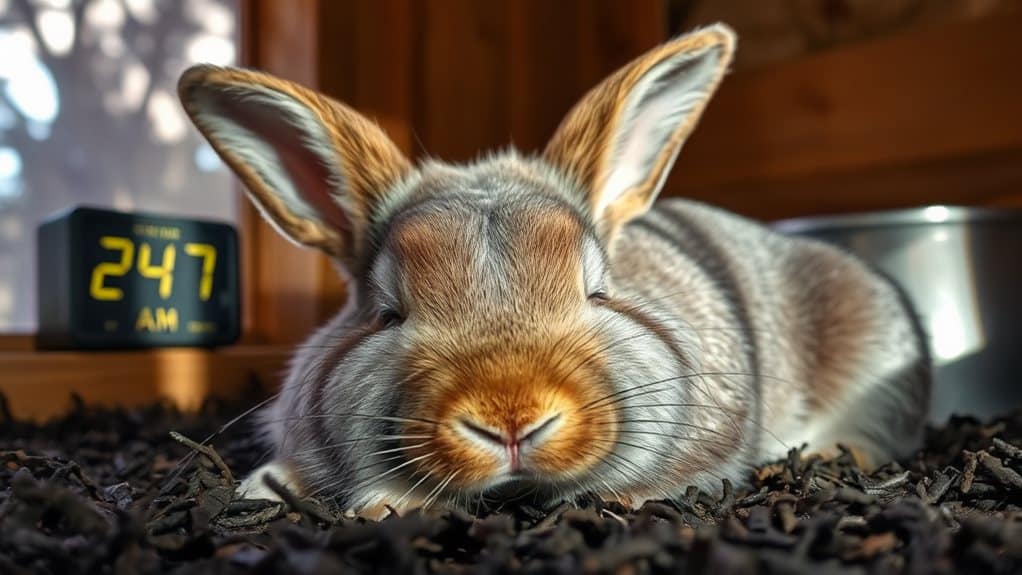
While many people mistakenly believe rabbits are nocturnal, it's important to understand that disrupting a rabbit's natural sleep cycle can lead to serious health issues.
You'll notice your furry friend becoming stressed and irritable when their rest patterns are interrupted, which can trigger various health problems.
Common stress factors that affect your rabbit's well-being include:
- Irregular feeding schedules that don't align with their natural eating patterns
- Sudden changes in their environment or daily routine
- Excessive noise or activity during their rest periods
- Bright lights when they're trying to sleep
When you notice sleep disturbances in your rabbit, it's vital to address them quickly.
Watch for signs like decreased appetite, lethargy, or unusual aggression.
Final Thoughts
You've likely heard rabbits called nocturnal, but that's not quite right. Your furry friend is actually crepuscular, meaning they're most active during dawn and dusk. Understanding this natural pattern will help you create the perfect schedule and environment for your rabbit's wellbeing. By working with their natural rhythms instead of against them, you'll have a happier, healthier pet who's ready to play when you're winding down or starting your day.